Creamy, low-fat soup bases
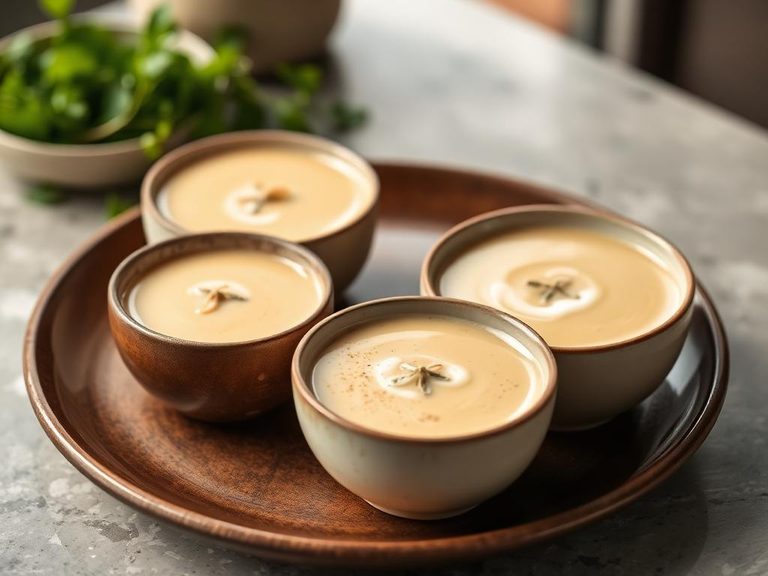
Creamy, low-fat soup bases are smooth, velvety foundations for soups that achieve richness without heavy cream or butter. They typically use ingredients like pureed vegetables (cauliflower, potato, or beans), low-fat milk or yogurt, or blended nuts and seeds to create a satisfying texture. While variations exist globally, this approach is particularly popular in health-conscious Western cooking and modern fusion cuisine.
🍽️ Nutrition at a glance
This dish is generally moderate in carbohydrates from its vegetable or starch base, low in fat, and provides a modest amount of protein depending on the base used. Key nutrients often include fiber, potassium, and vitamins A and C, with a typical serving ranging from 100 to 180 calories.
Nutrition breakdown
| Calories | 150 kcal |
| Protein | 6 g |
| Carbs | 22 g |
| Fat | 4 g |
| Fiber | 5 g |
| Sugar | 6 g |
| Sodium | 400 mg |
| Potassium | 450 mg |
| Vitamin A | 120 mcg RAE |
| Vitamin C | 15 mg |
| Calcium | 100 mg |
| Iron | 1.5 mg |
| Magnesium | 35 mg |
| Phosphorus | 90 mg |
| Folate | 40 mcg DFE |
Per 1 cup (240 g) · estimated, varies by recipe
💡 What's interesting
Nutritionally interesting is how these bases leverage the natural starches and fibers of vegetables or legumes to mimic the mouthfeel of fat, making them a clever culinary hack for reducing calories without sacrificing comfort. Culturally, they represent a shift towards healthier versions of classic comfort foods, blending traditional soup-making with modern nutritional science.