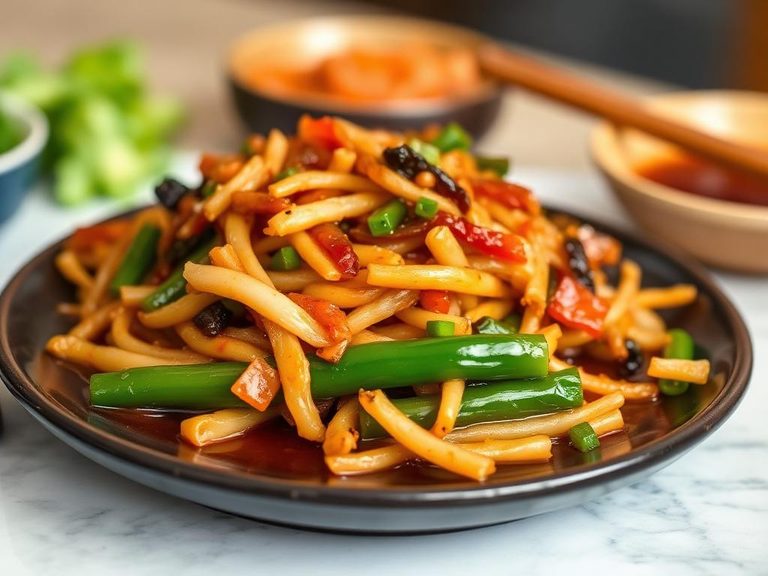
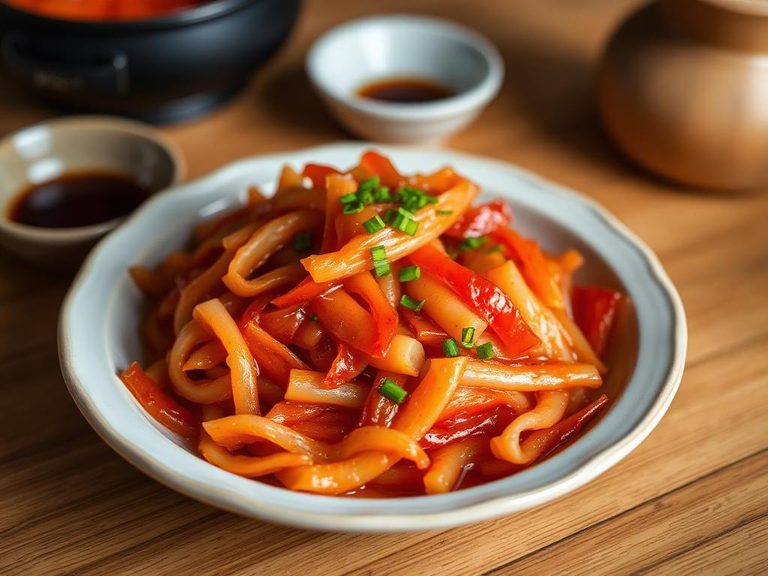
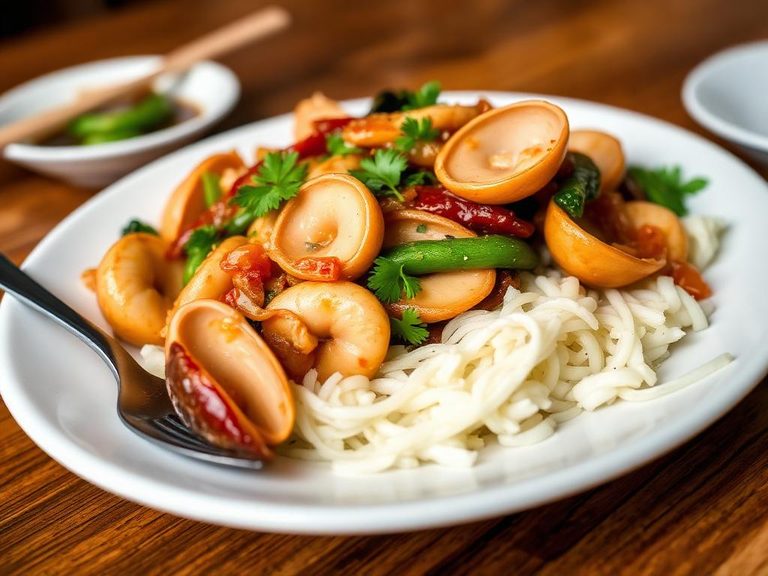
Chrysanthemum and pork hot pot

Shungiku nabe is a classic Japanese one-pot hot pot dish featuring fragrant chrysanthemum greens (shungiku) as the star vegetable, simmered with various meats and other ingredients in a savory broth. It typically includes thinly sliced pork, tofu, mushrooms, and vegetables like napa cabbage or carrots, all cooked together in a dashi-based broth. This comforting dish is a popular home-cooked meal in Japan, especially during the cooler autumn and winter months.
🍽️ Nutrition at a glance
This dish is a well-balanced meal that is moderate in protein from the pork and tofu, with healthy fats and a good amount of dietary fiber from the abundant vegetables. A typical serving provides a good range of vitamins and minerals, particularly vitamins A, C, and K from the greens, and generally falls in the range of 350-450 calories per serving.
Nutrition breakdown
| Calories | 400 kcal |
| Protein | 25 g |
| Carbs | 18 g |
| Fat | 28 g |
| Fiber | 6 g |
| Sugar | 5 g |
| Sodium | 900 mg |
| Vitamin A | 450 µg RAE |
| Vitamin C | 30 mg |
| Vitamin K | 120 µg |
| Potassium | 650 mg |
| Iron | 3.5 mg |
| Calcium | 150 mg |
| Vitamin B6 | 0.5 mg |
| Folate | 80 µg |
Per 1 typical serving (approx. 350 g) · estimated, varies by recipe
💡 What's interesting
Culturally, shungiku nabe is a quintessential example of 'nabe' (hot pot) dining in Japan, which emphasizes communal cooking and eating directly from the pot at the table. Nutritionally, chrysanthemum greens are a standout ingredient, being exceptionally high in beta-carotene (a precursor to vitamin A), which supports eye health and immunity.