Chinese Mooncakes
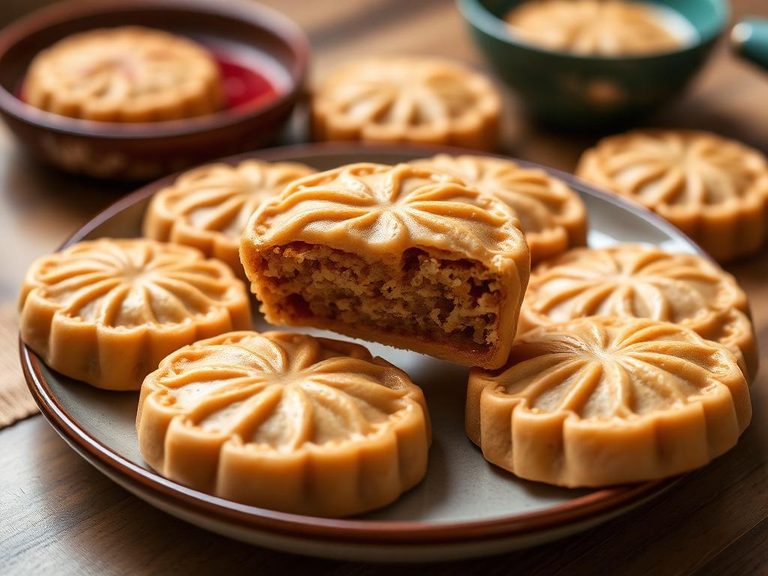
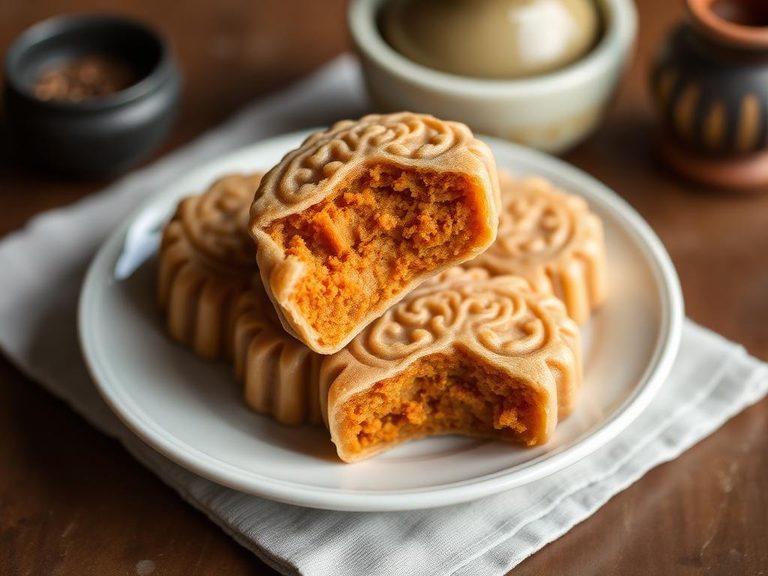
Chinese Mooncakes are dense, round pastries traditionally eaten during the Mid-Autumn Festival, symbolizing family reunion and completeness. Their classic form features a thin, tender crust made from flour, syrup, and oil, encasing a rich, sweet filling most commonly made from lotus seed paste or red bean paste, often containing a salted duck egg yolk to represent the full moon.
🍽️ Nutrition at a glance
Mooncakes are very energy-dense, being high in carbohydrates (from sugar and flour) and fats (from oil and egg yolk), with a moderate amount of protein. A single, traditional-sized mooncake can provide roughly 800-1000 calories, making it a treat meant for sharing in small slices.
Nutrition breakdown
| Calories | 420 kcal |
| Protein | 6.5 g |
| Carbs | 55 g |
| Fat | 20 g |
| Fiber | 2.5 g |
| Sugar | 30 g |
| Sodium | 180 mg |
| Iron | 2.5 mg |
| Calcium | 45 mg |
| Potassium | 120 mg |
| Phosphorus | 80 mg |
| Magnesium | 25 mg |
| Vitamin B1 (Thiamin) | 0.15 mg |
| Vitamin B2 (Riboflavin) | 0.08 mg |
| Niacin (B3) | 1.2 mg |
Per 1 piece (100 g) · estimated, varies by recipe
💡 What's interesting
The round shape of the mooncake is deeply symbolic, mirroring the full moon and representing unity and completeness in Chinese culture. Nutritionally, the inclusion of a salted egg yolk creates a unique sweet-and-savory flavor profile and is a nod to the moon itself.