

Chestnut Purée
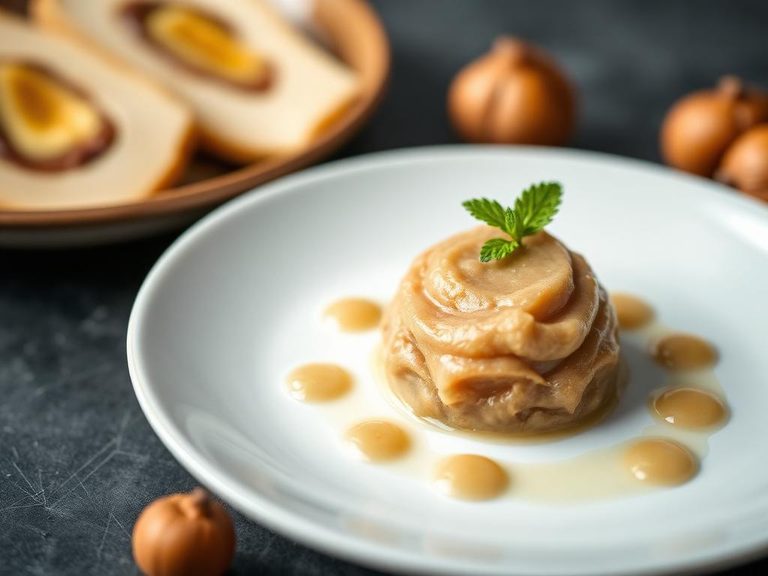
Mont Blanc is a classic French dessert featuring a smooth, sweet purée of chestnuts piped into vermicelli-like strands, traditionally topped with whipped cream to resemble the snow-capped peak of the Alps. Its core ingredients are chestnut purée, sugar, and often a touch of vanilla or rum, served over a meringue or sponge cake base. Originating in 19th-century France, it remains a beloved patisserie staple, especially in autumn and winter.
🍽️ Nutrition at a glance
This dessert is high in carbohydrates from chestnuts and sugar, with a moderate amount of fat from the cream. It provides dietary fiber, potassium, and some B vitamins, with a typical serving containing around 300-400 calories.
Nutrition breakdown
| Calories | 350 kcal |
| Protein | 5 g |
| Carbs | 55 g |
| Fat | 14 g |
| Fiber | 4 g |
| Sugar | 30 g |
| Sodium | 40 mg |
| Potassium | 350 mg |
| Vitamin C | 15 mg |
| Vitamin B6 | 0.3 mg |
| Manganese | 1.2 mg |
| Copper | 0.4 mg |
| Folate | 50 µg |
| Magnesium | 40 mg |
| Iron | 1.5 mg |
Per 1 cup (240 g) · estimated, varies by recipe
💡 What's interesting
Culturally, Mont Blanc is a symbol of alpine elegance and seasonal indulgence, often appearing in French and Italian pastry shops. Nutritionally, chestnuts are unique among nuts for being low in fat and high in complex carbs, offering a more energy-dense, less oily profile.
🍽️ Related dishes
AI estimate may be inaccurate · Terms