

Cheesy Omelette
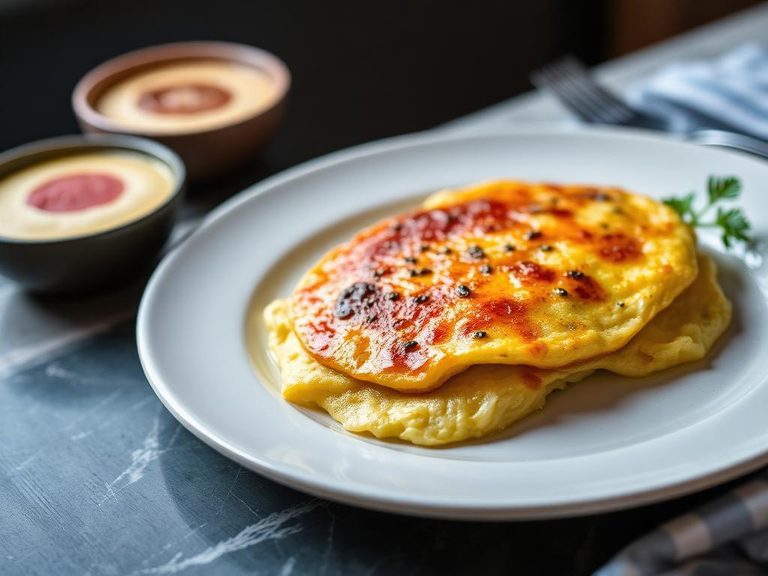
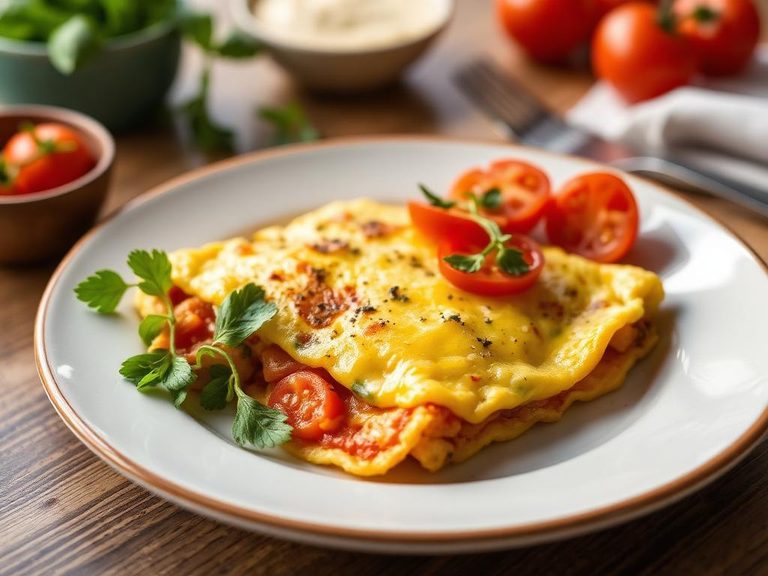
A cheesy omelette is a classic breakfast dish made by beating eggs and cooking them with melted cheese folded inside. It typically features eggs, butter or oil, and a generous amount of cheese like cheddar, mozzarella, or Swiss. While enjoyed worldwide, its origins are deeply rooted in French cuisine, where the omelette (omelette) is a foundational technique.
🍽️ Nutrition at a glance
This dish is high in protein and fat, with very few carbohydrates, making it a low-carb, high-satiety meal. It provides a good source of complete protein, vitamin B12, selenium, and calcium, with a typical serving containing roughly 300-400 calories.
Nutrition breakdown
| Calories | 350 kcal |
| Protein | 22 g |
| Carbs | 2 g |
| Fat | 28 g |
| Fiber | 0 g |
| Sugar | 1 g |
| Sodium | 450 mg |
| Vitamin B12 | 1.5 mcg |
| Selenium | 30 mcg |
| Calcium | 300 mg |
| Riboflavin (B2) | 0.5 mg |
| Phosphorus | 250 mg |
| Vitamin A | 400 IU |
| Zinc | 2.5 mg |
| Choline | 150 mg |
Per 1 omelette (approx. 150 g) · estimated, varies by recipe
💡 What's interesting
Culturally, the omelette is a test of a chef's skill in French cuisine, requiring precise heat control for a tender, non-brown exterior. Nutritionally, the combination of eggs and cheese creates a complete amino acid profile, making it an efficient protein source for muscle repair.
🍽️ Related dishes



AI estimate may be inaccurate · Terms