

Cheeseburger Sliders
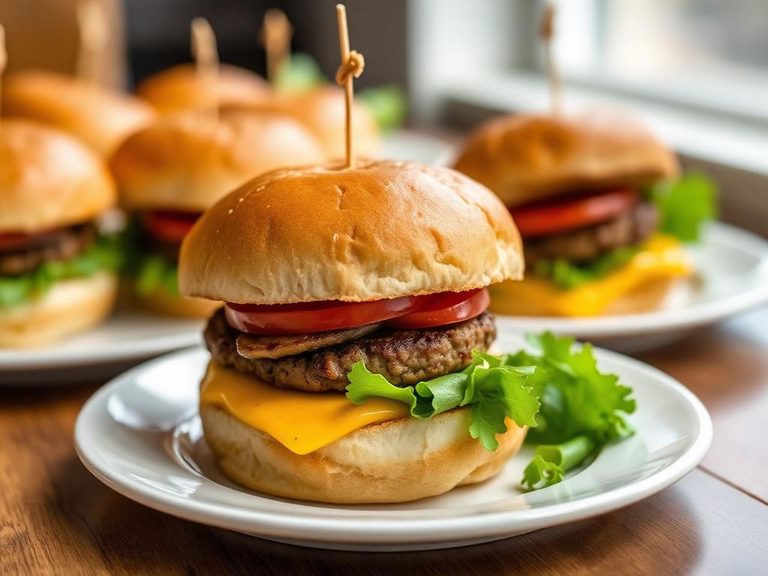
Cheeseburger sliders are mini versions of classic American cheeseburgers, typically made with small beef patties, melted cheese, and condiments served on soft dinner rolls or slider buns. They originated in the United States, often associated with casual dining, parties, and fast-food culture, evolving from the broader hamburger tradition that gained popularity in the early 20th century.
🍳 View the full Cheeseburger Sliders recipe →
🍽️ Nutrition at a glance
These sliders are generally high in fat and protein due to the beef and cheese, with moderate carbohydrates from the buns; they provide key nutrients like iron, calcium, and B vitamins. A typical serving of two sliders might range from 300 to 500 calories, depending on ingredients and preparation.
Nutrition breakdown
| Calories | 620 kcal |
| Protein | 32 g |
| Carbs | 38 g |
| Fat | 38 g |
| Fiber | 2 g |
| Sugar | 7 g |
| Sodium | 890 mg |
| Calcium | 220 mg |
| Iron | 4.5 mg |
| Potassium | 380 mg |
| Vitamin A | 150 mcg RAE |
| Vitamin C | 3 mg |
| Vitamin B12 | 2.5 mcg |
| Zinc | 5 mg |
| Phosphorus | 320 mg |
Per 3 sliders (approx. 210 g) · estimated, varies by recipe
💡 What's interesting
Culturally, cheeseburger sliders represent a fun, shareable twist on a beloved American staple, often seen at tailgates or family gatherings. Nutritionally, their small size can make portion control easier, but they still pack a calorie-dense punch, highlighting the balance between indulgence and moderation in modern eating habits.
🍽️ Related dishes


AI estimate may be inaccurate · Terms