

Cannoli shells
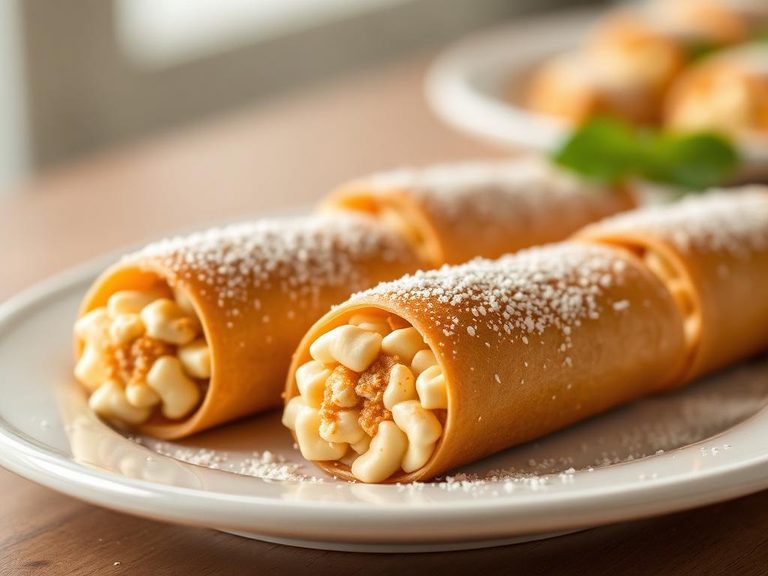
Cannoli shells are the crispy, tube-shaped pastry casings that form the base of the classic Italian dessert. Made from a simple dough of flour, sugar, butter, and often wine or vinegar, they are rolled into cylinders while still warm and pliable after frying. Once cooled, they become perfectly crisp vessels ready to be filled with a sweet, creamy ricotta mixture.
🍽️ Nutrition at a glance
These shells are primarily a source of carbohydrates from refined flour and sugar, with a moderate amount of fat from the butter and frying oil. A single, unfilled shell typically provides around 100-150 calories, offering minimal protein or significant vitamins.
Nutrition breakdown
| Calories | 120 kcal |
| Protein | 2 g |
| Carbs | 16 g |
| Fat | 5 g |
| Fiber | 0.5 g |
| Sugar | 4 g |
| Sodium | 70 mg |
| Iron | 1.2 mg |
| Calcium | 20 mg |
| Potassium | 40 mg |
| Phosphorus | 30 mg |
| Thiamin (B1) | 0.1 mg |
| Niacin (B3) | 1 mg |
| Folate | 15 mcg |
| Magnesium | 8 mg |
Per 2 shells (approx. 30 g) · estimated, varies by recipe
💡 What's interesting
The technique of rolling the shells while warm is a critical skill; it transforms a flat, fried disc into the iconic tube shape before the pastry hardens. This method ensures the shell is strong enough to hold the filling while providing the essential textural contrast between the crisp shell and the soft, creamy interior.
🍽️ Related dishes

AI estimate may be inaccurate · Terms