Candied rose-apples
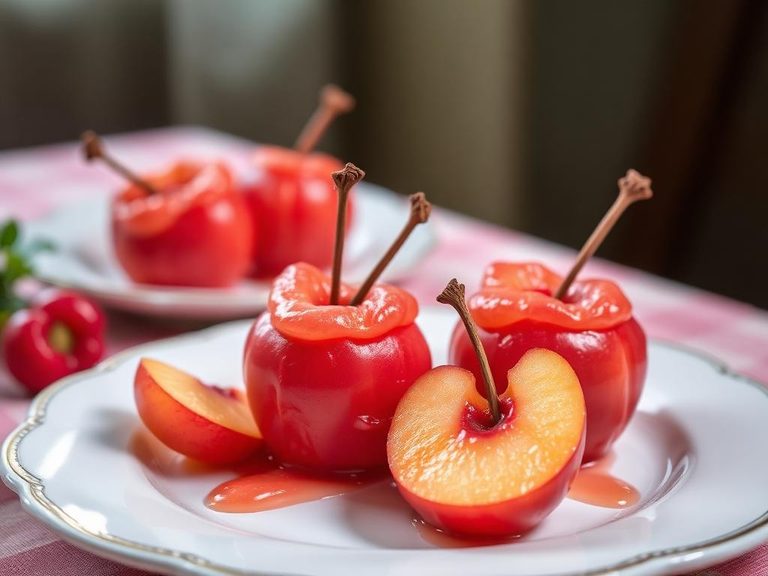
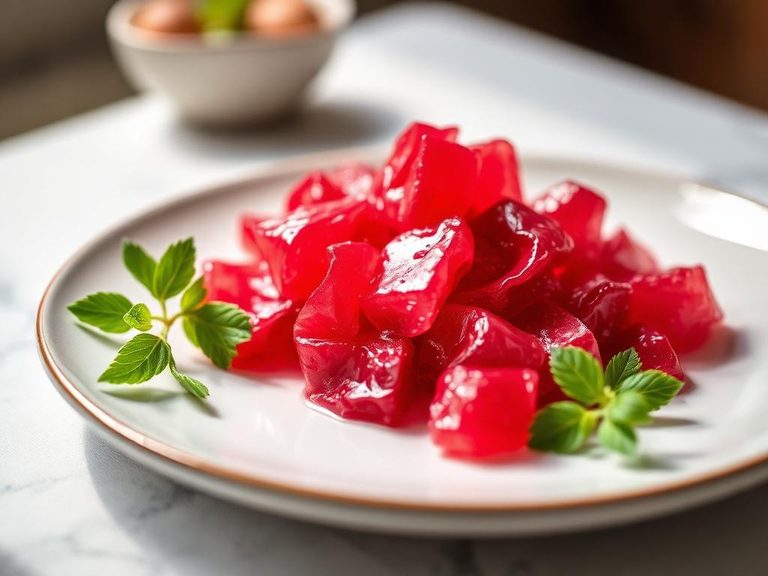
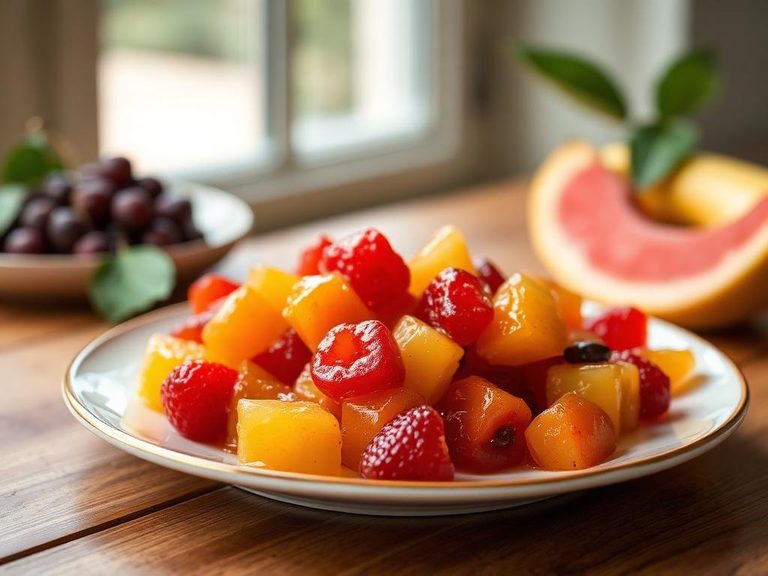
Candied rose-apples, known as 'tanghulu' or 'bingtanghulu' in Chinese, are a traditional street snack featuring skewered fruit coated in a hard, glossy sugar shell. The primary ingredient is typically hawthorn berries, though other fruits like strawberries, grapes, or rose-apples (wax apples) are also used. This confection originated in northern China during the Song Dynasty and remains a beloved treat, especially during winter festivals and Lunar New Year celebrations.
🍽️ Nutrition at a glance
This dish is very high in carbohydrates, almost entirely from simple sugars, with negligible fat and minimal protein. A single serving provides a quick burst of energy and small amounts of vitamin C and potassium from the fruit, but is primarily an indulgent sweet treat with a calorie range of approximately 150-250 kcal per skewer.
Nutrition breakdown
| Calories | 200 kcal |
| Protein | 0.5 g |
| Carbs | 50 g |
| Fat | 0 g |
| Fiber | 2 g |
| Sugar | 45 g |
| Sodium | 5 mg |
| Vitamin C | 15 mg |
| Potassium | 120 mg |
| Manganese | 0.2 mg |
| Iron | 0.5 mg |
| Vitamin A | 10 µg |
| Calcium | 15 mg |
| Phosphorus | 20 mg |
| Magnesium | 8 mg |
Per 1 skewer (approx. 100 g, including 4-5 candied hawthorn berries) · estimated, varies by recipe
💡 What's interesting
The magic of tanghulu lies in the sugar coating's texture: it's cooked to the 'hard crack' stage, creating a satisfyingly crisp shell that shatters to reveal the soft, tart fruit inside. Nutritionally, it's a fascinating contrast—the fruit offers some vitamins and fiber, while the sugar shell provides a dense, immediate energy source, making it a classic example of a 'sometimes' food enjoyed for its sensory pleasure.