Bismarck Herring with Liverwurst
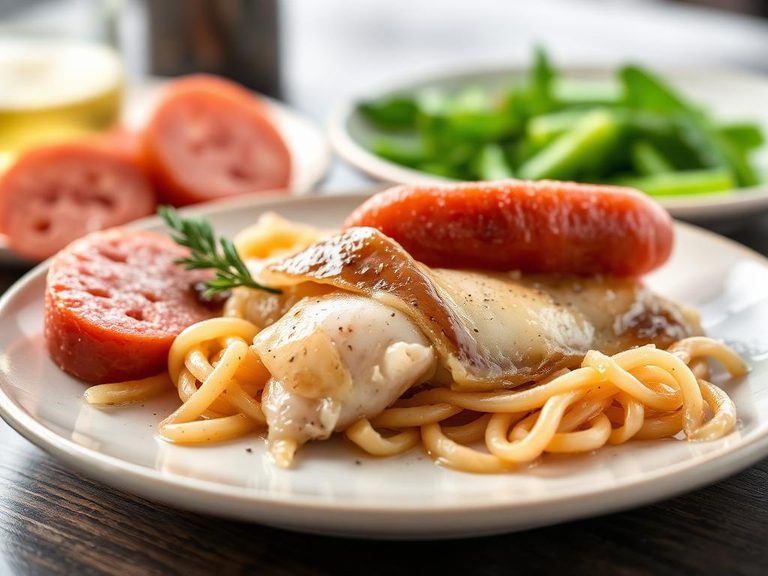
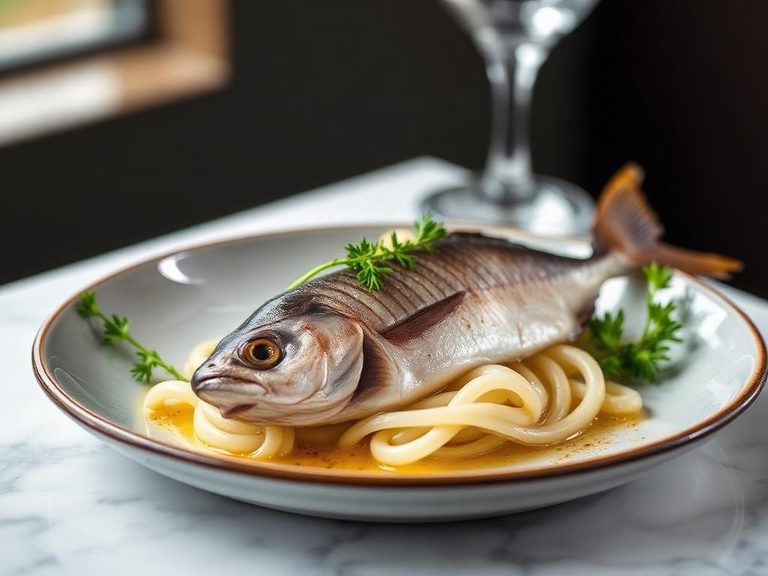
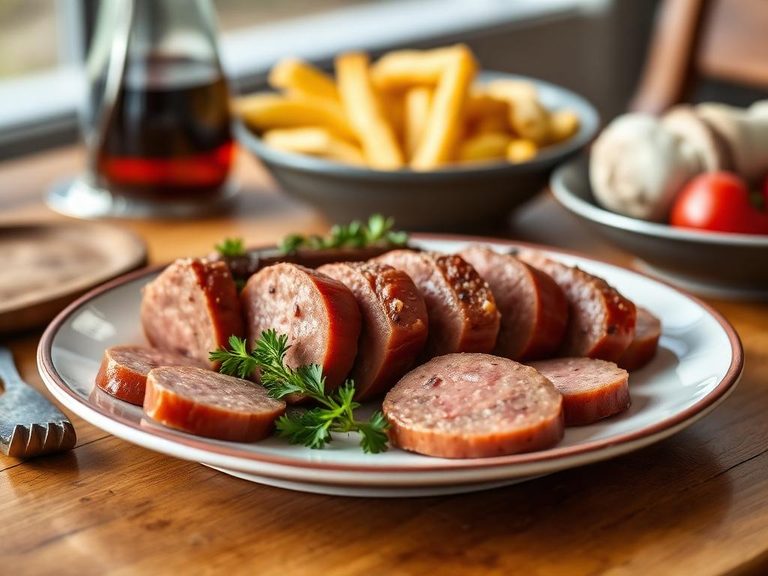
Bismarck Herring with Liverwurst is a hearty German dish that combines pickled herring fillets with creamy liver sausage, typically served on rye bread. The herring is marinated in a brine of vinegar, onions, and spices, while the liverwurst adds a rich, savory spread. It's a classic example of Northern German or Prussian-inspired cuisine, often enjoyed as a substantial snack or light meal.
🍽️ Nutrition at a glance
This dish is high in fat and protein, with minimal carbohydrates, making it a low-carb option. It provides significant amounts of omega-3 fatty acids from the herring, along with iron and B vitamins from the liverwurst, with a typical serving containing around 300-400 calories.
Nutrition breakdown
| Calories | 350 kcal |
| Protein | 20 g |
| Carbs | 5 g |
| Fat | 28 g |
| Fiber | 1 g |
| Sugar | 2 g |
| Sodium | 800 mg |
| Vitamin B12 | 8 µg |
| Iron | 3 mg |
| Vitamin D | 10 µg |
| Omega-3 Fatty Acids | 1.5 g |
| Selenium | 25 µg |
| Phosphorus | 250 mg |
| Vitamin A | 400 µg |
| Zinc | 2 mg |
Per 1 serving (150 g) · estimated, varies by recipe
💡 What's interesting
Culturally, it reflects the historical influence of Prussian cuisine, where preserved fish and offal-based sausages were practical staples. Nutritionally, the combination offers a unique blend of marine and organ meat nutrients, including vitamin D and B12, which are less common in everyday meals.