

Bánh mì sandwiches
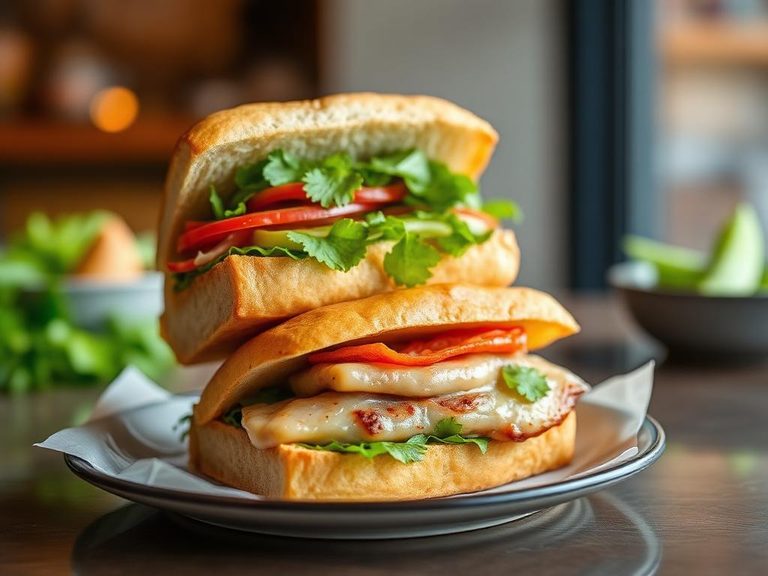
Bánh mì is a Vietnamese sandwich that masterfully blends French colonial influence with local Vietnamese ingredients, typically featuring a light, crispy baguette filled with savory meats like pâté or grilled pork, pickled daikon and carrot, fresh cilantro, cucumber, and chili. It originated in Vietnam as a fusion dish, evolving from the French baguette sandwich into a beloved street food staple.
🍳 View the full Bánh mì sandwiches recipe →
🍽️ Nutrition at a glance
A typical bánh mì is moderately high in carbohydrates from the baguette and provides a good amount of protein from the meat fillings, with some fat from the pâté or mayonnaise. It offers key nutrients like iron and B vitamins from the meats, plus vitamin C and fiber from the fresh vegetables, with a rough calorie ballpark of 400-600 per serving depending on fillings.
Nutrition breakdown
| Calories | 450 kcal |
| Protein | 22 g |
| Carbs | 45 g |
| Fat | 20 g |
| Fiber | 3 g |
| Sugar | 8 g |
| Sodium | 1100 mg |
| Iron | 4 mg |
| Calcium | 120 mg |
| Vitamin C | 15 mg |
| Vitamin A | 80 mcg RAE |
| Potassium | 350 mg |
| Thiamin (B1) | 0.4 mg |
| Niacin (B3) | 5 mg |
| Folate | 100 mcg DFE |
Per 1 sandwich (250 g) · estimated, varies by recipe
💡 What's interesting
What makes bánh mì culturally unique is its perfect embodiment of culinary fusion, blending French baking techniques with Vietnamese flavors and fresh ingredients to create something entirely new. Nutritionally, it stands out for balancing indulgent elements like pâté with light, pickled vegetables that aid digestion, making it a surprisingly well-rounded street food option.
🍽️ Related dishes


AI estimate may be inaccurate · Terms