

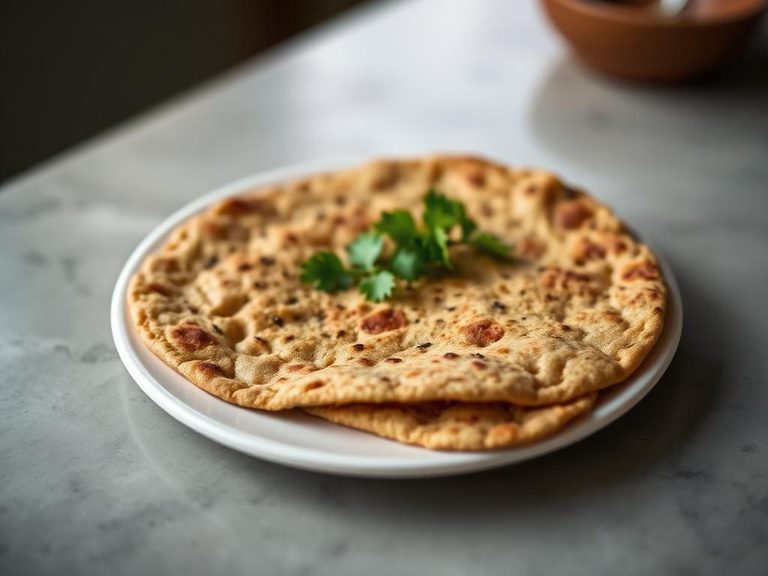
Amaranth flatbread or roti

Amaranth flatbread, often called 'rajgira roti' or 'ramdana ki roti' in India, is a gluten-free bread made from amaranth flour, typically mixed with boiled potatoes or warm water to form a dough. It is a staple during Hindu fasting periods (vrat) and is popular across various regions of the Indian subcontinent. The bread is usually cooked on a hot griddle with ghee or oil until golden and slightly crispy.
🍽️ Nutrition at a glance
This flatbread is a good source of plant-based protein and dietary fiber, with a moderate carbohydrate content. It provides essential minerals like iron, magnesium, and phosphorus, with a typical serving containing roughly 150-200 calories.
Nutrition breakdown
| Calories | 180 kcal |
| Protein | 5 g |
| Carbs | 30 g |
| Fat | 5 g |
| Fiber | 4 g |
| Sugar | 1 g |
| Sodium | 150 mg |
| Iron | 2.5 mg |
| Magnesium | 60 mg |
| Phosphorus | 120 mg |
| Manganese | 1.2 mg |
| Potassium | 150 mg |
| Calcium | 80 mg |
| Zinc | 1.0 mg |
| Folate | 40 mcg |
Per 1 medium flatbread (approx. 80 g) · estimated, varies by recipe
💡 What's interesting
Amaranth is an ancient pseudocereal that was a sacred crop to the Aztecs, and it's naturally gluten-free, making this flatbread a vital and nutritious option for those with celiac disease or gluten sensitivity. Nutritionally, it stands out for its complete protein profile, containing all nine essential amino acids, which is rare for plant-based foods.
🍽️ Related dishes





AI estimate may be inaccurate · Terms