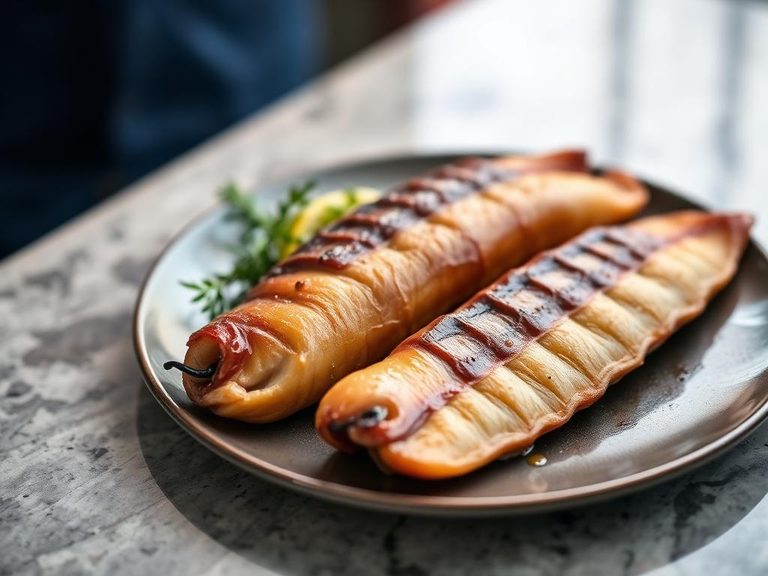
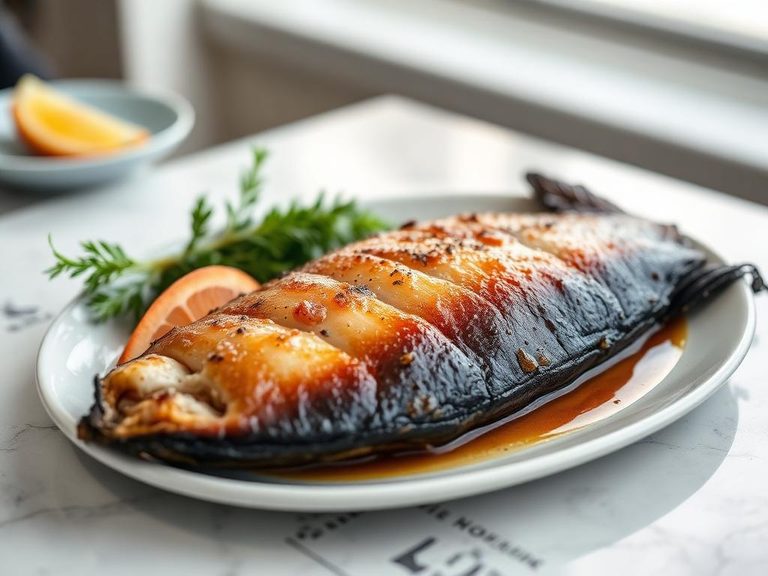
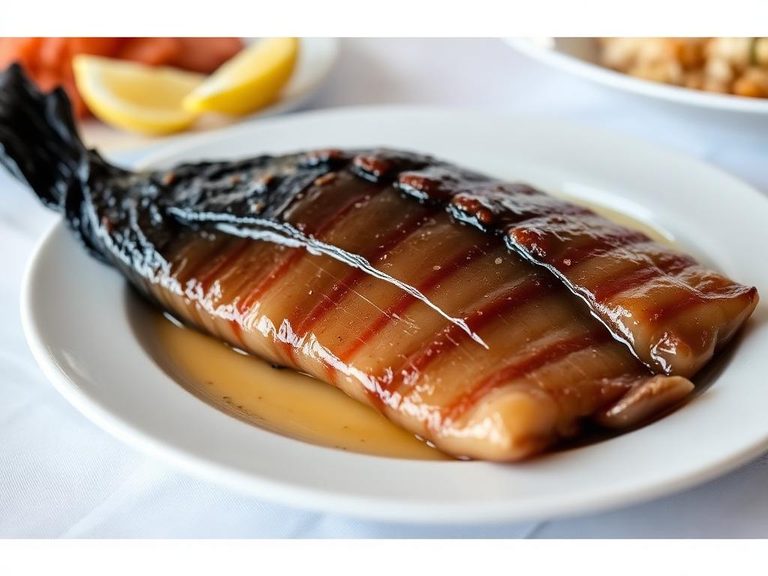
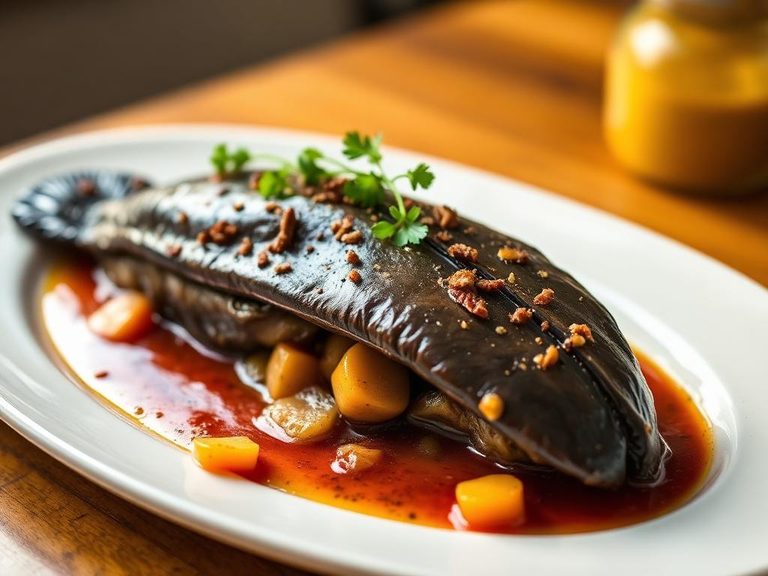
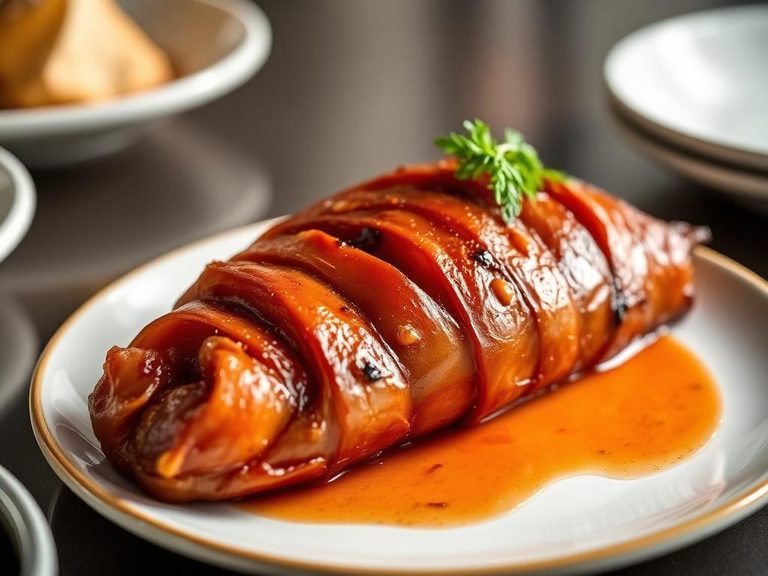
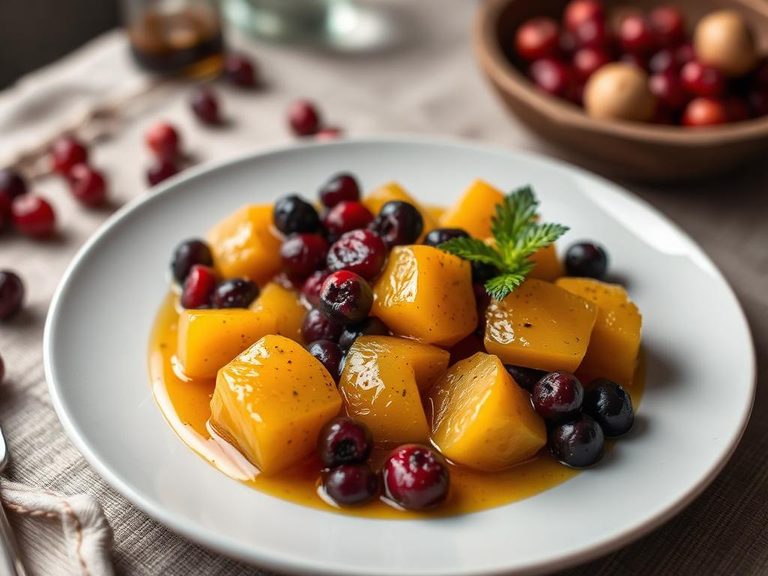
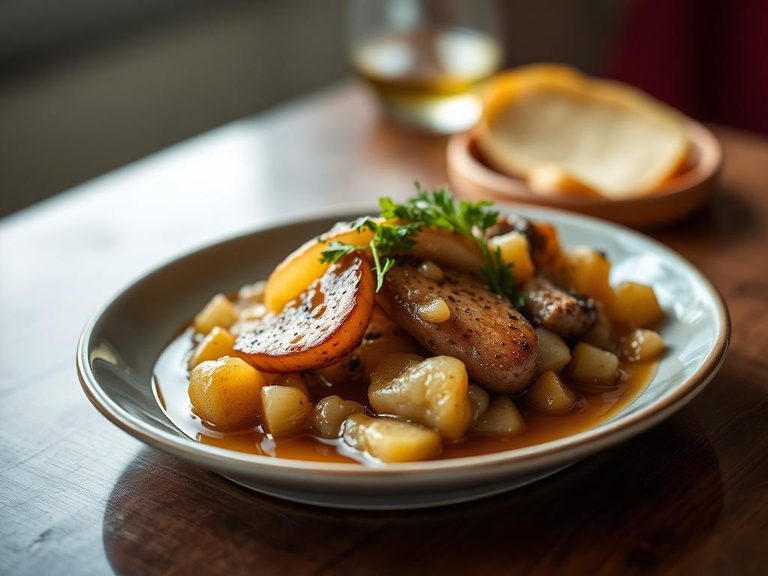
Whale flipper, raw (sliced)
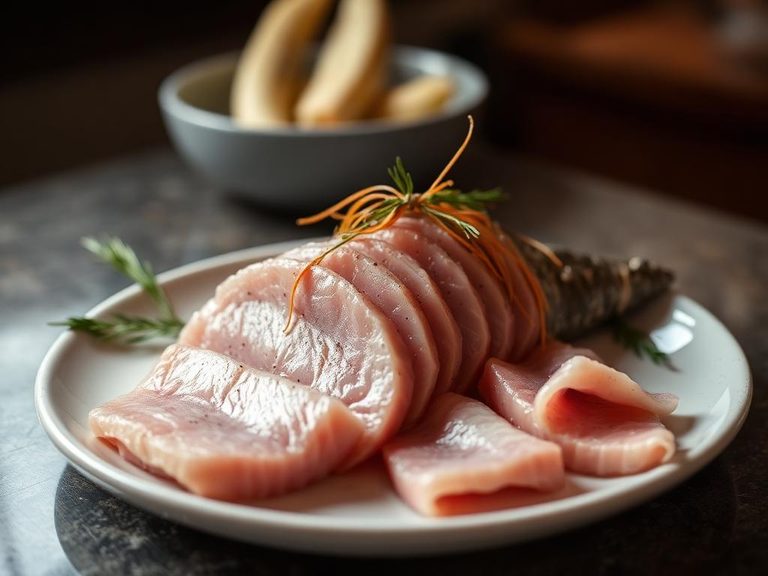
Whale flipper, served raw and sliced, is a traditional delicacy in certain Arctic and coastal communities, particularly in parts of Japan (where it is known as 'iruka' or 'kujira' sashimi) and among some Inuit and other Indigenous groups. The dish consists of thinly sliced raw whale flipper, which has a distinct, slightly chewy texture and a rich, marine flavor.
🍽️ Nutrition at a glance
This dish is very high in protein and contains a significant amount of healthy fats, including omega-3 fatty acids. It is virtually carbohydrate-free and provides essential nutrients like vitamin B12, iron, and selenium, with a rough calorie estimate of 150-200 kcal per 100-gram serving.
Nutrition breakdown
| Calories | 170 kcal |
| Protein | 22 g |
| Carbs | 0 g |
| Fat | 9 g |
| Fiber | 0 g |
| Sugar | 0 g |
| Sodium | 60 mg |
| Vitamin B12 | 15 mcg |
| Selenium | 35 mcg |
| Phosphorus | 200 mg |
| Niacin (B3) | 5 mg |
| Iron | 2.5 mg |
| Potassium | 280 mg |
| Zinc | 1.5 mg |
| Omega-3 (EPA+DHA) | ~1.2 g |
Per 3 oz (85 g) · estimated, varies by recipe
💡 What's interesting
Culturally, consuming whale flipper is deeply tied to traditional subsistence practices and is often considered a prized or ceremonial food in its regions of origin. Nutritionally, its high omega-3 content is notable, similar to other cold-water marine animals, which is beneficial for heart and brain health.