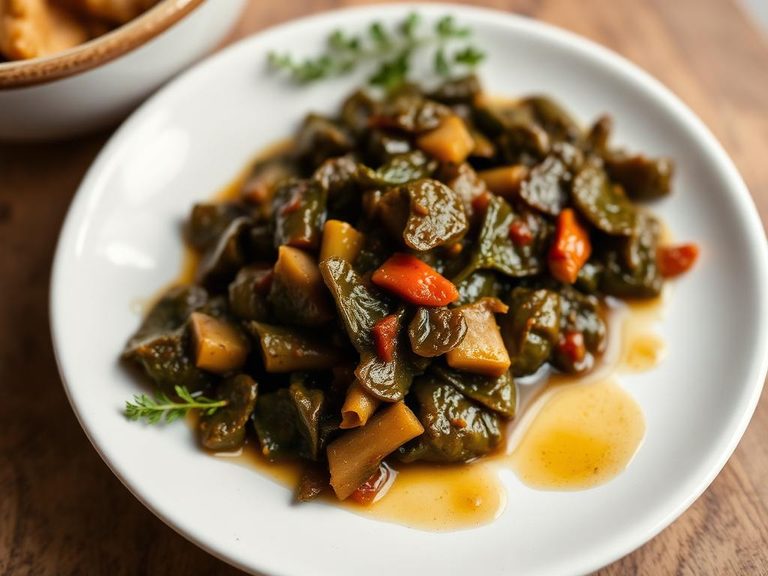
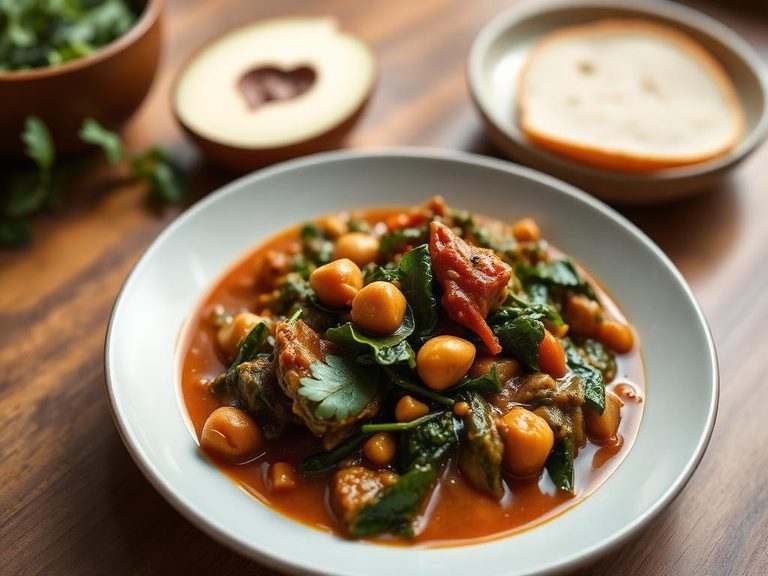
West African-style stewed greens with palm oil
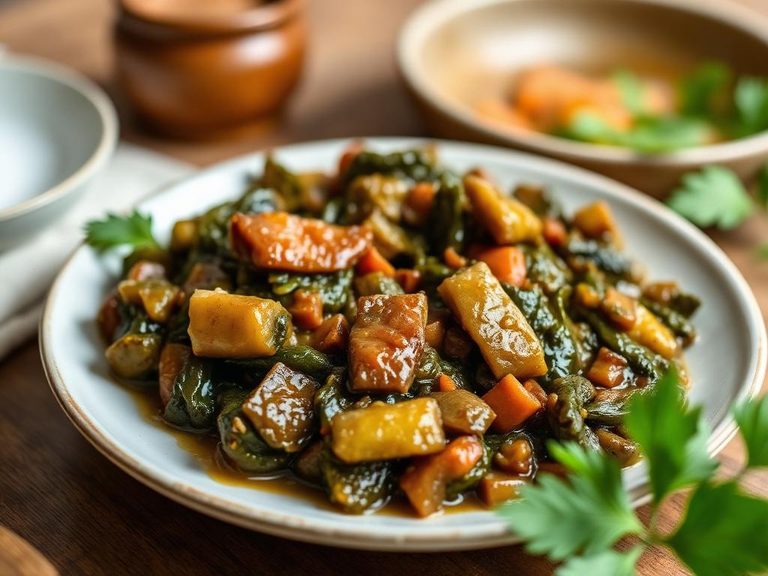
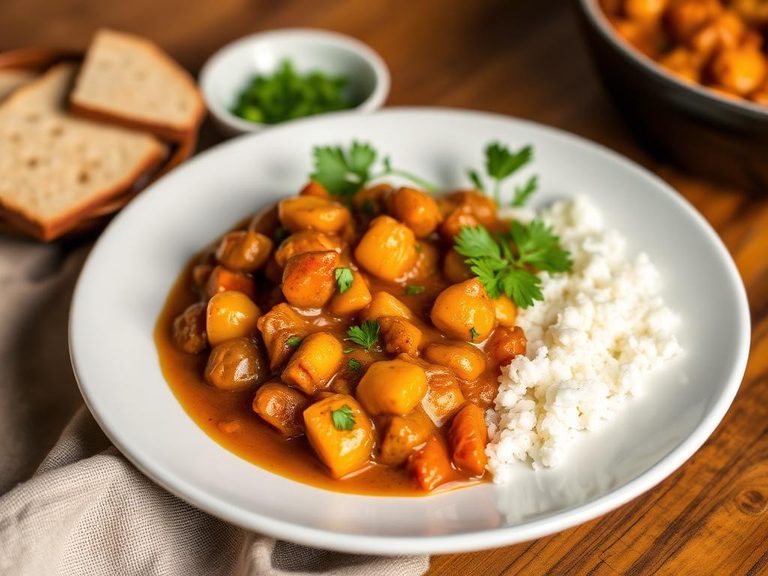
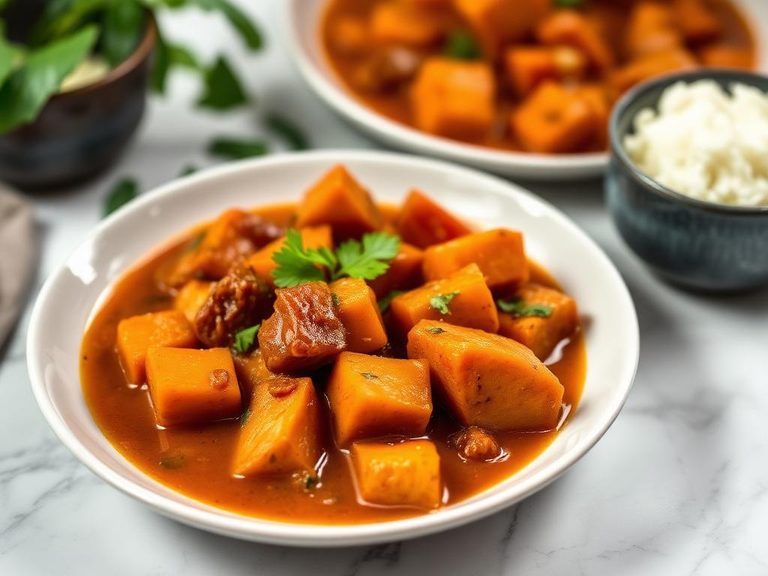
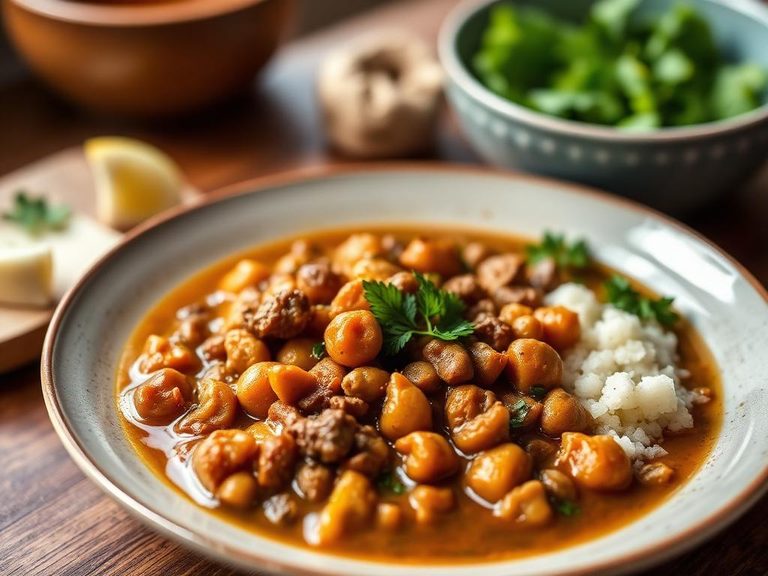
West African-style stewed greens with palm oil is a vibrant, savory dish where leafy greens like spinach, kale, or traditional varieties such as amaranth or bitter leaves are slow-cooked in a rich, red palm oil base. The stew is typically flavored with onions, tomatoes, scotch bonnet peppers, and often includes fermented locust beans (dawadawa) for depth, and sometimes smoked fish or meat. It is a staple comfort food across many West African countries, including Nigeria, Ghana, and Sierra Leone.
🍽️ Nutrition at a glance
This dish is moderate in carbohydrates and high in healthy fats, primarily from the nutrient-dense palm oil, while also providing a good source of plant-based protein if legumes or fish are added. It is exceptionally rich in vitamins A, C, and K, iron, and antioxidants, with a typical serving containing roughly 200-300 calories depending on the specific greens and additions used.
Nutrition breakdown
| Calories | 180 kcal |
| Protein | 3.5 g |
| Carbs | 12 g |
| Fat | 14 g |
| Fiber | 5 g |
| Sugar | 3 g |
| Sodium | 400 mg |
| Vitamin A | 4500 IU |
| Vitamin C | 35 mg |
| Vitamin K | 300 mcg |
| Iron | 3.5 mg |
| Calcium | 120 mg |
| Potassium | 380 mg |
| Magnesium | 45 mg |
| Folate | 80 mcg |
Per 1 cup (240 g) · estimated, varies by recipe
💡 What's interesting
The use of unrefined red palm oil is culturally significant, as it provides the dish's characteristic color and a unique, earthy flavor, while also being a traditional source of beta-carotene and vitamin E in West African diets. Nutritionally, the combination of iron-rich greens with the vitamin C from peppers and tomatoes enhances iron absorption, showcasing an intuitive nutritional synergy in traditional cooking.