Vegetarian Jambalaya
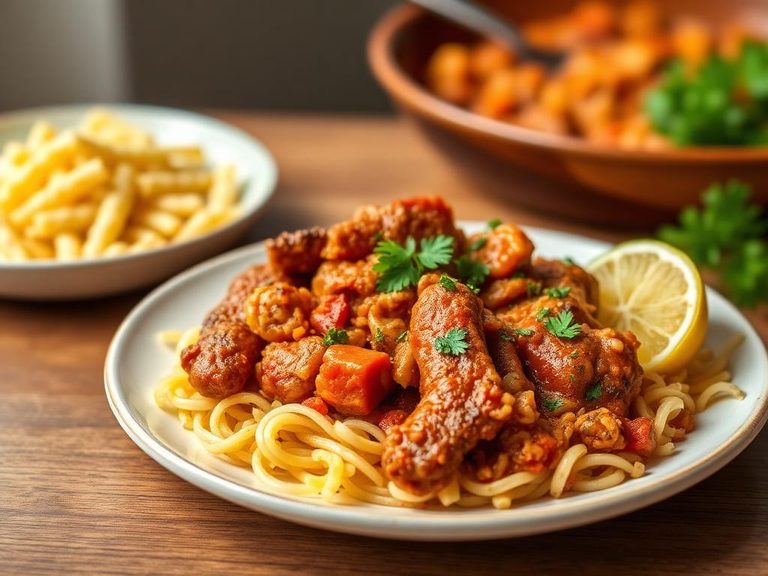
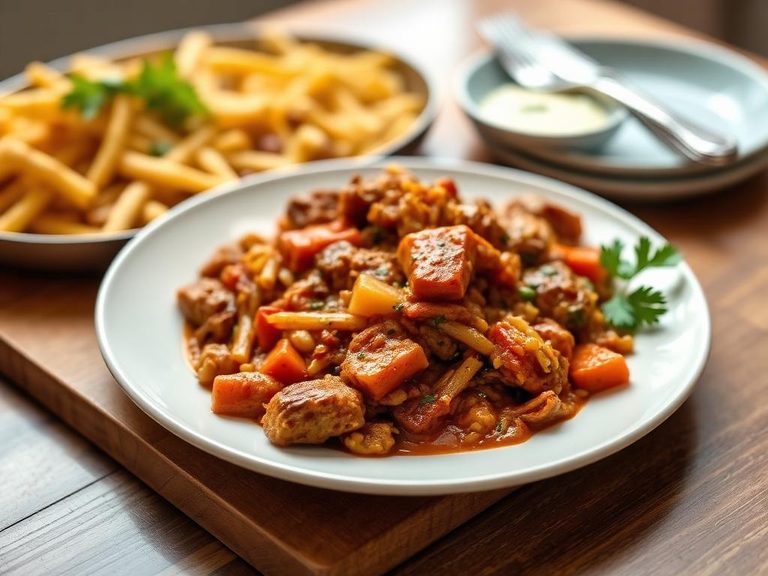
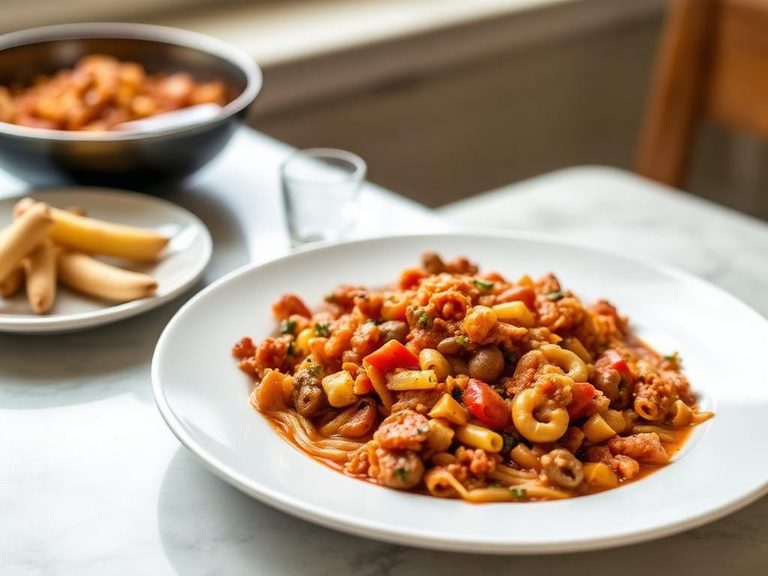
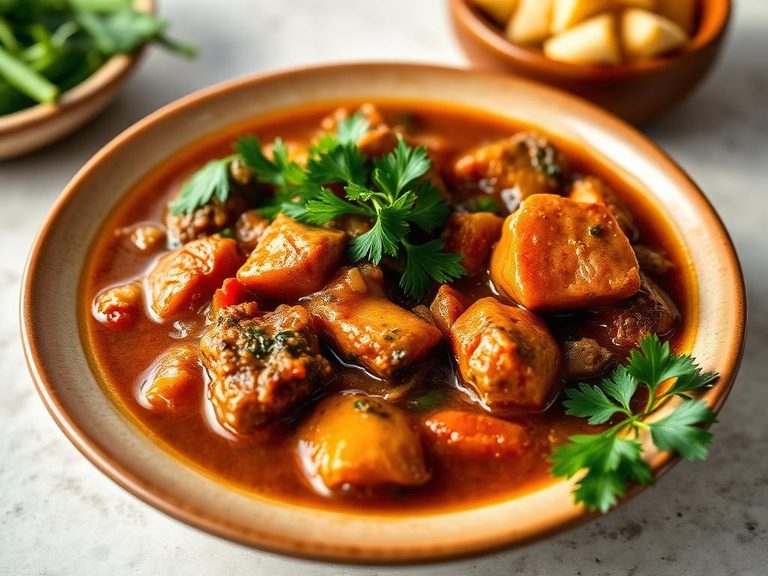
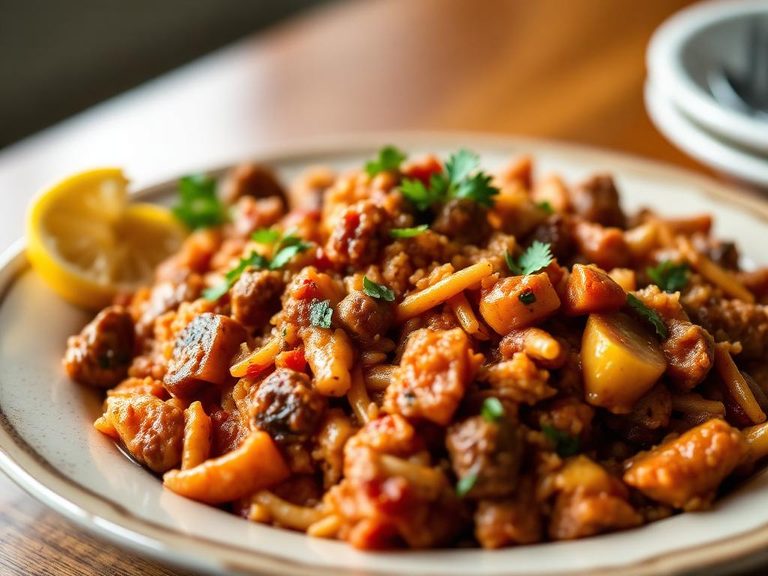
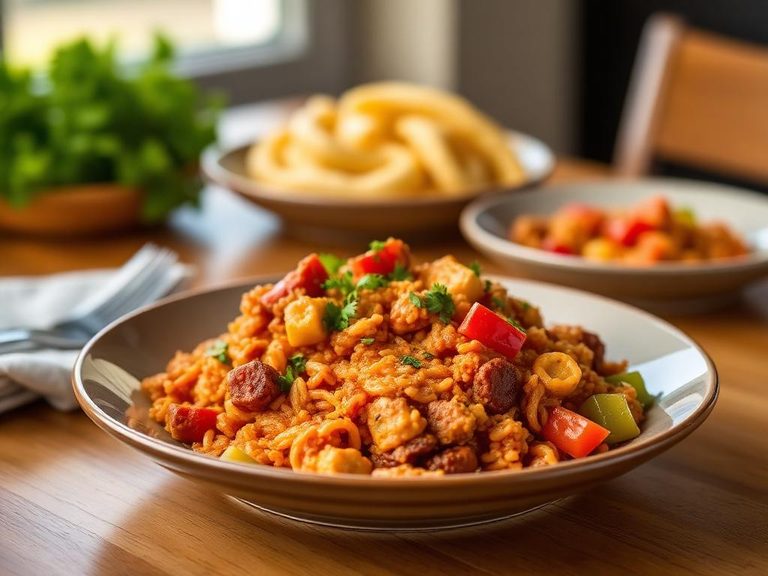
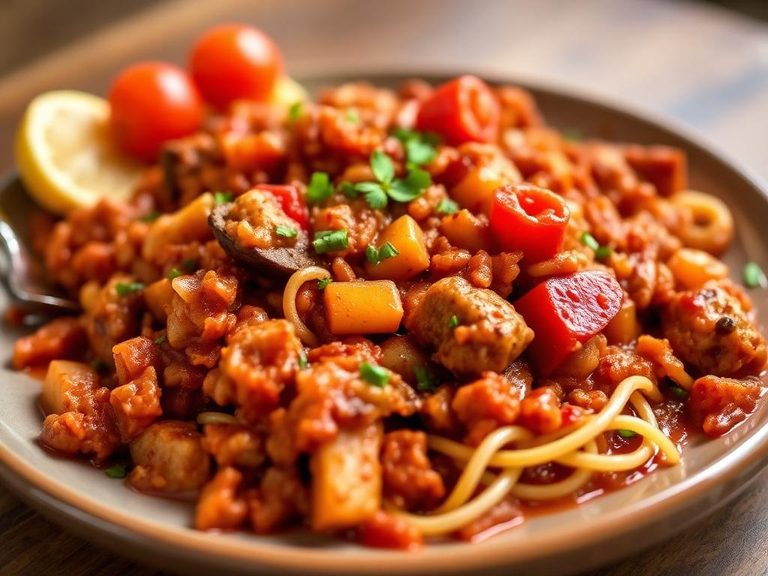
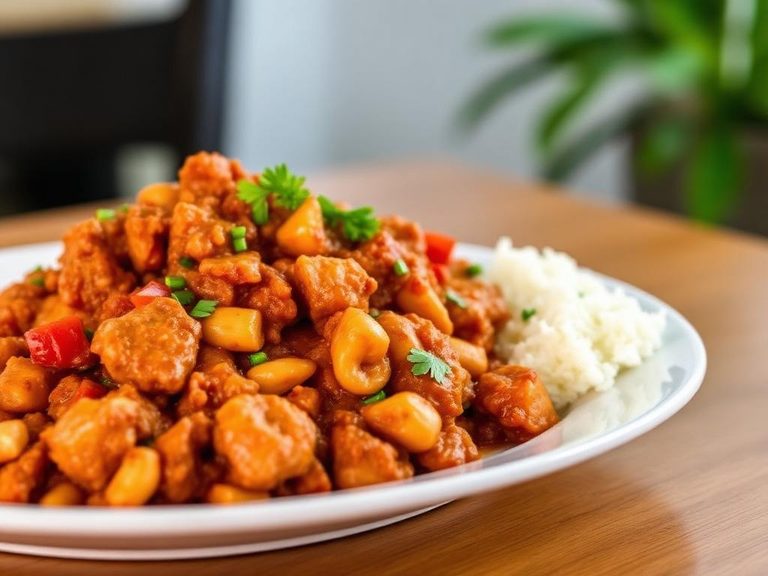
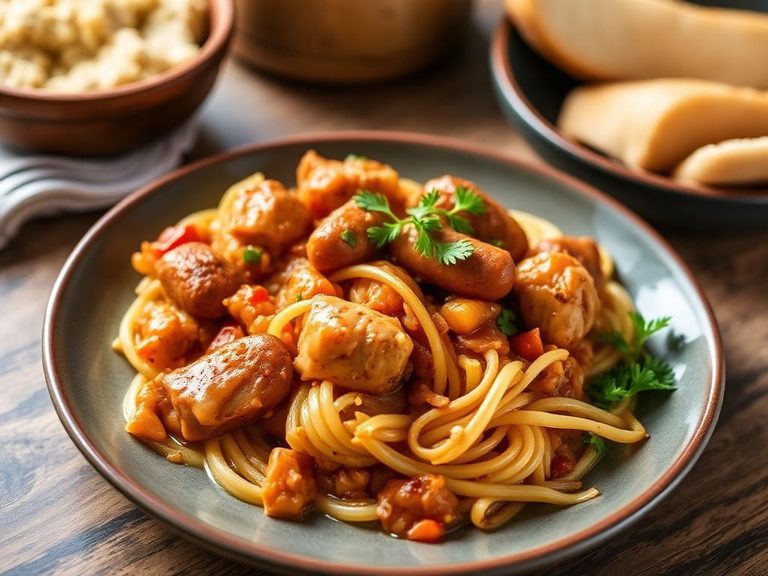
Vegetarian Jambalaya is a vibrant, one-pot rice dish that hails from Louisiana, USA, drawing its roots from a blend of Spanish, French, and African culinary traditions. It typically features a hearty mix of vegetables like bell peppers, celery, and onions (the 'holy trinity'), along with beans, tomatoes, and a variety of spices, all simmered together with rice. This meatless version captures the soulful, robust flavors of the classic Creole and Cajun dish while being entirely plant-based.
🍽️ Nutrition at a glance
This dish is generally balanced, offering a good mix of complex carbohydrates from rice and fiber from vegetables and beans, with moderate protein from legumes and minimal fat if prepared with minimal oil. It provides essential nutrients like iron, vitamin C, and B vitamins, and a typical serving ranges from 300 to 450 calories, depending on portion size and specific ingredients used.
Nutrition breakdown
| Calories | 280 kcal |
| Protein | 10 g |
| Carbs | 45 g |
| Fat | 7 g |
| Fiber | 6 g |
| Sugar | 4 g |
| Sodium | 850 mg |
| Potassium | 450 mg |
| Iron | 3.5 mg |
| Vitamin C | 15 mg |
| Vitamin A | 80 mcg RAE |
| Calcium | 60 mg |
| Magnesium | 55 mg |
| Folate | 120 mcg DFE |
| Zinc | 1.8 mg |
Per 1 cup (240 g) · estimated, varies by recipe
💡 What's interesting
Culturally, Vegetarian Jambalaya showcases the adaptability of Cajun and Creole cuisine, evolving to meet modern dietary preferences while preserving its communal, celebratory spirit. Nutritionally, it stands out as a complete meal in one pot, combining plant-based protein and fiber-rich ingredients to promote sustained energy and digestive health.