Tea-Smoked Duck
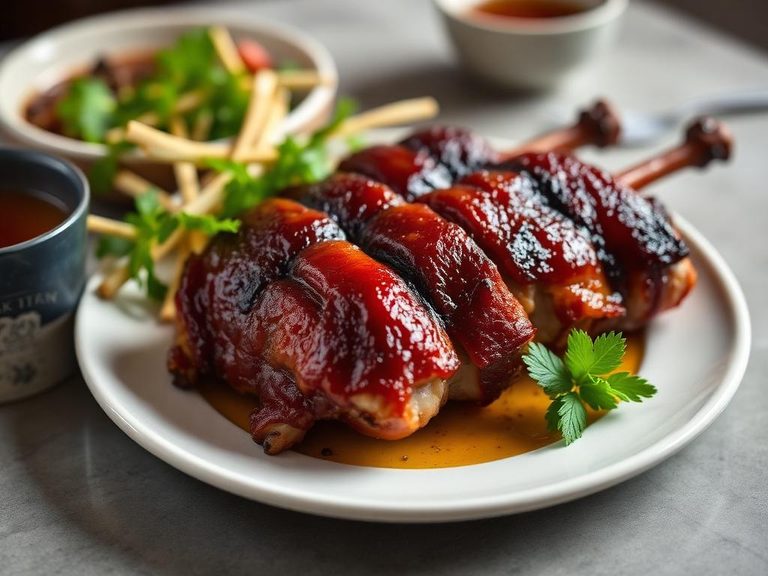
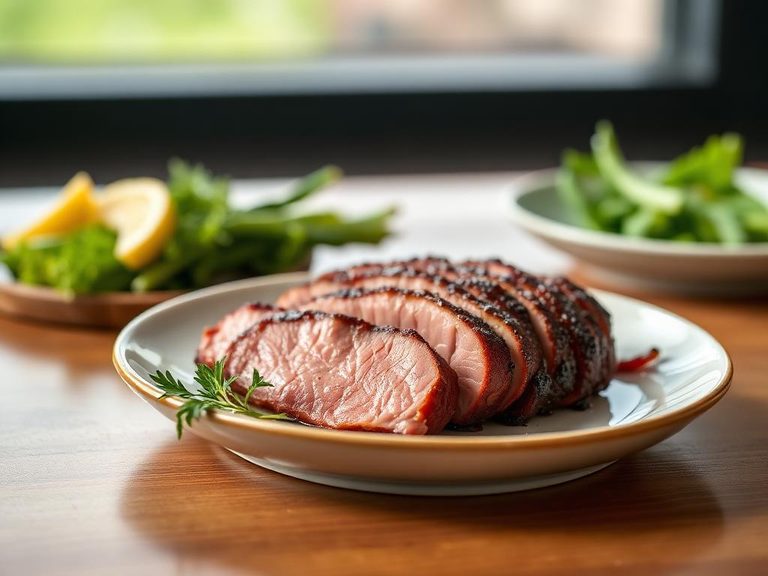
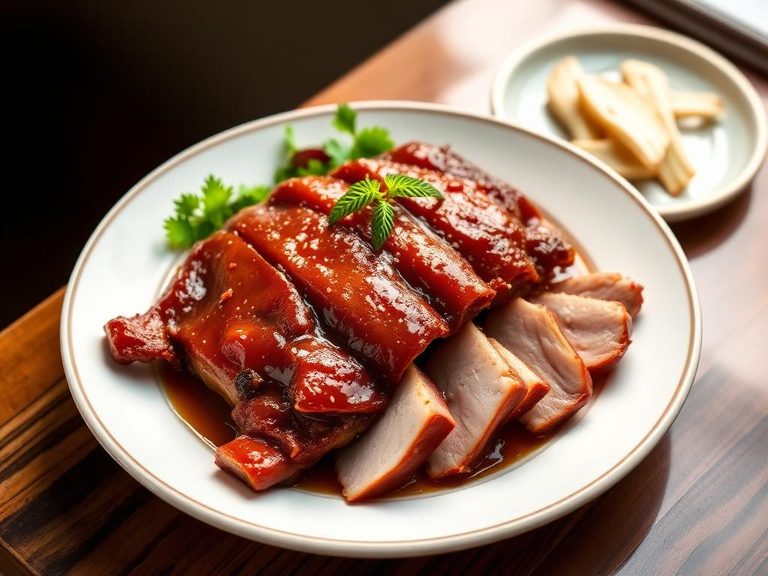
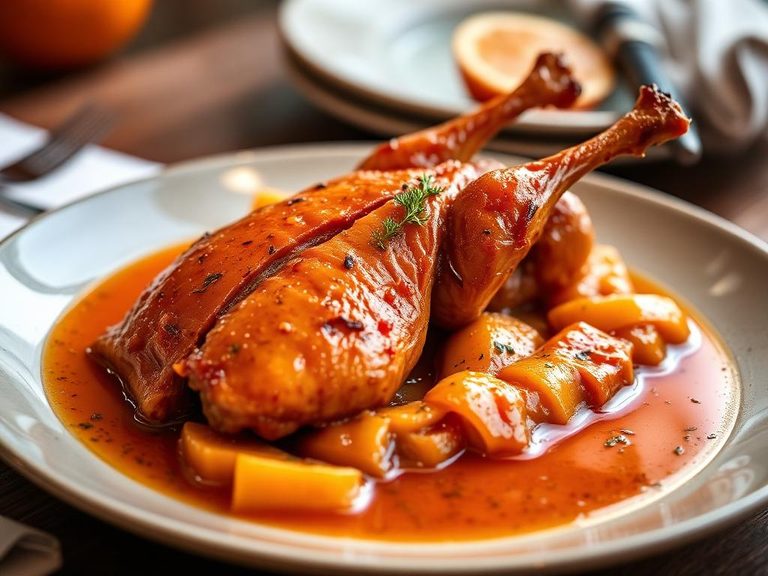
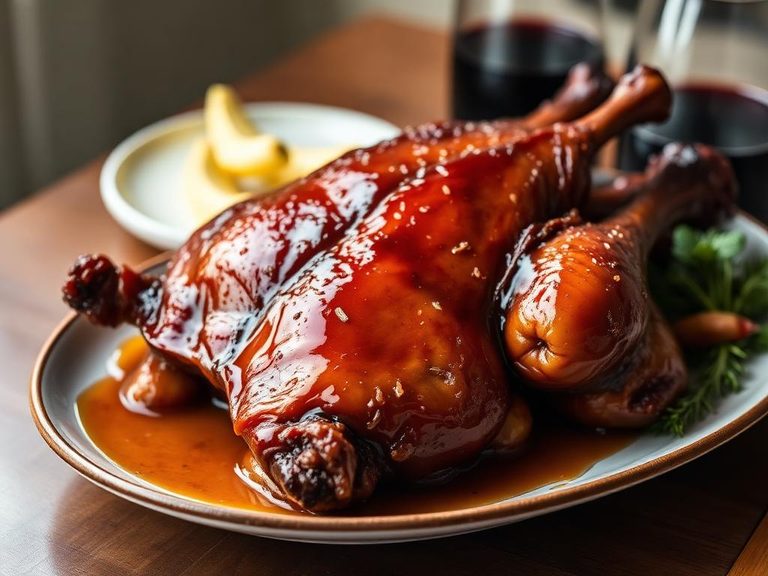
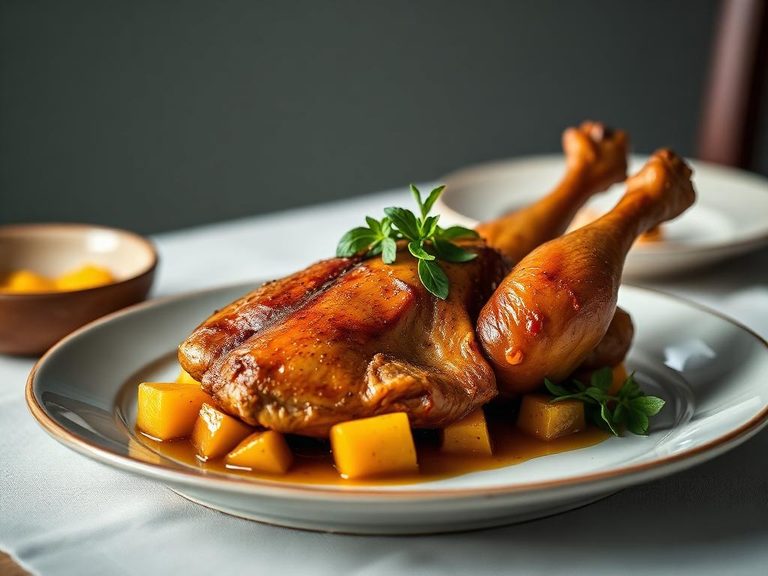
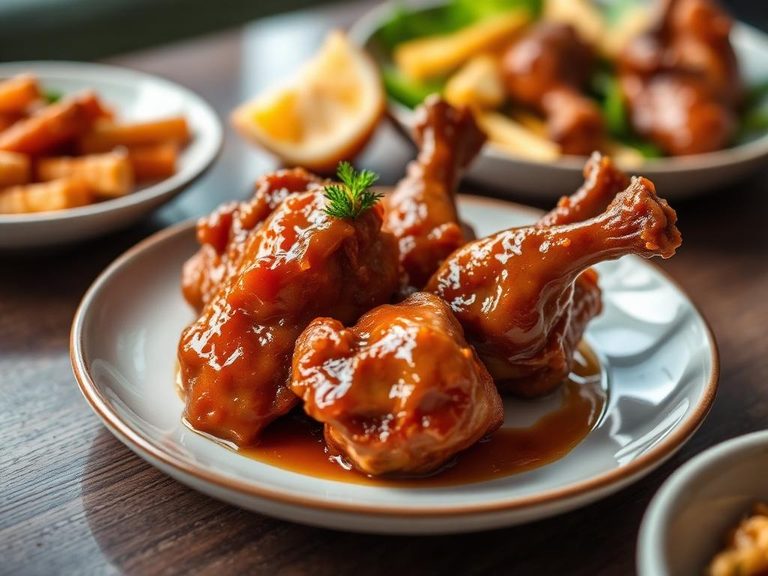
Tea-Smoked Duck is a classic Sichuan dish where a whole duck is marinated, steamed, and then smoked over a mixture of tea leaves, rice, and spices. The smoking process imparts a deep, aromatic flavor and a beautiful mahogany color to the skin, while the meat remains tender and juicy. It's often served sliced as an appetizer or a main course.
🍽️ Nutrition at a glance
This dish is high in protein and fat, with the skin contributing significantly to the calorie count. A typical serving provides a good source of iron and B vitamins, with an approximate range of 350-450 calories per 100-gram serving, depending on the cut and preparation.
Nutrition breakdown
| Calories | 400 kcal |
| Protein | 28 g |
| Carbs | 5 g |
| Fat | 30 g |
| Fiber | 0 g |
| Sugar | 1 g |
| Sodium | 800 mg |
| Iron | 3.5 mg |
| Zinc | 4.0 mg |
| Niacin (B3) | 8.0 mg |
| Vitamin B6 | 0.6 mg |
| Vitamin B12 | 0.5 mcg |
| Selenium | 25 mcg |
| Phosphorus | 280 mg |
| Cholesterol | 110 mg |
Per 1 serving (about 150 g) · estimated, varies by recipe
💡 What's interesting
The smoking technique, using tea leaves like lapsang souchong or jasmine, is a unique culinary method that infuses the duck with a complex, smoky aroma not found in other cooking styles. Nutritionally, the tea compounds may offer some antioxidant benefits, though the dish is primarily enjoyed for its rich flavor and cultural heritage.