

Taro soup
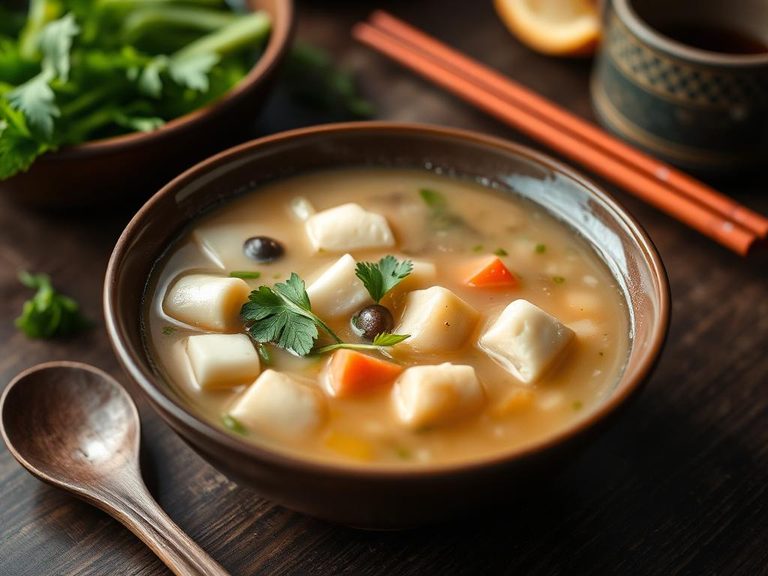
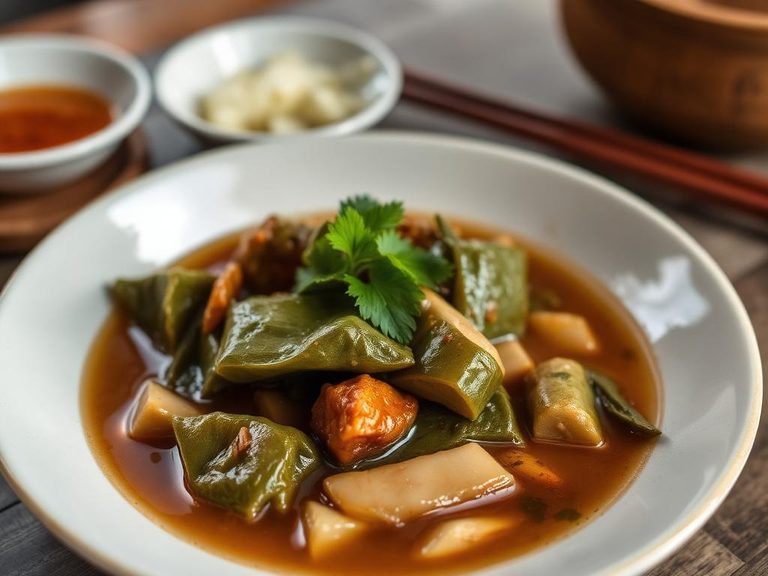
Taro soup, exemplified by the Filipino dish Sinigang sa Gabi, is a savory and sour stew featuring taro root as a key ingredient alongside various meats or seafood and vegetables. It is a beloved comfort food in the Philippines, known for its distinctive tangy flavor profile derived from tamarind or other souring agents.
🍳 View the full Taro soup recipe →
🍽️ Nutrition at a glance
This dish is primarily a source of complex carbohydrates from the taro root, with moderate protein depending on the meat used, and is generally low in fat. A typical serving provides a good amount of dietary fiber, potassium, and vitamin C, with a calorie range of approximately 250-350 per bowl.
Nutrition breakdown
| Calories | 120 kcal |
| Protein | 5 g |
| Carbs | 18 g |
| Fat | 3.5 g |
| Fiber | 4 g |
| Sugar | 3 g |
| Sodium | 650 mg |
| Potassium | 350 mg |
| Vitamin C | 15 mg |
| Vitamin A | 80 µg RAE |
| Iron | 1.2 mg |
| Calcium | 40 mg |
| Magnesium | 25 mg |
| Phosphorus | 90 mg |
| Vitamin B6 | 0.15 mg |
Per 1 cup (240 g) · estimated, varies by recipe
💡 What's interesting
Culturally, Sinigang is often considered the unofficial national dish of the Philippines, representing the Filipino palate's preference for sour flavors. Nutritionally, taro root is a unique starch that contains resistant starch, which can benefit gut health and help regulate blood sugar levels.
🍽️ Related dishes


AI estimate may be inaccurate · Terms