

Tagines and Stews
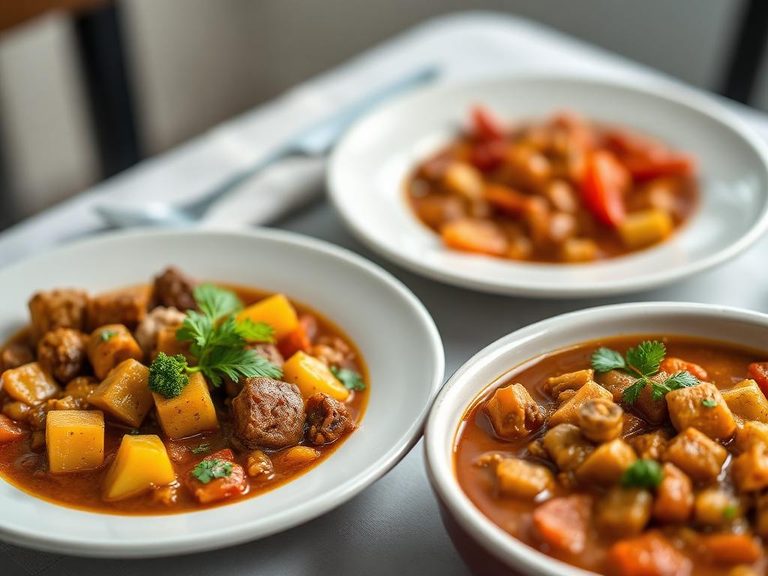
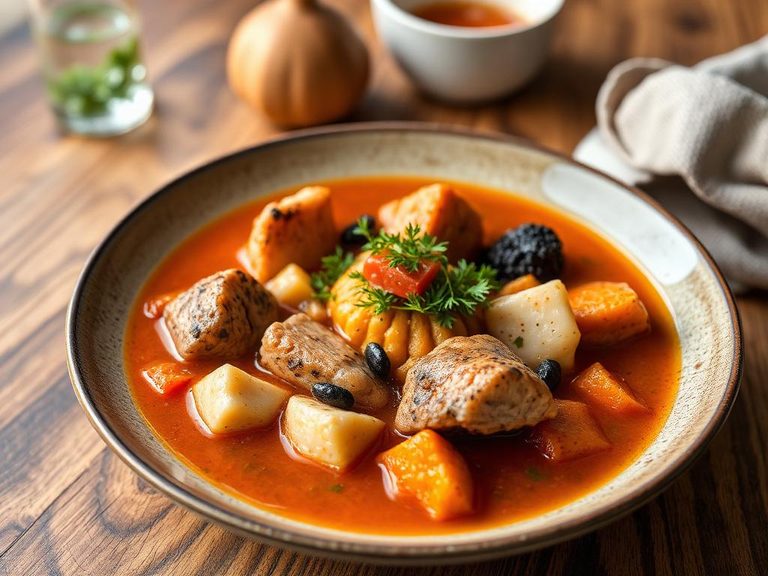
Tagines and stews are slow-cooked, aromatic dishes originating from North Africa and the Middle East, characterized by tender meats or vegetables simmered with spices, dried fruits, and nuts in a conical clay pot. They typically feature ingredients like lamb, chicken, chickpeas, apricots, olives, and warming spices such as cumin, coriander, and saffron.
🍳 View the full Tagines and Stews recipe →
🍽️ Nutrition at a glance
These dishes are generally high in protein from the meat or legumes, with moderate fat content from cooking oils or nuts, and can be carb-rich if served with couscous or bread. They provide essential nutrients like iron, fiber, and vitamins from vegetables and herbs, with a typical serving ranging from 400-600 calories depending on ingredients.
Nutrition breakdown
| Calories | 250 kcal |
| Protein | 18 g |
| Carbs | 20 g |
| Fat | 10 g |
| Fiber | 4 g |
| Sugar | 5 g |
| Sodium | 650 mg |
| Potassium | 450 mg |
| Vitamin A | 80 mcg |
| Vitamin C | 15 mg |
| Iron | 3.5 mg |
| Calcium | 50 mg |
| Vitamin B6 | 0.4 mg |
| Magnesium | 40 mg |
| Zinc | 3 mg |
Per 1 cup (240 g) · estimated, varies by recipe
💡 What's interesting
The conical tagine pot is ingeniously designed to trap steam, creating a self-basting cycle that keeps food moist and infuses deep flavors, reflecting centuries of Berber culinary innovation. Nutritionally, the slow-cooking method helps break down tough fibers and meld spices, enhancing both digestibility and the bioavailability of nutrients.
🍽️ Related dishes
AI estimate may be inaccurate · Terms