Swede and apple casserole
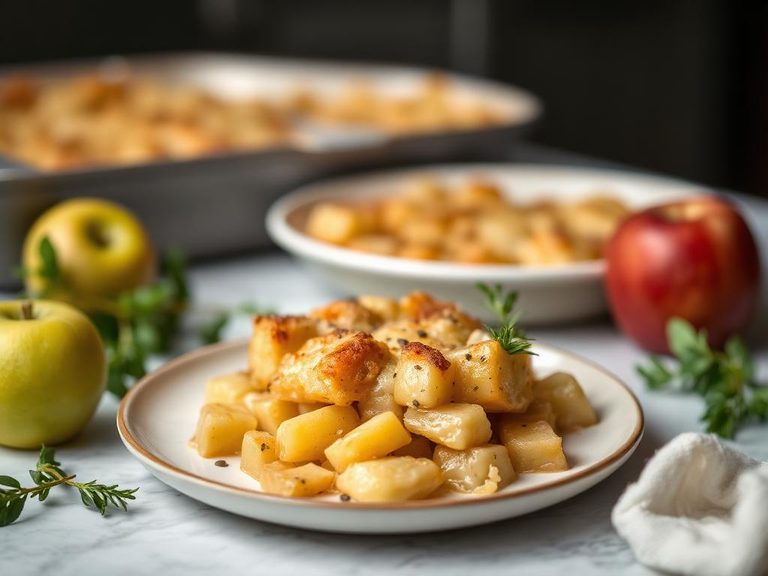
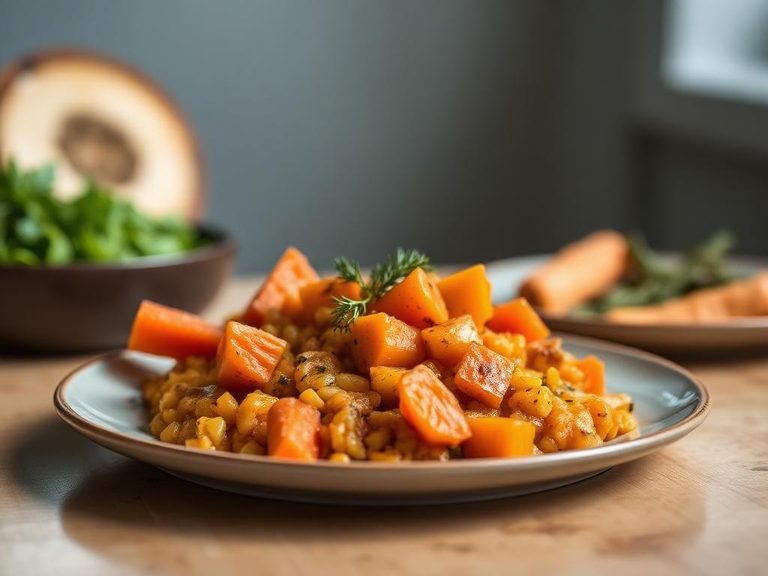
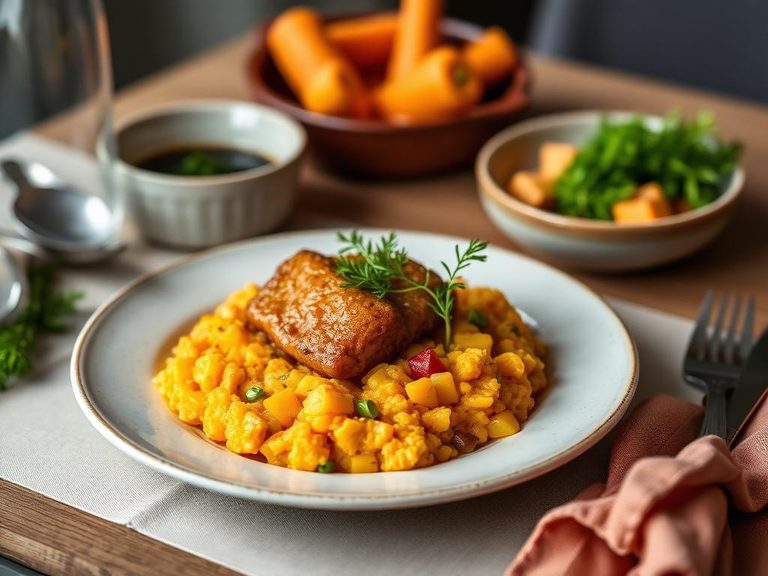
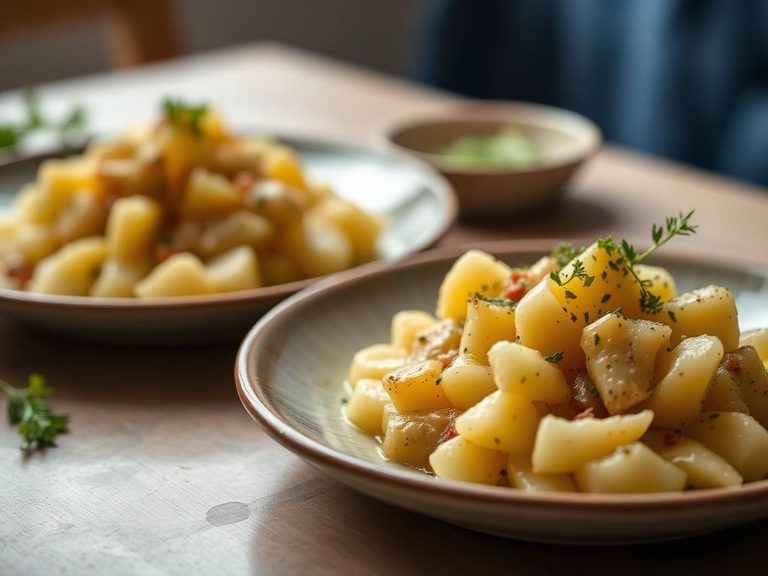
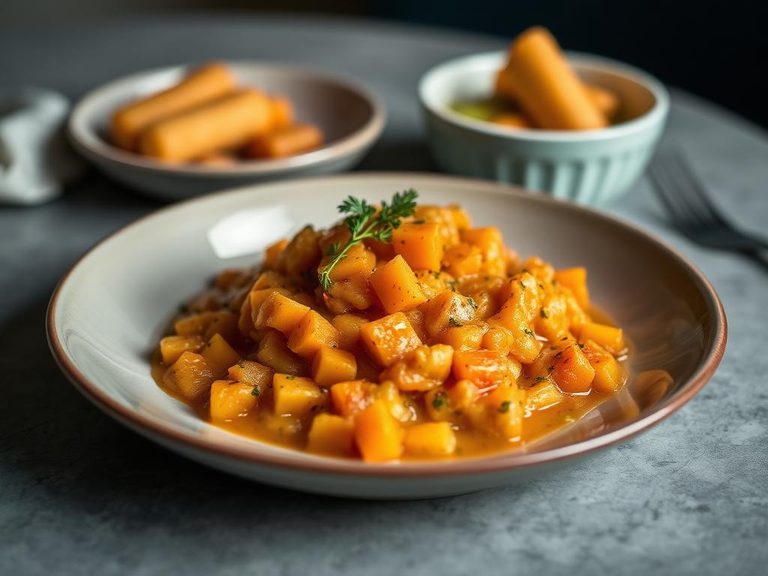
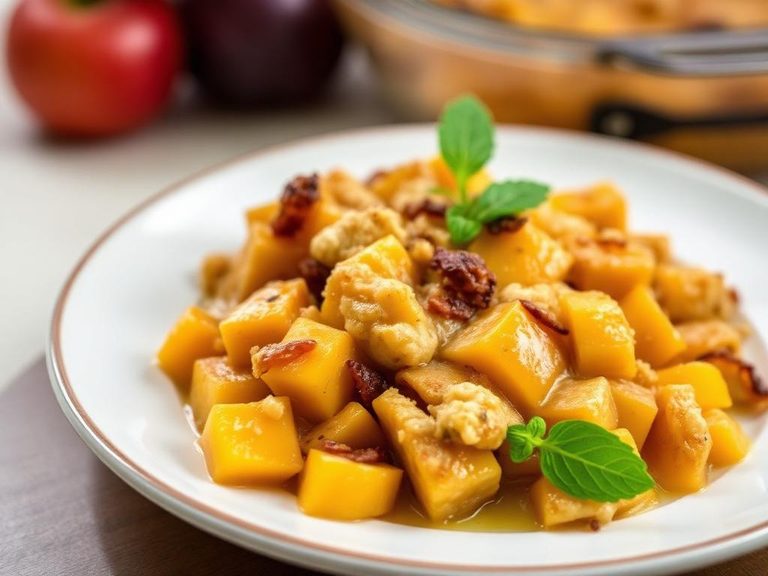
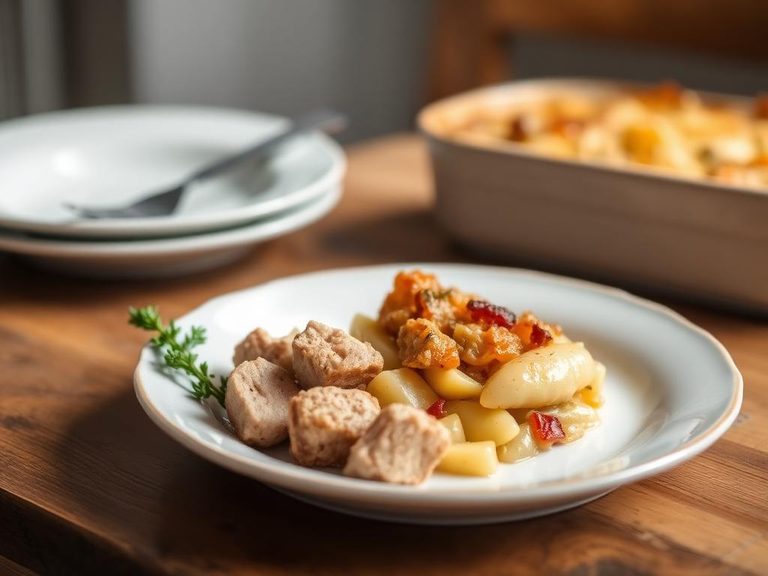
Swede and apple casserole is a comforting, sweet-savory side dish from Northern European and British cuisine. It features diced swede (rutabaga) and tart apples baked together, often with butter, sugar, and warming spices like cinnamon or nutmeg until tender and caramelized.
🍽️ Nutrition at a glance
This dish is primarily a source of carbohydrates from the starchy swede and fruit sugars, with a modest amount of fat from any added butter. It provides a good dose of vitamin C, potassium, and dietary fiber, with a typical serving containing roughly 150-200 calories.
Nutrition breakdown
| Calories | 120 kcal |
| Protein | 2.5 g |
| Carbs | 28 g |
| Fat | 1.5 g |
| Fiber | 5 g |
| Sugar | 18 g |
| Sodium | 40 mg |
| Vitamin C | 45 mg |
| Potassium | 420 mg |
| Vitamin A | 450 IU |
| Manganese | 0.5 mg |
| Vitamin B6 | 0.2 mg |
| Folate | 35 µg |
| Calcium | 55 mg |
| Iron | 0.8 mg |
Per 1 cup (240 g) · estimated, varies by recipe
💡 What's interesting
Culturally, it's a classic way to use autumn harvest vegetables, often served alongside roasts for holidays like Christmas. Nutritionally, it's a unique blend that offers the earthy, mineral-rich profile of a root vegetable with the bright, pectin-rich qualities of fruit.