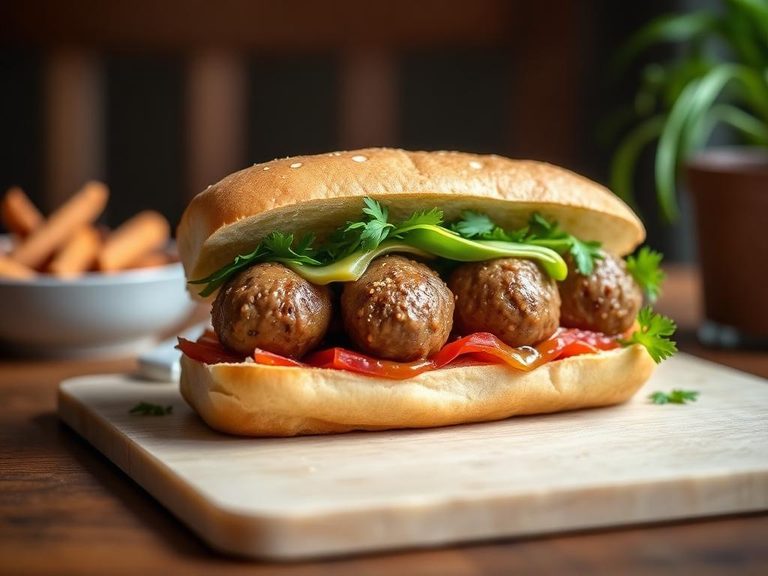
Submarine sandwich (sub)

A submarine sandwich, often called a 'sub,' is a long, hearty sandwich served on a baguette-style roll and typically filled with layers of deli meats, cheeses, lettuce, tomatoes, onions, and a variety of condiments. It originated in Italian-American communities in the northeastern United States during the early 20th century, with regional names like 'hoagie,' 'hero,' or 'grinder' reflecting local traditions.
🍽️ Nutrition at a glance
A typical sub is high in carbohydrates from the bread and can be high in fat depending on the meats, cheeses, and sauces used, though it also provides a good amount of protein from the fillings. A standard 6- to 8-inch sub generally ranges from 400 to 800 calories, with significant contributions from sodium and fiber if loaded with vegetables.
Nutrition breakdown
| Calories | 550 kcal |
| Protein | 28 g |
| Carbs | 48 g |
| Fat | 26 g |
| Fiber | 3 g |
| Sugar | 7 g |
| Sodium | 1200 mg |
| Calcium | 150 mg |
| Iron | 4 mg |
| Potassium | 350 mg |
| Vitamin A | 100 µg |
| Vitamin C | 10 mg |
| Thiamin (B1) | 0.5 mg |
| Niacin (B3) | 6 mg |
| Folate | 80 µg |
Per 1 sandwich (240 g) · estimated, varies by recipe
💡 What's interesting
Culturally, the sub is a symbol of American casual dining and has inspired global variations, from the Italian 'panino' to the Vietnamese 'bánh mì,' showcasing how immigrant cuisines adapt. Nutritionally, it can be customized to be a balanced meal with lean proteins and plenty of veggies, making it a popular choice for both convenience and personalization.