

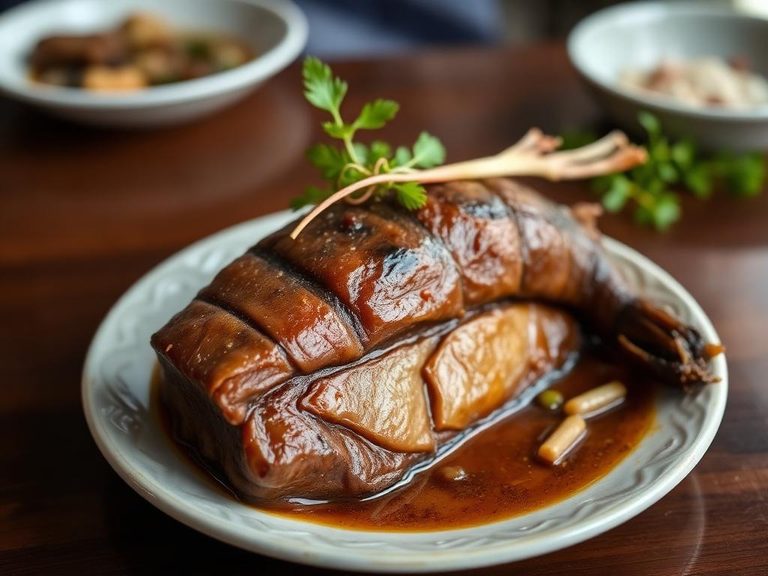
Stewed or boiled with traditional herbs
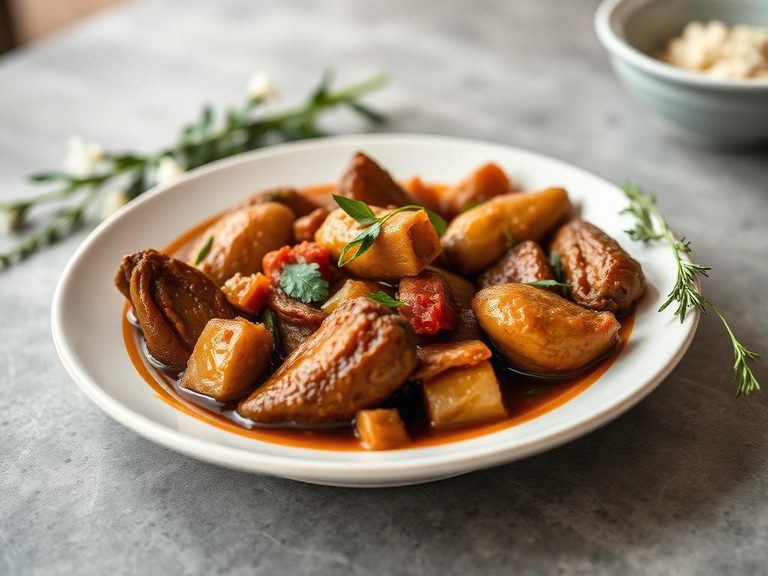
This is a nourishing, slow-cooked broth-based dish, often featuring chicken, pork, or beef simmered with a blend of traditional Chinese herbs like astragalus, goji berries, and ginger. It is a staple of home cooking and medicinal cuisine across China, particularly in Cantonese and Hakka culinary traditions. The dish is valued for its warming properties and is often prepared to support health during seasonal changes.
🍽️ Nutrition at a glance
The dish is typically high in protein from the meat and low in carbohydrates, with a moderate fat content that depends on the cut used. It provides a rich source of minerals like potassium and iron, along with herbal compounds, and a standard serving contains roughly 250-350 calories.
Nutrition breakdown
| Calories | 300 kcal |
| Protein | 25 g |
| Carbs | 8 g |
| Fat | 18 g |
| Fiber | 2 g |
| Sugar | 3 g |
| Sodium | 650 mg |
| Potassium | 420 mg |
| Iron | 2.5 mg |
| Zinc | 3.8 mg |
| Niacin (B3) | 6 mg |
| Phosphorus | 210 mg |
| Selenium | 18 mcg |
| Vitamin B6 | 0.4 mg |
| Copper | 0.2 mg |
Per 1 bowl (350 g) · estimated, varies by recipe
💡 What's interesting
Culturally, this dish embodies the principle of 'food as medicine' in Chinese tradition, where specific herb combinations are chosen to balance the body's 'qi' and address seasonal needs. Nutritionally, the slow simmering process extracts minerals and flavors from both the meat and herbs, creating a highly digestible and hydrating broth.
🍽️ Related dishes
AI estimate may be inaccurate · Terms