Standalone bottle feeding
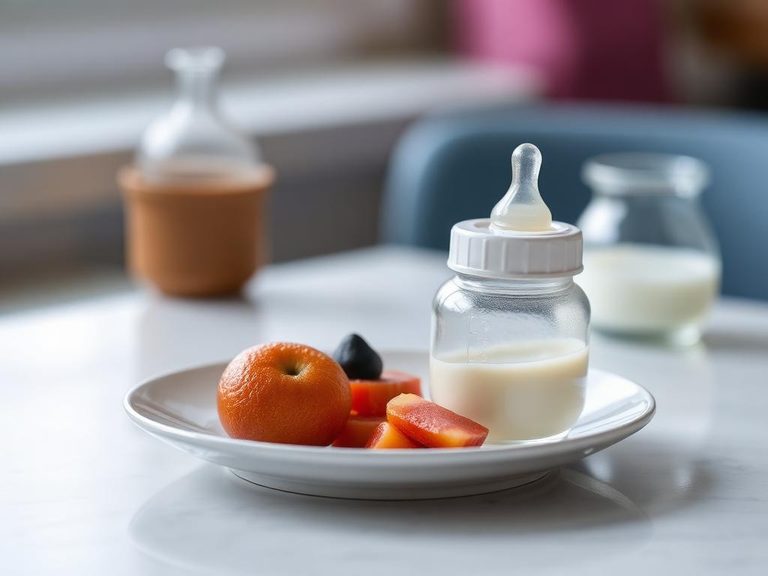
Standalone bottle feeding is not a culinary dish, but a method of feeding an infant with expressed breast milk or infant formula using a bottle. It involves providing nutrition directly from a bottle, separate from direct breastfeeding, and is a common practice for infants worldwide.
🍽️ Nutrition at a glance
The nutritional content is entirely dependent on what is in the bottle—either breast milk or formula. Breast milk provides a balanced mix of fats, proteins, and carbohydrates, while formula is designed to mimic this profile. A typical 4-ounce (120ml) serving of infant formula or breast milk contains roughly 80-100 calories.
Nutrition breakdown
| Calories | 90 kcal |
| Protein | 2.2 g |
| Carbs | 10.5 g |
| Fat | 4.8 g |
| Fiber | 0 g |
| Sugar | 10.5 g |
| Sodium | 35 mg |
| Calcium | 80 mg |
| Phosphorus | 50 mg |
| Vitamin D | 1.0 mcg |
| Iron | 0.8 mg |
| Vitamin A | 60 mcg |
| Vitamin C | 8 mg |
| Potassium | 110 mg |
| Zinc | 0.5 mg |
Per 1 bottle (120 g) · estimated, varies by recipe
💡 What's interesting
This method allows for flexibility and shared feeding responsibilities, enabling other caregivers to bond with the infant. Nutritionally, it ensures precise measurement of intake, which is crucial for monitoring an infant's growth.