Some commercial cake mixes
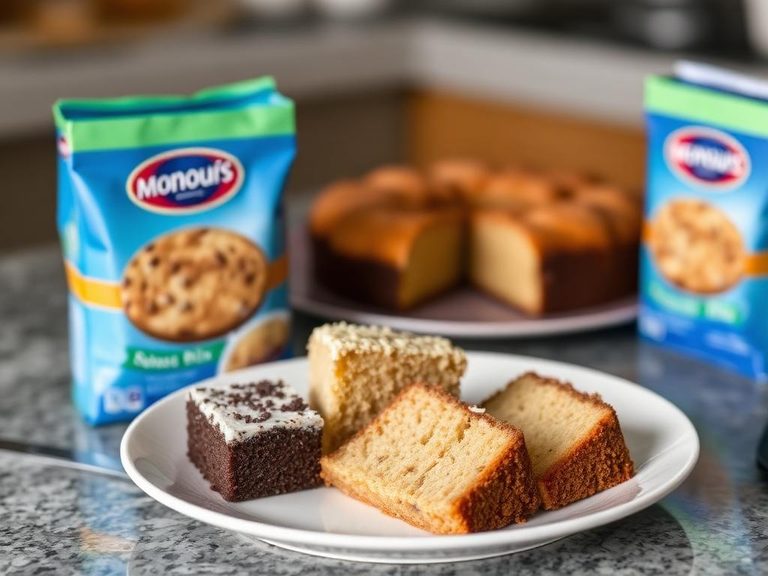
Commercial cake mixes are pre-packaged, shelf-stable dry blends designed for convenient home baking. They typically contain refined wheat flour, sugar, leavening agents, and artificial flavors, requiring only the addition of eggs, oil, and water to prepare. This product originated and gained widespread popularity in the United States during the mid-20th century.
🍽️ Nutrition at a glance
A standard slice of cake made from a commercial mix is high in carbohydrates and added sugars, with a moderate amount of fat. It primarily provides quick energy from calories, which typically range from 250 to 350 kcal per serving.
Nutrition breakdown
| Calories | 320 kcal |
| Protein | 3 g |
| Carbs | 52 g |
| Fat | 12 g |
| Fiber | 0.5 g |
| Sugar | 30 g |
| Sodium | 310 mg |
| Iron | 2.5 mg |
| Niacin (B3) | 2.0 mg |
| Folic Acid | 60 mcg |
| Thiamin (B1) | 0.2 mg |
| Riboflavin (B2) | 0.15 mg |
| Vitamin B6 | 0.1 mg |
| Calcium | 40 mg |
| Potassium | 50 mg |
Per 1 slice (approx. 80 g) · estimated, varies by recipe
💡 What's interesting
The introduction of commercial cake mixes in the 1950s is a classic case study in consumer psychology, as initial low sales improved dramatically after companies modified instructions to require adding eggs, giving bakers a sense of participation. Nutritionally, they are often fortified with synthetic vitamins to replace some nutrients lost during the heavy processing of the flour.