

Soda Bread
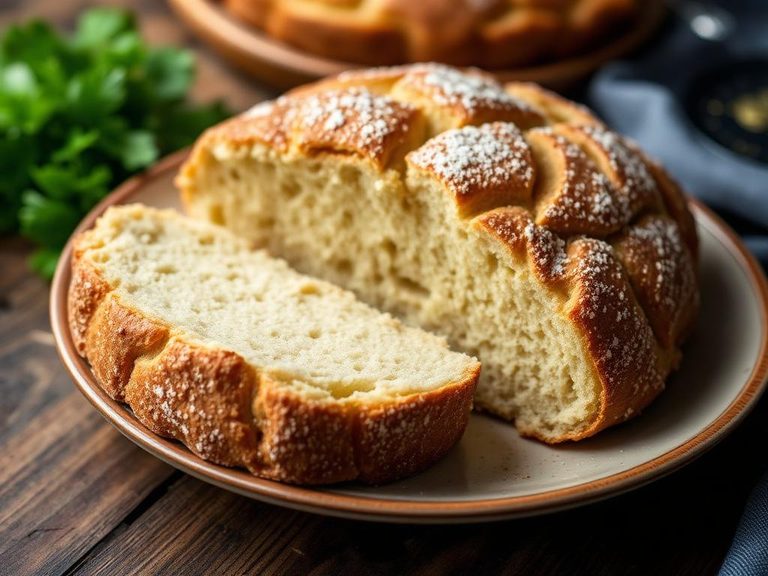
Soda bread is a quick bread that uses baking soda as a leavening agent instead of yeast, resulting in a dense, tender crumb. Its core ingredients are typically flour, baking soda, salt, and buttermilk, which provides the acid needed for the soda to react. This rustic loaf is a staple of Irish cuisine, though similar versions exist across the British Isles.
🍽️ Nutrition at a glance
As a bread made primarily from flour and buttermilk, it is high in carbohydrates and provides a moderate amount of protein, with fat content depending on added butter. A typical slice offers around 180-220 calories, along with some calcium from the buttermilk and B vitamins from the flour.
Nutrition breakdown
| Calories | 175 kcal |
| Protein | 4.5 g |
| Carbs | 33 g |
| Fat | 2.5 g |
| Fiber | 1.8 g |
| Sugar | 3 g |
| Sodium | 380 mg |
| Iron | 2.1 mg |
| Calcium | 45 mg |
| Potassium | 85 mg |
| Thiamin (B1) | 0.3 mg |
| Niacin (B3) | 2.8 mg |
| Folate | 55 µg |
| Magnesium | 15 mg |
| Phosphorus | 60 mg |
Per 1 slice (60 g) · estimated, varies by recipe
💡 What's interesting
Culturally, soda bread is deeply tied to Irish history and home cooking, born from the practical need for a fast, oven-free bread that could be made with simple, available ingredients. Its unique chemistry relies on the immediate reaction between the acidic buttermilk and alkaline baking soda, meaning the dough must be baked right away for maximum rise.
🍽️ Related dishes


AI estimate may be inaccurate · Terms