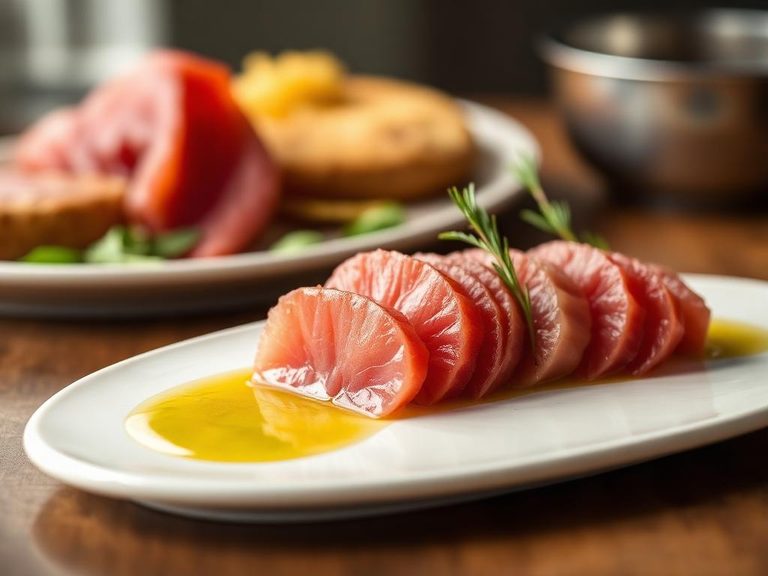
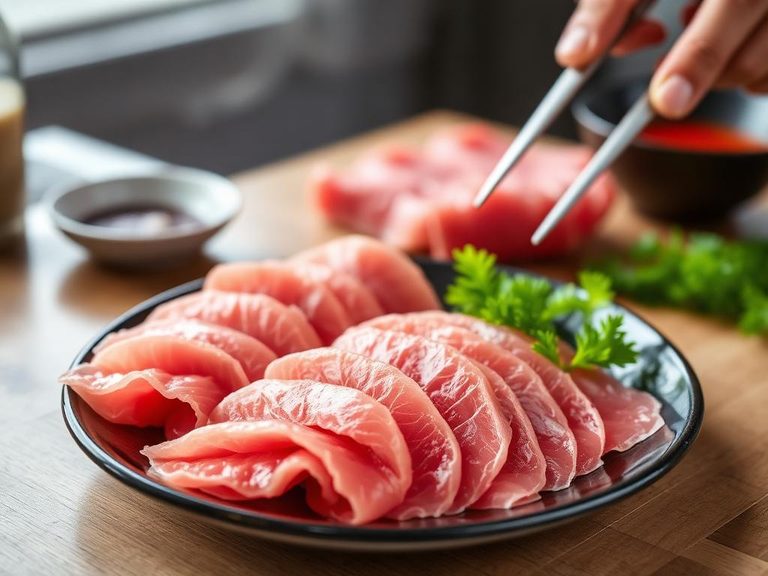
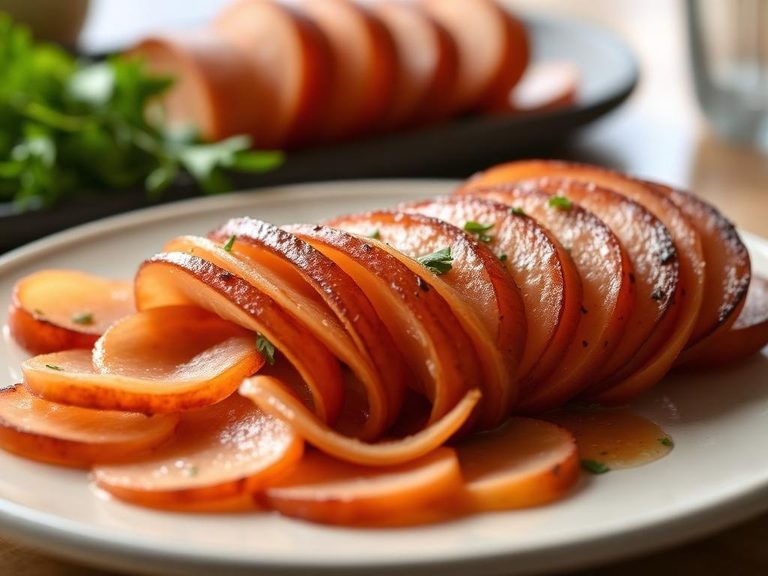
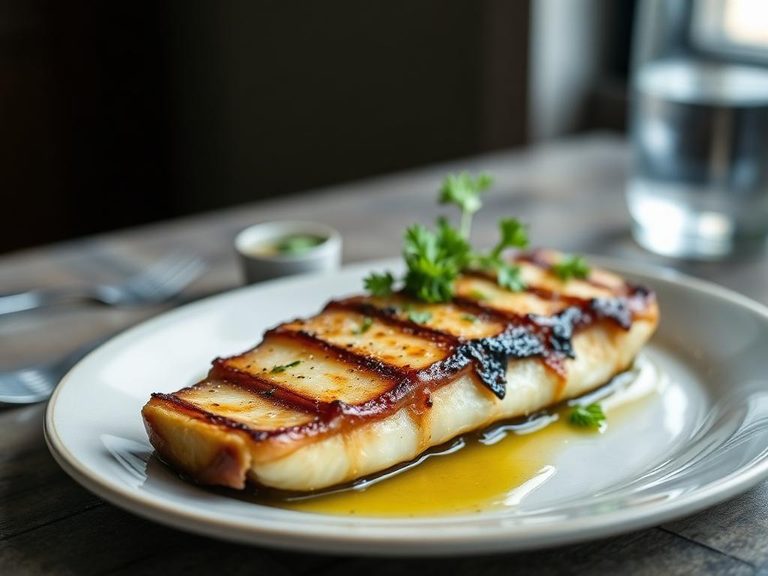
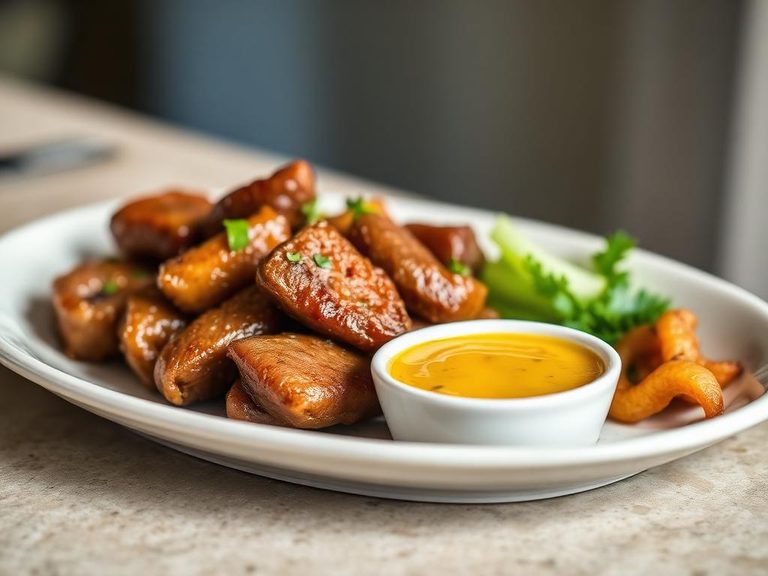
Sliced thin and served with traditional fats like seal oil
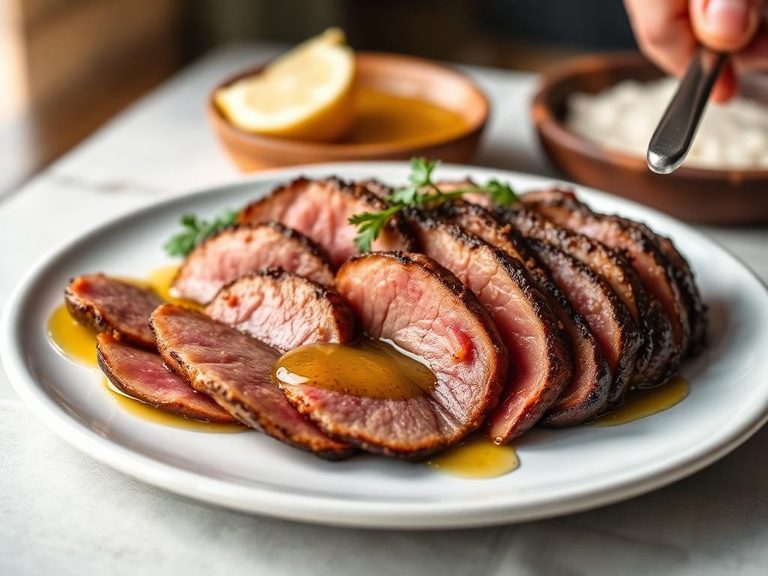
This dish, often called 'Muktuk' or 'Inuit Sashimi,' consists of raw, frozen-thinly sliced skin and blubber from marine mammals, most commonly narwhal, beluga, or bowhead whale. It is a traditional food of Inuit and other Arctic Indigenous peoples, served with a side of traditional animal fats like seal oil for dipping. The preparation is simple, highlighting the natural flavors and textures of the Arctic sea.
🍽️ Nutrition at a glance
This is an extremely high-fat, high-protein, and virtually zero-carbohydrate food, providing dense calories and essential nutrients. A typical serving is a significant source of Vitamin C, Vitamin D, and Omega-3 fatty acids, with a rough calorie range of 200-400 kcal per 100g depending on the specific animal and fat used.
Nutrition breakdown
| Calories | 320 kcal |
| Protein | 14 g |
| Carbs | 0 g |
| Fat | 28 g |
| Fiber | 0 g |
| Sugar | 0 g |
| Sodium | 180 mg |
| Vitamin C | 18 mg |
| Vitamin D | 10 µg |
| Omega-3 (EPA+DHA) | 2.5 g |
| Selenium | 32 µg |
| Vitamin B12 | 8 µg |
| Iron | 2.1 mg |
| Phosphorus | 250 mg |
| Zinc | 3.4 mg |
Per 100 g (about 3.5 oz) · estimated, varies by recipe
💡 What's interesting
Culturally, it is a vital source of nutrients in a harsh environment where plant foods are scarce. Nutritionally, it is one of the rare natural food sources of Vitamin C for Arctic peoples, crucial for preventing scurvy, and its high-fat content provides essential energy for survival in extreme cold.