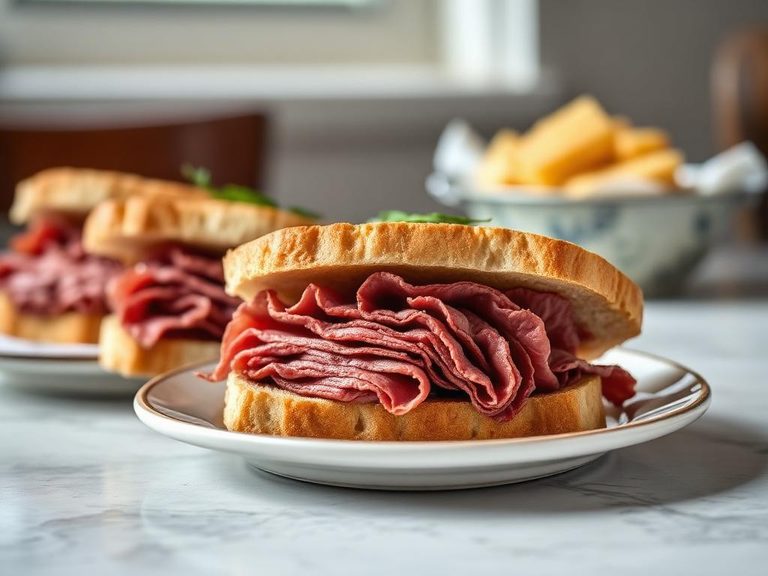
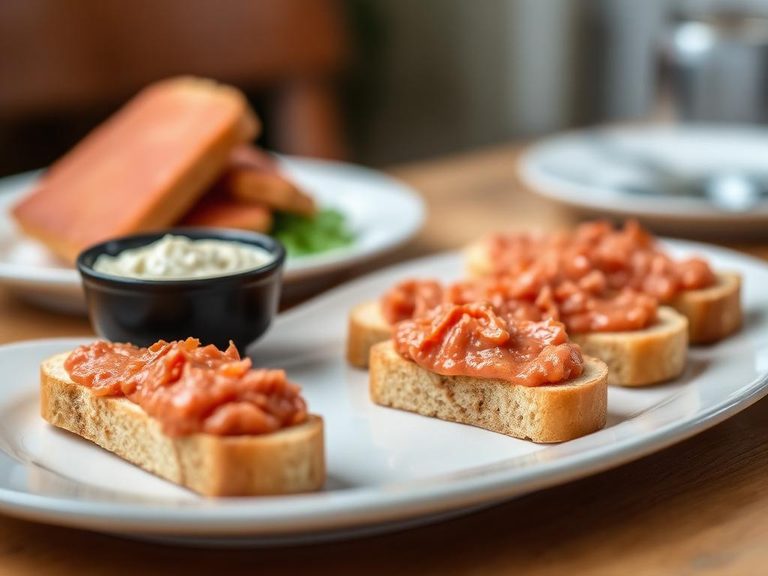
Sliced thinly as a high-protein snack
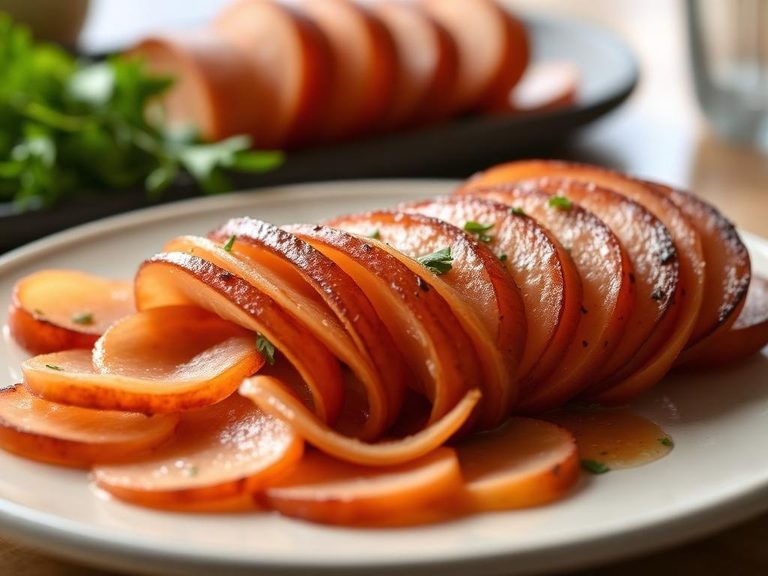
This refers to thinly sliced, dried, and seasoned beef jerky, a popular high-protein snack with roots in many cultures, from Native American pemmican to Mongolian borts. The dish typically consists of lean beef (or sometimes venison) marinated in a mixture of soy sauce, Worcestershire sauce, spices, and sometimes sugar or honey, then dehydrated until chewy.
🍽️ Nutrition at a glance
It is exceptionally high in protein and low in carbohydrates, making it a staple for hikers, athletes, and those seeking a savory, filling snack. A typical serving provides a significant amount of iron, zinc, and B vitamins, with a calorie count that can vary widely based on the marinade's sugar and fat content.
Nutrition breakdown
| Calories | 116 kcal |
| Protein | 9.4 g |
| Carbs | 3.1 g |
| Fat | 7.3 g |
| Fiber | 0.5 g |
| Sugar | 2.5 g |
| Sodium | 485 mg |
| Iron | 1.2 mg |
| Zinc | 2.3 mg |
| Niacin (B3) | 3.5 mg |
| Vitamin B6 | 0.2 mg |
| Vitamin B12 | 0.5 mcg |
| Phosphorus | 105 mg |
| Potassium | 150 mg |
| Selenium | 10.2 mcg |
Per 1 ounce (28 g) · estimated, varies by recipe
💡 What's interesting
Historically, jerky was a vital survival food for indigenous peoples and explorers, as the dehydration process removes moisture to prevent spoilage without refrigeration. Nutritionally, it's a concentrated source of complete protein, but the sodium content can be very high, so it's often recommended to drink water alongside it.