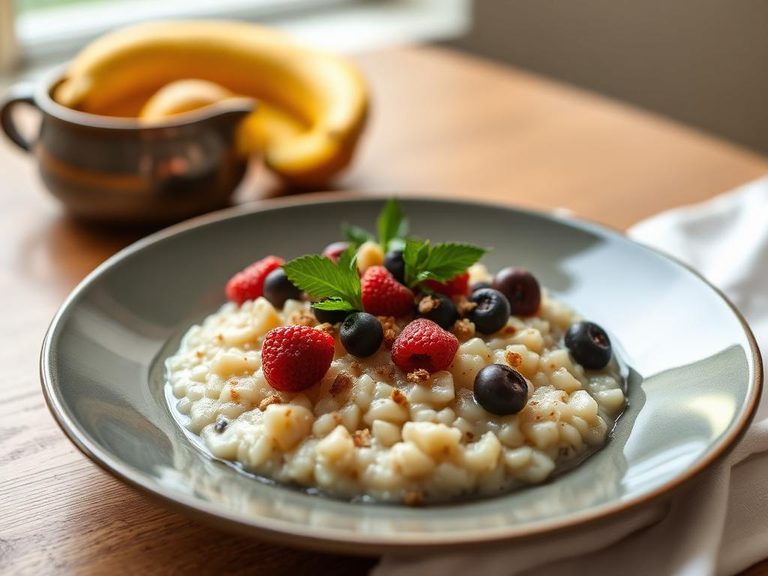
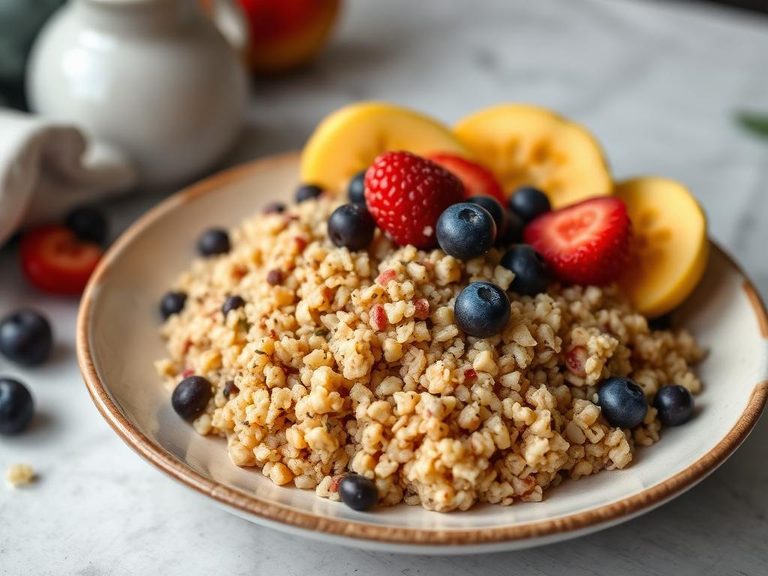
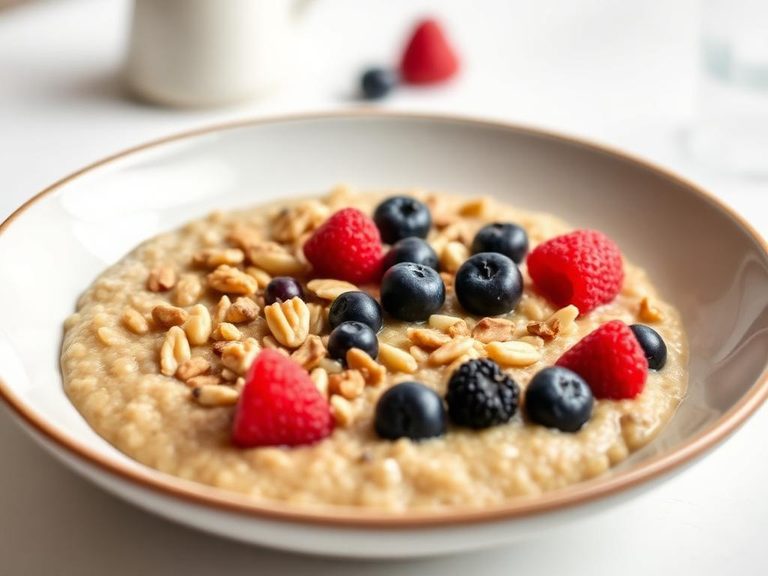
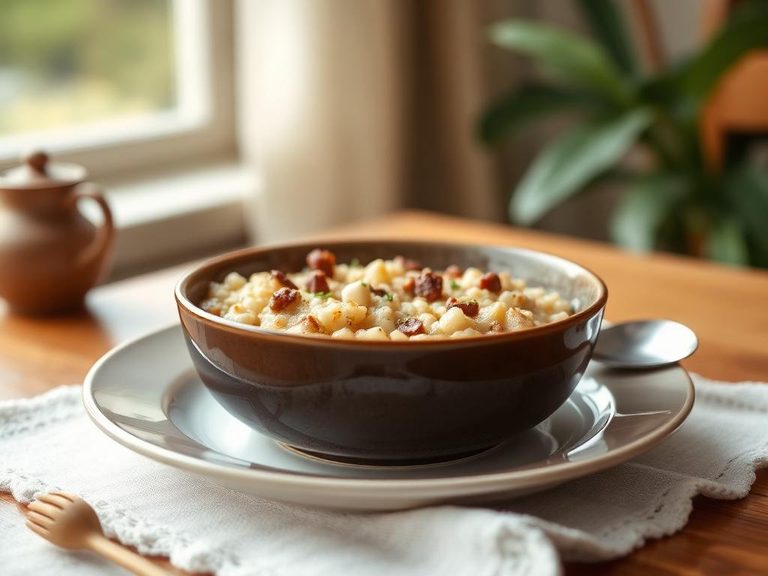
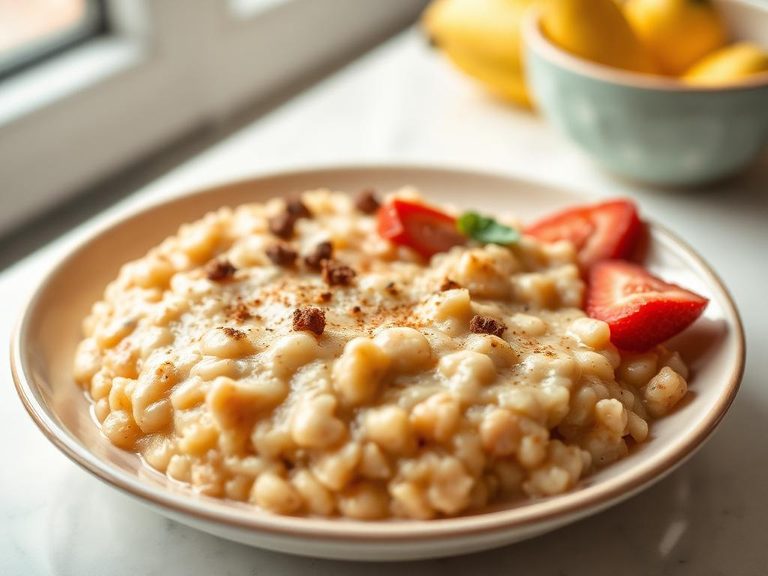
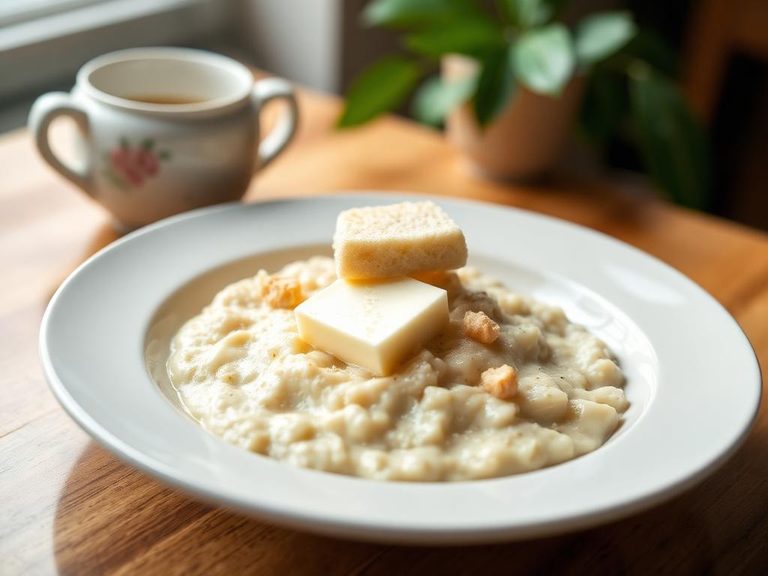
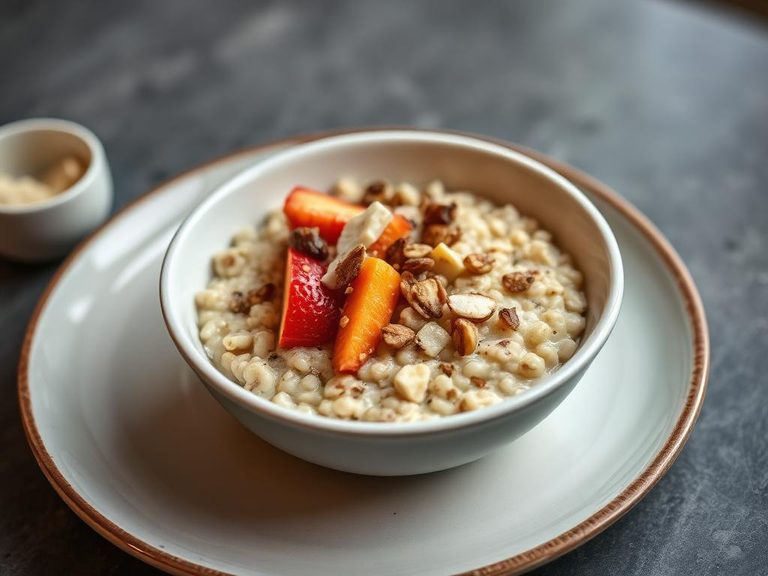
Savory breakfast porridge
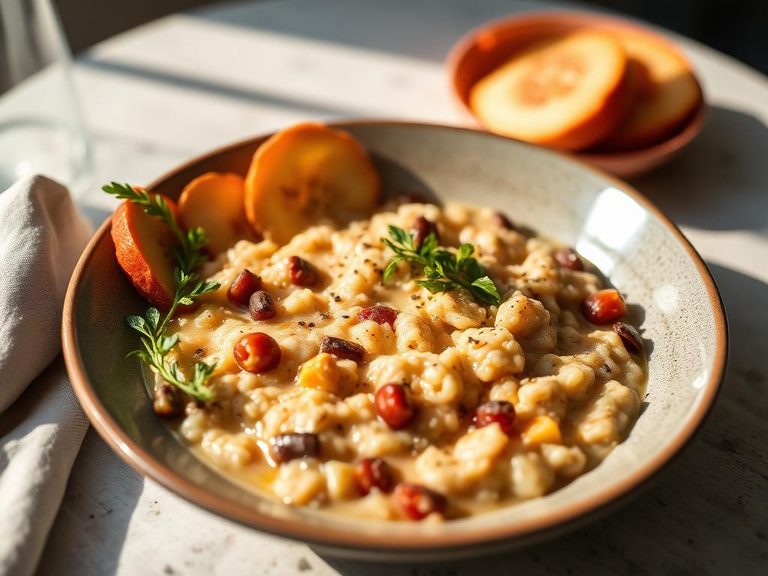
Savory breakfast porridge is a warm, comforting dish made from grains like rice, millet, or oats cooked in water or broth, often enriched with eggs, vegetables, and savory seasonings. It is a popular and adaptable breakfast choice across many cultures, particularly in East and Southeast Asia, where it is known as congee or jook. The dish is valued for its gentle texture and ability to be customized with local ingredients.
🍽️ Nutrition at a glance
This dish is primarily a source of complex carbohydrates for sustained energy, with moderate protein if eggs or meat are added, and is generally low in fat. Key nutrients include B vitamins, iron, and potassium from the grains and added ingredients, with a typical serving providing around 200-300 calories.
Nutrition breakdown
| Calories | 250 kcal |
| Protein | 8 g |
| Carbs | 40 g |
| Fat | 5 g |
| Fiber | 3 g |
| Sugar | 1 g |
| Sodium | 450 mg |
| Potassium | 280 mg |
| Iron | 2.5 mg |
| Magnesium | 40 mg |
| Phosphorus | 120 mg |
| Thiamin (B1) | 0.3 mg |
| Niacin (B3) | 4 mg |
| Folate | 50 mcg |
| Selenium | 10 mcg |
Per 1 cup (240 g) · estimated, varies by recipe
💡 What's interesting
Culturally, savory porridge is often seen as a healing food, easily digestible for the sick or elderly, and is a traditional comfort food for breakfast or late-night meals. Its unique quality lies in its versatility—it can be a simple, frugal meal or a lavish one with premium toppings, reflecting both everyday sustenance and culinary tradition.