

Sauerkraut and Sausage
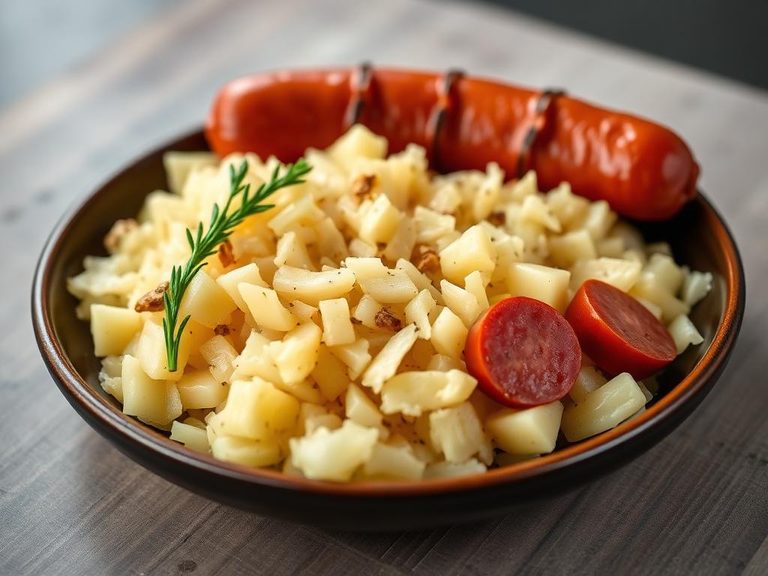
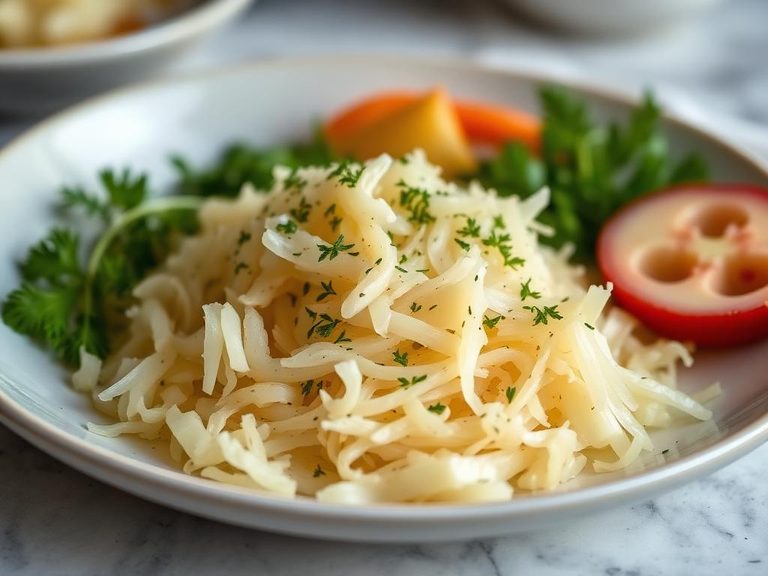
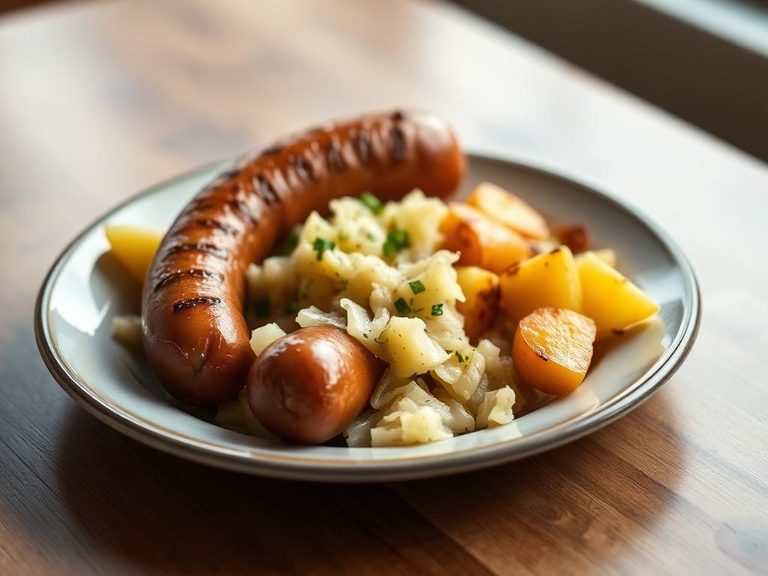
Sauerkraut and Sausage is a hearty, tangy dish of fermented cabbage and smoked or fresh sausage, a staple in German and Central European cuisine. It typically features thinly shredded cabbage fermented with lactic acid bacteria, paired with varieties like bratwurst or kielbasa, often simmered together or served side-by-side.
🍽️ Nutrition at a glance
This dish is high in protein and fat from the sausage, with moderate carbs from the sauerkraut, and is rich in vitamin C, vitamin K, and probiotics from the fermentation. A typical serving (about 1.5 cups) provides roughly 350-450 calories.
Nutrition breakdown
| Calories | 340 kcal |
| Protein | 14 g |
| Carbs | 16 g |
| Fat | 24 g |
| Fiber | 4 g |
| Sugar | 6 g |
| Sodium | 1200 mg |
| Vitamin C | 20 mg |
| Vitamin B12 | 1.2 mcg |
| Iron | 2.5 mg |
| Potassium | 350 mg |
| Phosphorus | 180 mg |
| Selenium | 18 mcg |
| Niacin (B3) | 4.5 mg |
| Zinc | 2.8 mg |
Per 1 cup (240 g) · estimated, varies by recipe
💡 What's interesting
Sauerkraut's fermentation process not only preserves the cabbage but also creates beneficial probiotics that support gut health, making this a historically important dish for nutrition during long winters. Its pairing with sausage reflects a practical, flavorful way to balance rich meats with acidic, nutrient-dense vegetables.
🍽️ Related dishes



AI estimate may be inaccurate · Terms