

Sauerkraut
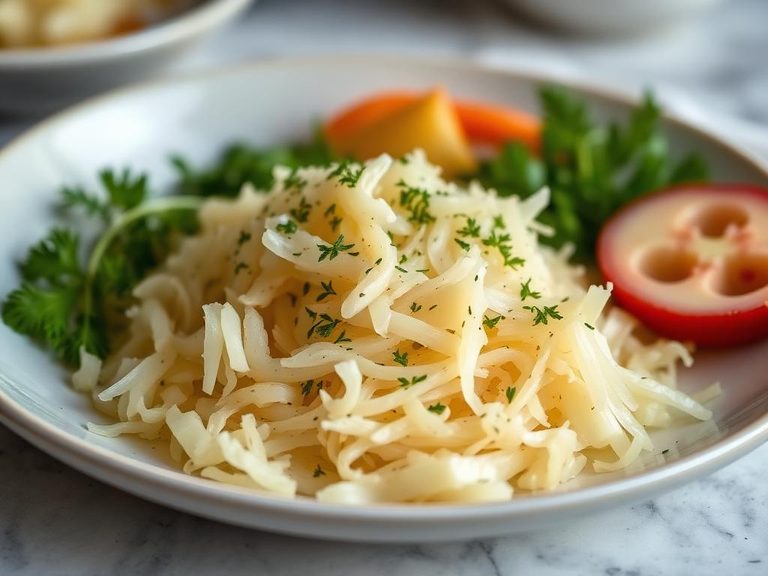
Sauerkraut is a traditional fermented cabbage dish, finely shredded and preserved through a process of lacto-fermentation. It typically consists of just cabbage and salt, originating in Germany and widely popular across Central and Eastern Europe.
🍳 View the full Sauerkraut recipe →
🍽️ Nutrition at a glance
Sauerkraut is low in calories, fat, and protein, but a good source of dietary fiber and vitamins C and K. A typical 1-cup serving provides around 27 calories and significant gut-friendly probiotics.
Nutrition breakdown
| Calories | 27 kcal |
| Protein | 1.3 g |
| Carbs | 4.3 g |
| Fat | 0.1 g |
| Fiber | 2.9 g |
| Sugar | 1.8 g |
| Sodium | 939 mg |
| Vitamin C | 20 mg |
| Vitamin K | 15 mcg |
| Iron | 1.5 mg |
| Potassium | 250 mg |
| Sodium | 939 mg |
| Folate | 40 mcg |
| Vitamin B6 | 0.13 mg |
| Manganese | 0.2 mg |
Per 1 cup (140 g) · estimated, varies by recipe
💡 What's interesting
Its unique fermentation process not only preserves the cabbage but also creates beneficial probiotics, making it a historically important food for gut health and nutrition during long winters.
🍽️ Related dishes








AI estimate may be inaccurate · Terms