Multi-grain pilaf
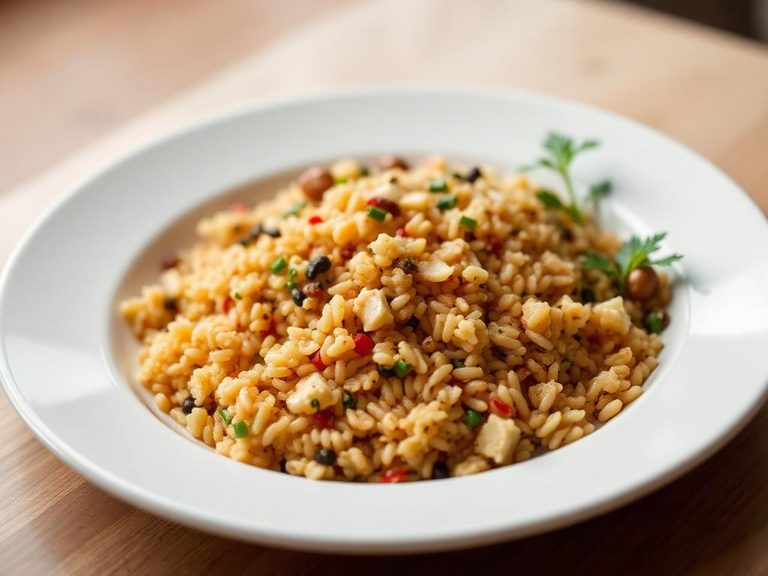
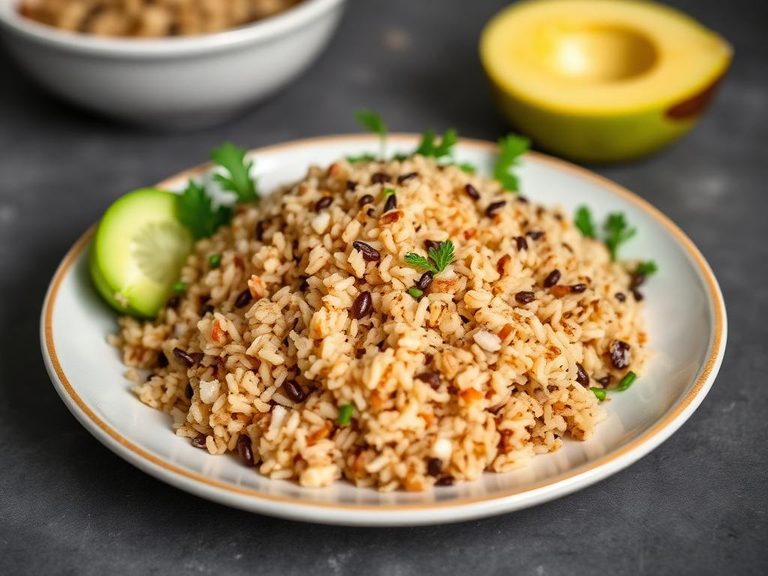
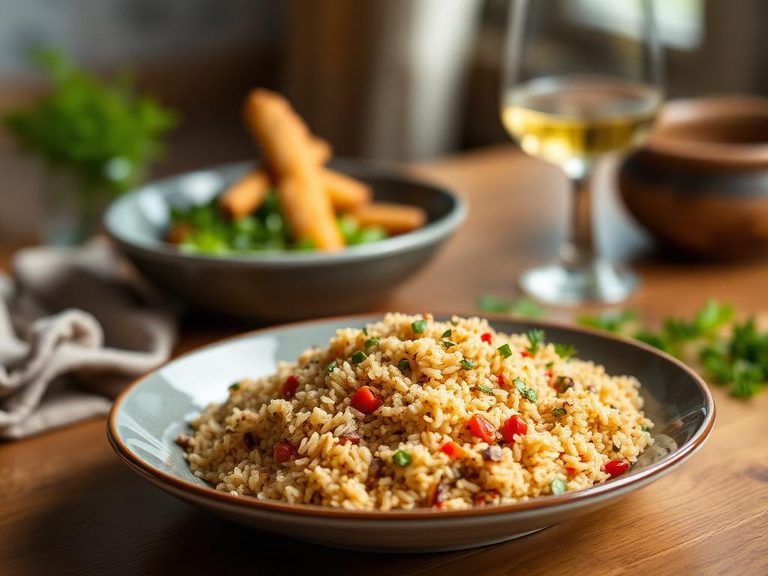
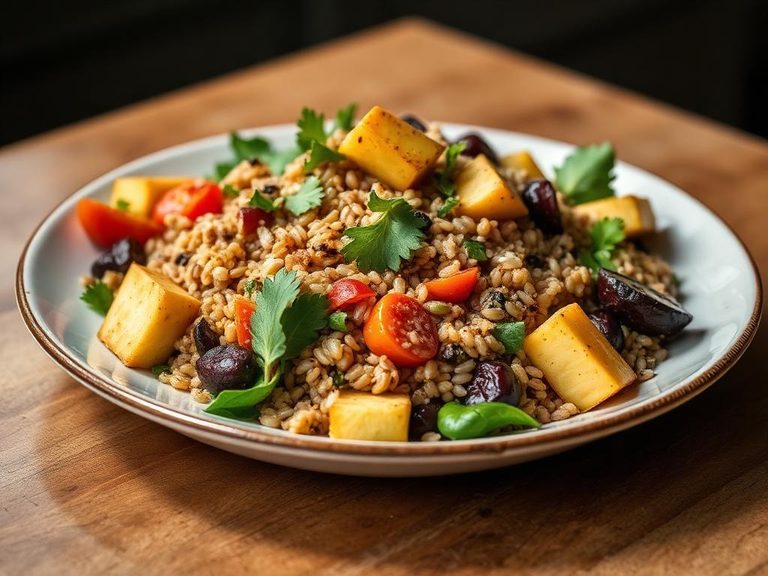
Multi-grain pilaf is a hearty, savory dish made by cooking a blend of whole grains—such as brown rice, quinoa, barley, and farro—with aromatic vegetables, herbs, and broth. It originates from various culinary traditions across the Middle East, Central Asia, and the Mediterranean, where grain-based dishes are a staple. The mix of grains gives it a delightful, chewy texture and a nutty, earthy flavor profile.
🍽️ Nutrition at a glance
This dish is primarily a complex carbohydrate source, providing sustained energy, with moderate protein and generally low fat unless prepared with added oils or fatty broths. It is rich in dietary fiber, B vitamins, and essential minerals like magnesium and iron, with a typical serving containing around 250-350 calories.
Nutrition breakdown
| Calories | 310 kcal |
| Protein | 8 g |
| Carbs | 58 g |
| Fat | 6 g |
| Fiber | 7 g |
| Sugar | 3 g |
| Sodium | 480 mg |
| Magnesium | 95 mg |
| Phosphorus | 220 mg |
| Iron | 3.2 mg |
| Zinc | 2.8 mg |
| Thiamin (B1) | 0.4 mg |
| Niacin (B3) | 4.5 mg |
| Folate | 60 mcg |
| Potassium | 310 mg |
Per 1 cup (200 g) · estimated, varies by recipe
💡 What's interesting
Culturally, pilaf methods are a cornerstone of communal and celebratory meals across many Eurasian cuisines, symbolizing abundance. Nutritionally, using a multi-grain blend creates a complete protein profile and enhances the dish's glycemic index, making it a more balanced and satisfying staple than single-grain rice dishes.