

Mock Duck
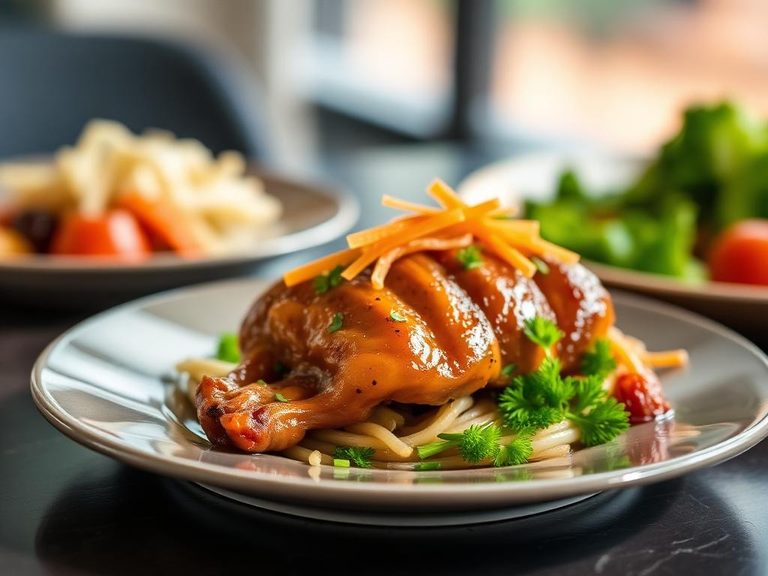
Mock duck is a popular vegetarian dish originating from Chinese Buddhist cuisine, designed to mimic the texture and appearance of duck meat. It is primarily made from wheat gluten (seitan) and sometimes soy protein, often seasoned with soy sauce, five-spice, and other aromatics to create a savory, umami-rich flavor profile.
🍽️ Nutrition at a glance
Mock duck is high in protein and relatively low in fat, making it a substantial meat substitute. A typical serving provides a good amount of iron and selenium, with a calorie range of approximately 150-250 kcal per 100 grams.
Nutrition breakdown
| Calories | 210 kcal |
| Protein | 25 g |
| Carbs | 10 g |
| Fat | 6 g |
| Fiber | 1 g |
| Sugar | 2 g |
| Sodium | 580 mg |
| Iron | 3.5 mg |
| Selenium | 18 mcg |
| Potassium | 200 mg |
| Phosphorus | 150 mg |
| Copper | 0.3 mg |
| Manganese | 0.8 mg |
| Niacin (B3) | 4 mg |
| Thiamine (B1) | 0.2 mg |
Per 1 cup (140 g) · estimated, varies by recipe
💡 What's interesting
Culturally, mock duck has been a staple in Chinese vegetarian cooking for centuries, often served during festivals or in Buddhist temple cuisine. Nutritionally, it's unique for being a high-protein, low-fat option that provides a satisfying, chewy texture similar to meat without the cholesterol.
🍽️ Related dishes







AI estimate may be inaccurate · Terms