

Mastic gum
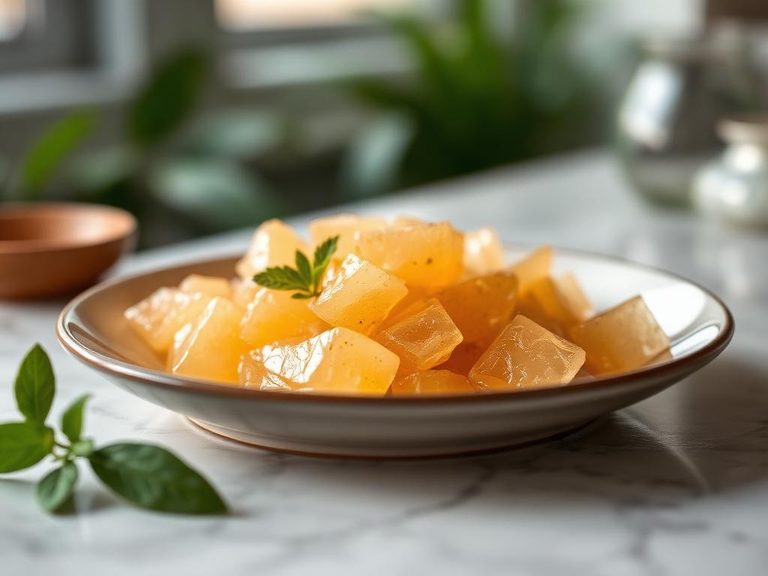
Mastic gum is a resin harvested from the mastic tree, primarily used as a flavoring agent in Mediterranean and Middle Eastern cuisine. It is not a standalone dish but a unique ingredient, often chewed like gum or used to flavor foods like bread, ice cream, and liqueurs. Its core origin is the Greek island of Chios.
🍳 View the full Mastic gum recipe →
🍽️ Nutrition at a glance
Mastic gum is not a significant source of macronutrients like carbs, fat, or protein, as it is typically used in very small quantities. It provides minimal calories (roughly 5-10 per gram) and is primarily valued for its aromatic compounds and potential digestive benefits rather than its nutritional profile.
Nutrition breakdown
| Calories | 3 kcal |
| Protein | 0 g |
| Carbs | 0.7 g |
| Fat | 0 g |
| Fiber | 0 g |
| Sugar | 0 g |
| Sodium | 0 mg |
| Calcium | 5 mg |
| Magnesium | 1 mg |
| Potassium | 2 mg |
| Iron | 0.1 mg |
| Zinc | 0.05 mg |
| Manganese | 0.02 mg |
| Copper | 0.01 mg |
| Phosphorus | 1 mg |
Per 1 gram (typical piece) · estimated, varies by recipe
💡 What's interesting
Culturally, mastic gum has been traded for over 2,500 years and was once worth its weight in gold. Nutritionally, it's unique as a natural resin that contains antioxidants and has been traditionally used to support oral and digestive health.
🍽️ Related dishes


AI estimate may be inaccurate · Terms