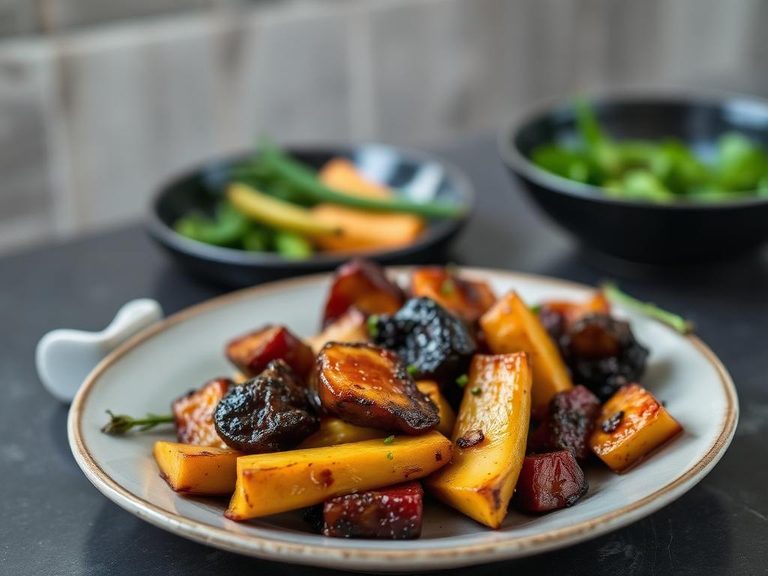
Marinade for fruit-based glazes
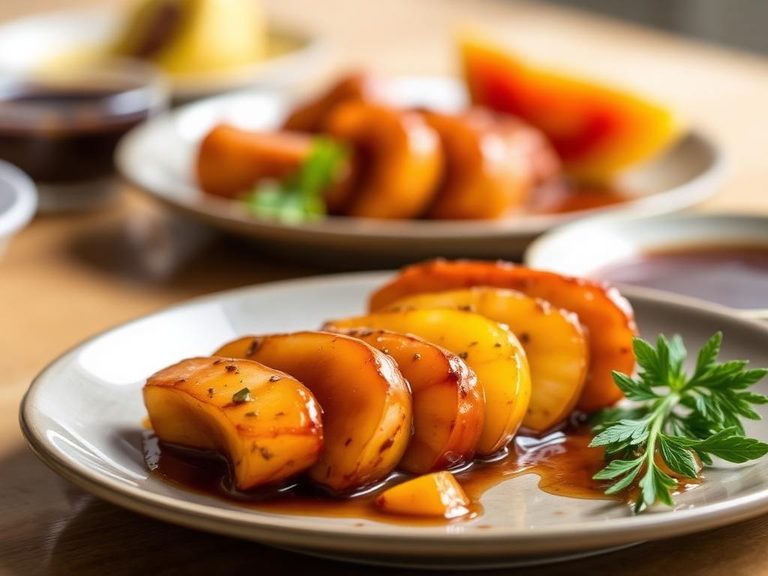
A fruit-based glaze marinade is a sweet, acidic mixture used to tenderize and flavor proteins like chicken, pork, or fish before cooking. It typically features fruit juice or purée (like pineapple, orange, or mango), an acid such as vinegar or citrus juice, and complementary spices. This style of marinade is common in many cuisines, from Caribbean jerk preparations to Asian-inspired teriyaki and Western barbecue styles.
🍽️ Nutrition at a glance
This marinade is primarily high in carbohydrates from its fruit and added sugar content, with negligible fat and protein. It provides vitamins like Vitamin C and potassium from the fruit base, with a calorie count heavily dependent on the sugar content, typically ranging from 50-100 calories per 2-tablespoon serving.
Nutrition breakdown
| Calories | 70 kcal |
| Protein | 0.1 g |
| Carbs | 18 g |
| Fat | 0 g |
| Fiber | 0.2 g |
| Sugar | 16 g |
| Sodium | 120 mg |
| Vitamin C | 15 mg |
| Potassium | 90 mg |
| Manganese | 0.1 mg |
| Folate | 8 µg |
| Vitamin B6 | 0.02 mg |
| Copper | 0.03 mg |
| Magnesium | 5 mg |
| Iron | 0.2 mg |
Per 2 tablespoons (30 g) · estimated, varies by recipe
💡 What's interesting
Culturally, fruit-based marinades are a global technique, using natural enzymes (like bromelain in pineapple) to tenderize meat while imparting a bright, complex flavor. Nutritionally, they can enhance the palatability of lean proteins, though the glaze itself is more of a flavor vehicle than a significant nutrient source.