

Glazes for roasted vegetables or proteins
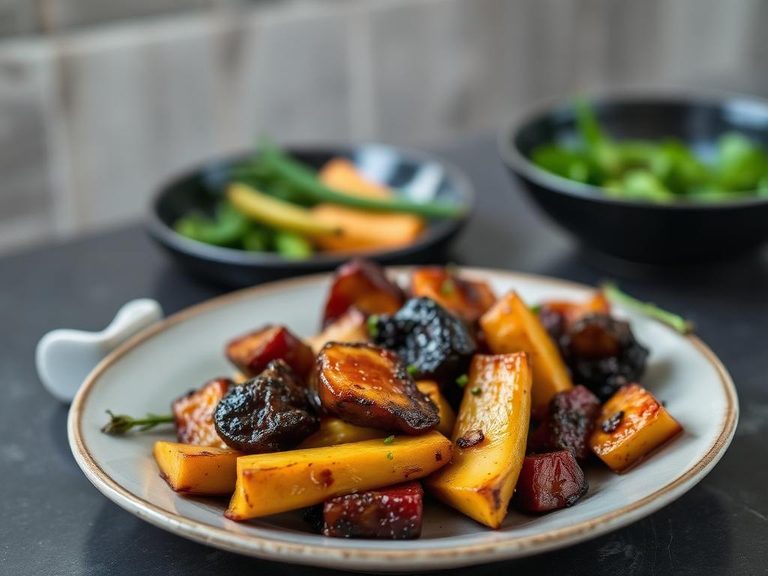
Glazes for roasted vegetables or proteins are sweet, savory, or tangy coatings applied during cooking to add flavor, moisture, and a beautiful sheen. They typically combine a sweetener like honey, maple syrup, or brown sugar with an acidic component such as balsamic vinegar, citrus juice, or soy sauce, often infused with herbs and spices. While the concept is universal, specific glazes are deeply rooted in various cuisines, from American barbecue to Asian teriyaki.
🍳 View the full Glazes for roasted vegetables or proteins recipe →
🍽️ Nutrition at a glance
A glaze is primarily a source of carbohydrates from its sweetener, with minimal fat or protein, and can add 30-80 calories per serving depending on thickness and sugar content. It can also contribute small amounts of antioxidants and minerals if made with ingredients like balsamic vinegar or whole-grain mustard.
Nutrition breakdown
| Calories | 80 kcal |
| Protein | 0.5 g |
| Carbs | 18 g |
| Fat | 0.5 g |
| Fiber | 0.5 g |
| Sugar | 16 g |
| Sodium | 350 mg |
| Potassium | 45 mg |
| Sodium | 350 mg |
| Vitamin C | 2 mg |
| Iron | 0.3 mg |
| Calcium | 10 mg |
| Magnesium | 5 mg |
| Vitamin B6 | 0.02 mg |
| Manganese | 0.1 mg |
Per 1/4 cup (60 g) · estimated, varies by recipe
💡 What's interesting
Glazes are a culinary technique that leverages the Maillard reaction and caramelization to create complex flavors and textures, transforming simple ingredients. Nutritionally, they can make lean proteins and vegetables more palatable, potentially encouraging greater consumption of these nutrient-dense foods.
🍽️ Related dishes







AI estimate may be inaccurate · Terms