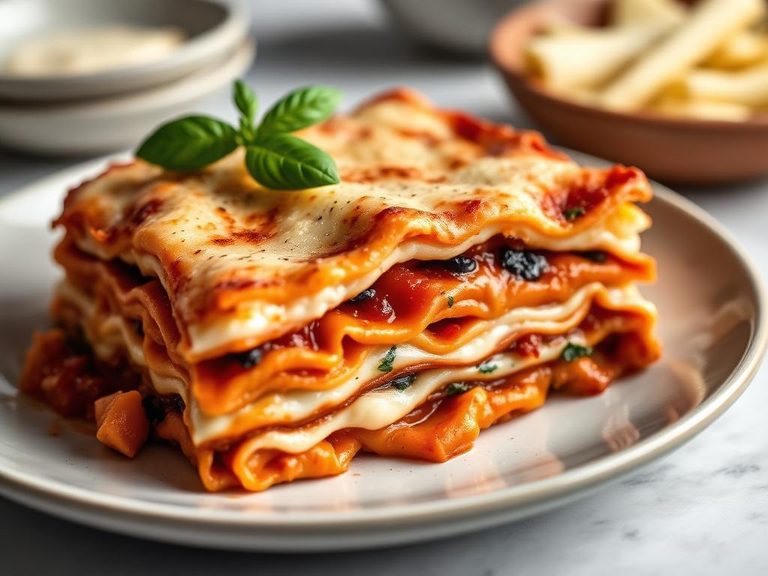
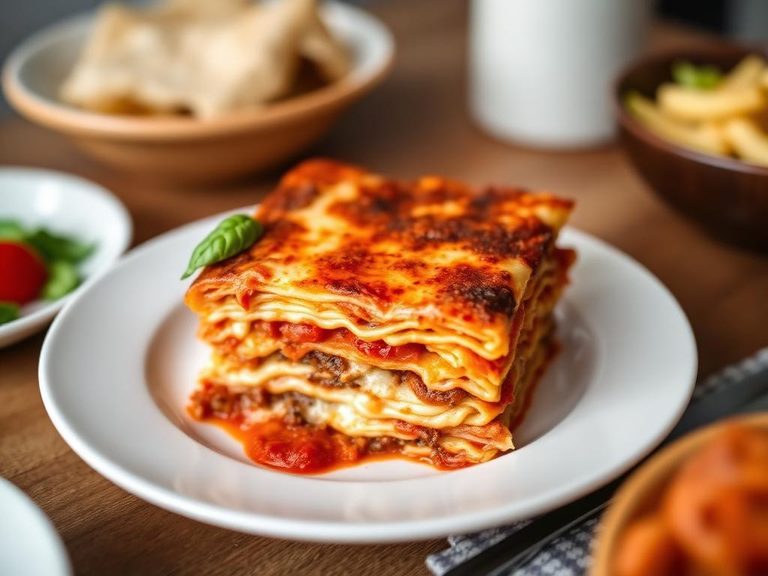
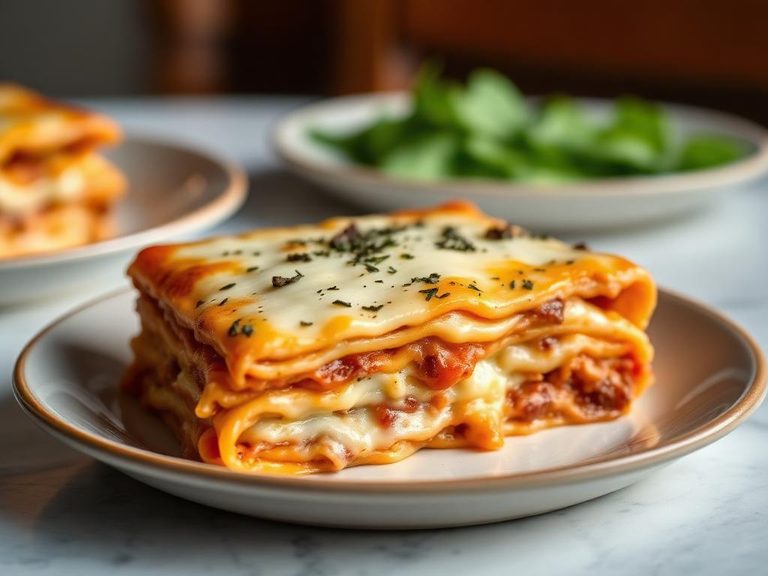
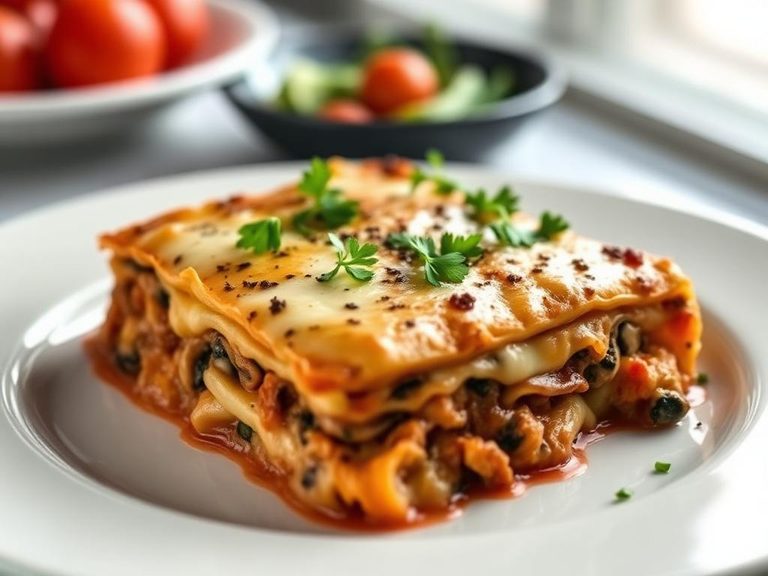
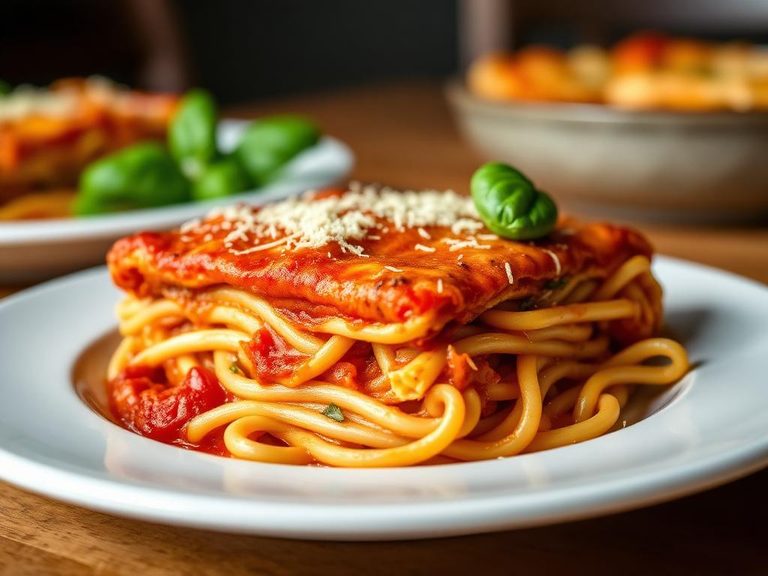
Lasagna cheese layer
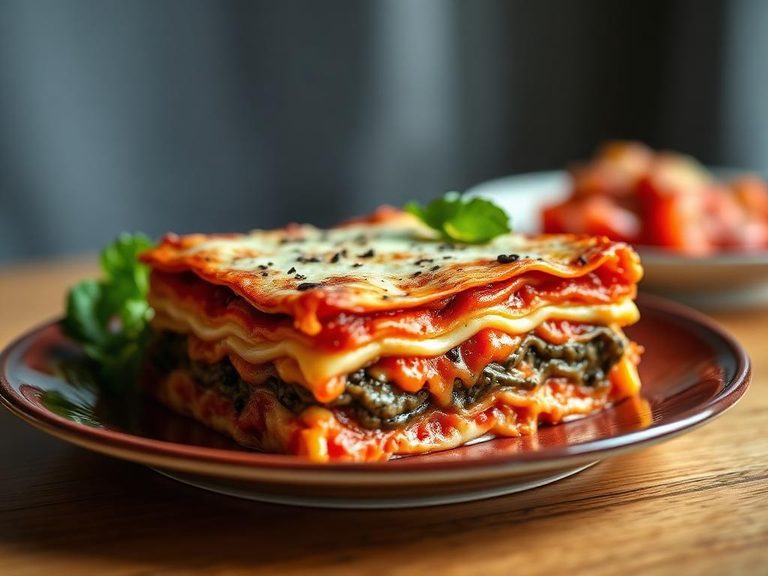
This is the signature cheese layer in an Italian-American lasagna, typically made with a blend of ricotta, mozzarella, and Parmesan cheeses, often bound with egg and seasoned with herbs. It provides a creamy, rich texture that contrasts with the meat sauce and pasta layers, creating the dish's iconic hearty structure.
🍽️ Nutrition at a glance
This layer is high in fat and protein from the cheese blend, with a moderate amount of carbohydrates from any added binders like egg or breadcrumbs. A typical serving of the cheese layer alone provides around 200-300 calories, along with calcium and sodium.
Nutrition breakdown
| Calories | 420 kcal |
| Protein | 22 g |
| Carbs | 30 g |
| Fat | 24 g |
| Fiber | 2 g |
| Sugar | 6 g |
| Sodium | 850 mg |
| Calcium | 450 mg |
| Iron | 3 mg |
| Potassium | 350 mg |
| Vitamin A | 300 mcg RAE |
| Vitamin C | 6 mg |
| Vitamin B12 | 1.5 mcg |
| Phosphorus | 300 mg |
| Zinc | 3 mg |
Per 1 cup (240 g) · estimated, varies by recipe
💡 What's interesting
Culturally, this cheese layer is a hallmark of the Italian-American adaptation, as traditional Italian lasagna often uses béchamel sauce instead. Nutritionally, it's a significant source of calcium but also contributes substantially to the dish's overall saturated fat and sodium content.