Japanese Nabemono
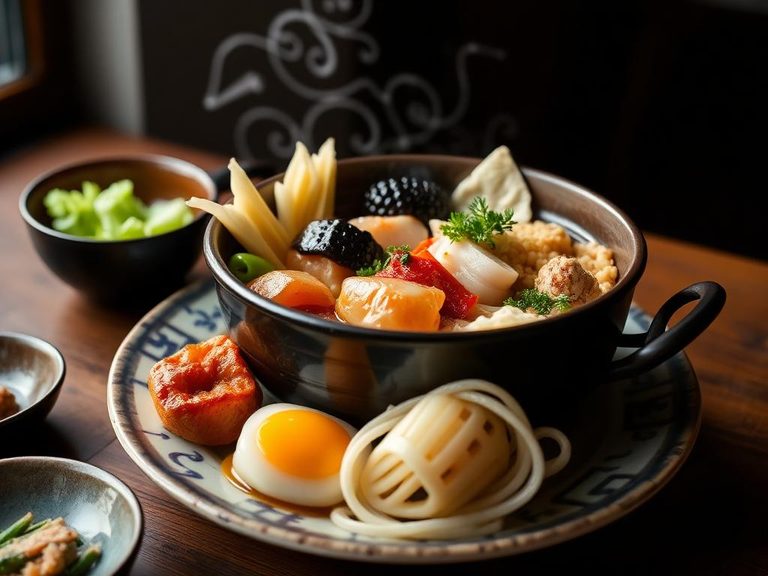
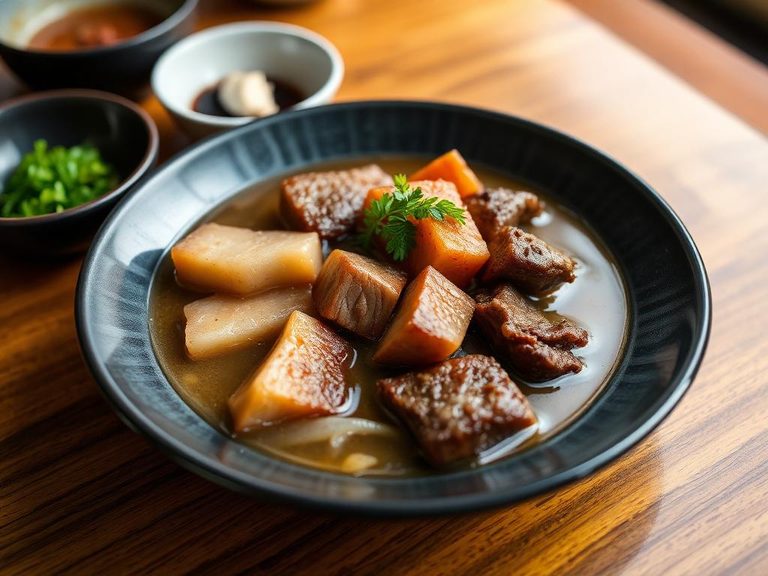
Japanese Nabemono, or 'hot pot,' is a communal dish where various ingredients are simmered in a flavorful broth at the table. It typically features a mix of thinly sliced meats, seafood, tofu, and seasonal vegetables like napa cabbage and mushrooms, all cooked together in a shared pot. This style of cooking is a beloved winter tradition across Japan, emphasizing warmth and togetherness.
🍽️ Nutrition at a glance
Nabemono is generally a balanced, nutrient-dense meal, rich in protein from meat and tofu, and packed with vitamins and fiber from the vegetables. The broth and cooking method keep it relatively low in fat compared to fried dishes, with a typical serving ranging from 300 to 500 calories depending on the specific ingredients and portion size.
Nutrition breakdown
| Calories | 220 kcal |
| Protein | 18 g |
| Carbs | 12 g |
| Fat | 10 g |
| Fiber | 3 g |
| Sugar | 4 g |
| Sodium | 850 mg |
| Potassium | 450 mg |
| Vitamin C | 15 mg |
| Vitamin A | 80 mcg RAE |
| Iron | 2.5 mg |
| Calcium | 60 mg |
| Vitamin B12 | 2.0 mcg |
| Niacin (B3) | 5.0 mg |
| Phosphorus | 200 mg |
Per 1 bowl (300 g) · estimated, varies by recipe
💡 What's interesting
Culturally, Nabemono is a symbol of 'nabe' or 'pot' gatherings, where friends and family cook and eat directly from the same pot, fostering a sense of intimacy and community. Nutritionally, the slow simmering process helps retain the nutrients in the ingredients, making it a wholesome and comforting meal.