Infant formula and nutritional supplements
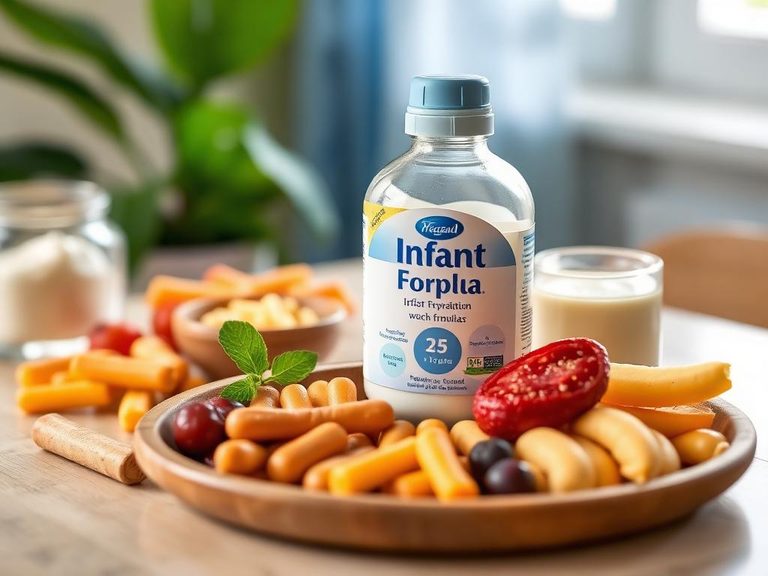
Infant formula is a manufactured food designed and marketed for feeding to babies and infants under 12 months of age, typically prepared from a powder or liquid concentrate mixed with water. It is designed to substitute for or supplement breast milk and is not considered a 'dish' in the culinary sense but a nutritional product. The primary ingredients often include a protein source (like cow's milk whey and casein), fats (like vegetable oils), carbohydrates (like lactose), and a blend of vitamins and minerals.
🍽️ Nutrition at a glance
Infant formula is nutritionally balanced to mimic breast milk, providing a moderate amount of calories from a mix of fats, carbohydrates, and protein. It is specifically fortified with essential nutrients like iron, vitamin D, and DHA to support infant growth and development, with a typical serving providing around 120-130 kcal.
Nutrition breakdown
| Calories | 125 kcal |
| Protein | 3.3 g |
| Carbs | 13.8 g |
| Fat | 6.8 g |
| Fiber | 0 g |
| Sugar | 13.8 g |
| Sodium | 55 mg |
| Vitamin D | 1.0 mcg |
| Calcium | 105 mg |
| Iron | 1.8 mg |
| Zinc | 0.8 mg |
| Vitamin A | 60 mcg |
| Vitamin C | 10 mg |
| Potassium | 175 mg |
| Phosphorus | 55 mg |
Per 1 prepared serving (approximately 150 g or 5 fl oz) · estimated, varies by recipe
💡 What's interesting
Infant formula is a marvel of food science, meticulously engineered to match the nutritional profile and functional properties of human breast milk, which varies by species. Its composition is constantly updated based on ongoing research into infant nutrition and developmental needs.
🍽️ Related dishes
 Nutritional supplements and meal replacements
 Nutritional supplements and meal replacement drinks
 Base for high-protein nutritional supplements
 Nutritional Supplement in Infant Formulas
 Used in special medical nutritional formulas
 Omega-3 supplements
 Commercial protein bars and supplements
 Chaser for supplements