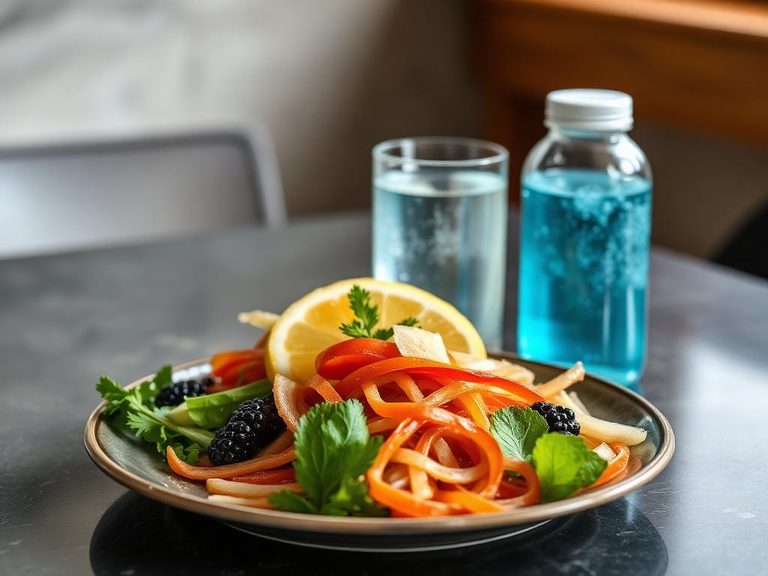
Hydration drink during illness

A hydration drink during illness is a simple, soothing beverage designed to replenish fluids and essential minerals when the body is weakened by sickness. Common variations include clear broths, electrolyte solutions, or warm water with honey and lemon, found in various forms across global home remedies. It is not a single 'dish' but a category of restorative drinks used to combat dehydration from fever, vomiting, or diarrhea.
🍽️ Nutrition at a glance
These drinks are typically very low in fat and protein, with a primary focus on carbohydrates from sugars like honey or fruit juices to provide quick energy. Key nutrients include electrolytes such as sodium and potassium, which are crucial for fluid balance, and the calorie count is generally low, often ranging from 50 to 150 calories per serving depending on the ingredients.
Nutrition breakdown
| Calories | 50 kcal |
| Protein | 0 g |
| Carbs | 13 g |
| Fat | 0 g |
| Fiber | 0 g |
| Sugar | 11 g |
| Sodium | 450 mg |
| Potassium | 120 mg |
| Sodium | 450 mg |
| Chloride | 350 mg |
| Glucose | 11 g |
| Citric Acid | 500 mg |
| Vitamin C | 30 mg |
| Vitamin B6 | 0.5 mg |
| Niacin (B3) | 2 mg |
Per 1 cup (240 g) · estimated, varies by recipe
💡 What's interesting
Culturally, the practice of using warm broths or sweetened drinks for the sick is a universal home remedy, reflecting a deep-seated understanding of the need for gentle nourishment. Nutritionally, its uniqueness lies in its targeted function: it's not about complex nutrition but about efficient, rapid rehydration and electrolyte replacement to support the body's healing process.