

Honey-Glazed Easter Ham

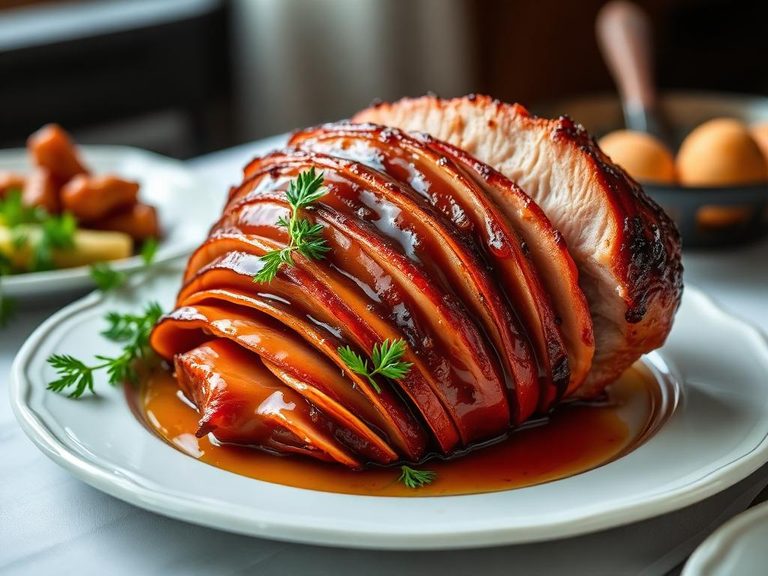
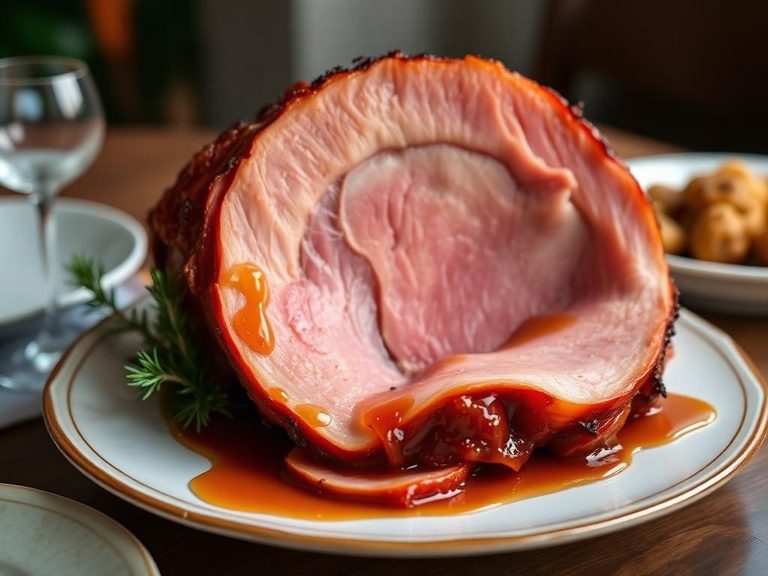
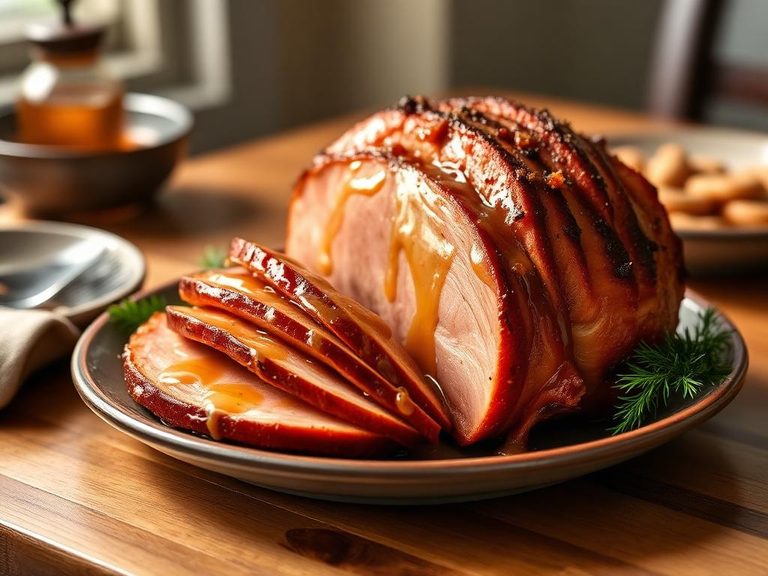
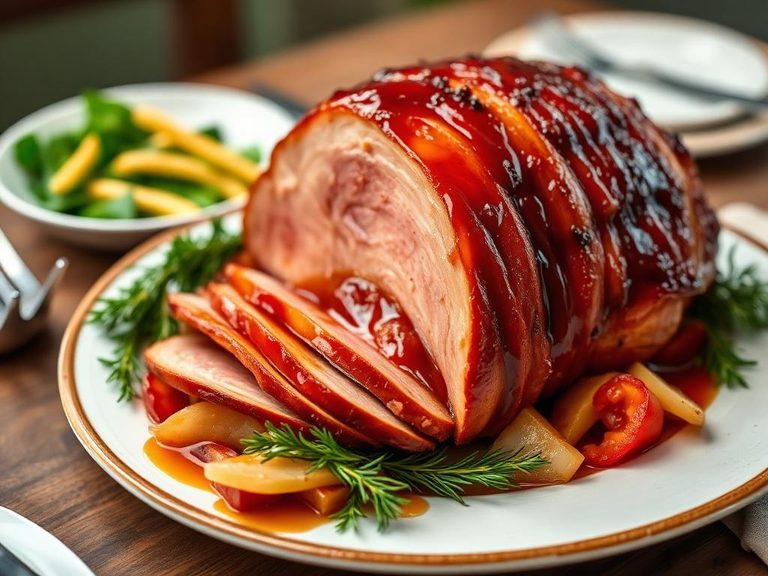
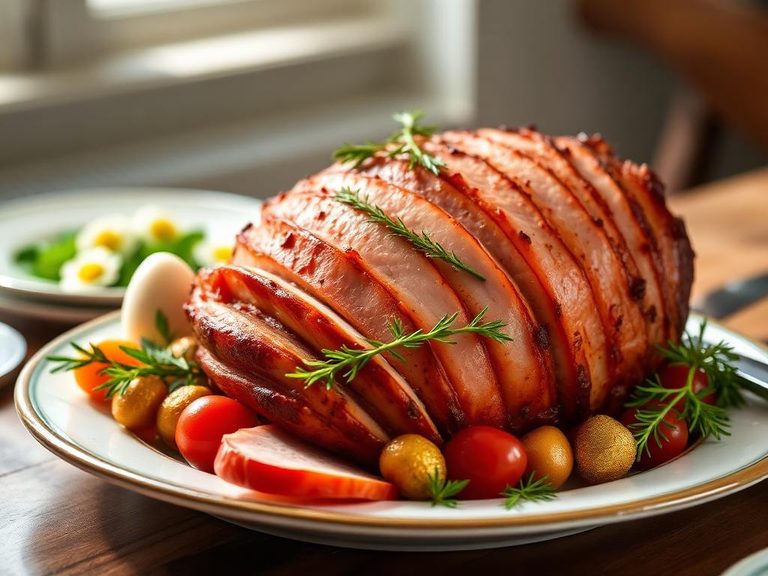
Honey-Glazed Easter Ham is a classic centerpiece dish for Easter celebrations, particularly popular in the United States and parts of Europe. It typically features a cured, smoked ham (often a spiral-cut or bone-in ham) baked with a sweet, sticky glaze made from honey, brown sugar, mustard, and warm spices like cloves or cinnamon. The dish is celebrated for its rich, savory-sweet flavor and its role as a festive family meal.
🍽️ Nutrition at a glance
This dish is high in protein and fat, with a moderate amount of carbohydrates primarily from the honey and sugar glaze. A typical serving (about 3-4 ounces of meat with glaze) provides a good source of protein, B vitamins (especially thiamine and niacin), and minerals like zinc and selenium, while containing roughly 200-300 calories.
Nutrition breakdown
| Calories | 290 kcal |
| Protein | 21 g |
| Carbs | 15 g |
| Fat | 16 g |
| Fiber | 0 g |
| Sugar | 14 g |
| Sodium | 1050 mg |
| Potassium | 320 mg |
| Phosphorus | 280 mg |
| Zinc | 3.5 mg |
| Selenium | 25 mcg |
| Vitamin B1 (Thiamin) | 0.7 mg |
| Vitamin B6 | 0.4 mg |
| Niacin (B3) | 5.0 mg |
| Iron | 1.2 mg |
Per 1 slice (113 g) · estimated, varies by recipe
💡 What's interesting
Culturally, the honey-glazed ham is deeply tied to Easter traditions, symbolizing celebration and renewal, and its preparation often involves family recipes passed down through generations. Nutritionally, while it's a protein-rich main, the glaze adds a quick source of energy from simple sugars, making it a balance of savory sustenance and festive indulgence.
🍽️ Related dishes


AI estimate may be inaccurate · Terms