Heart Yakitori
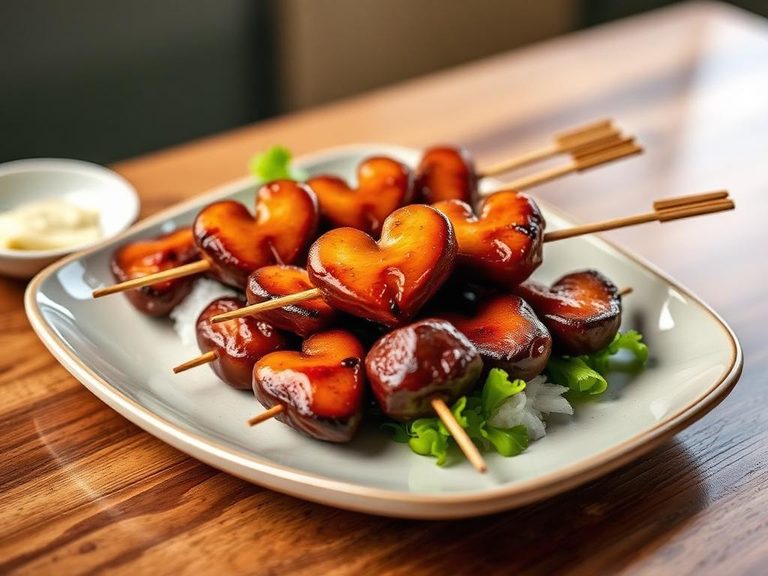
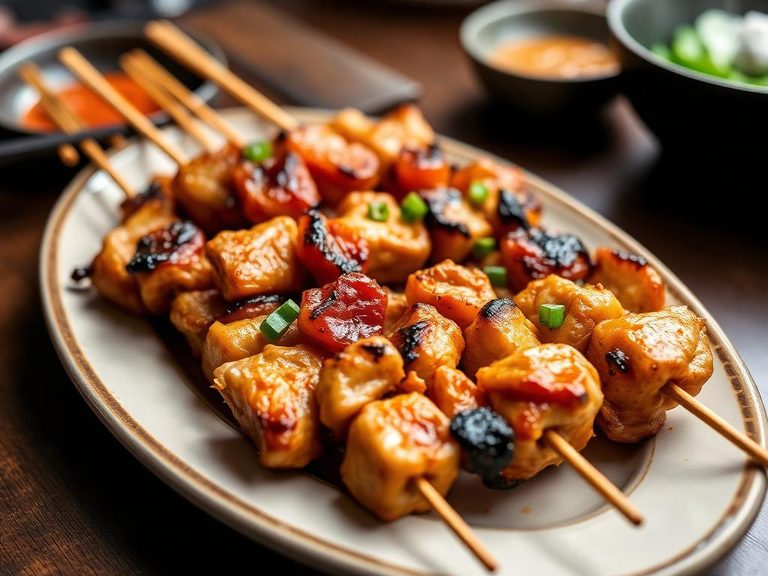
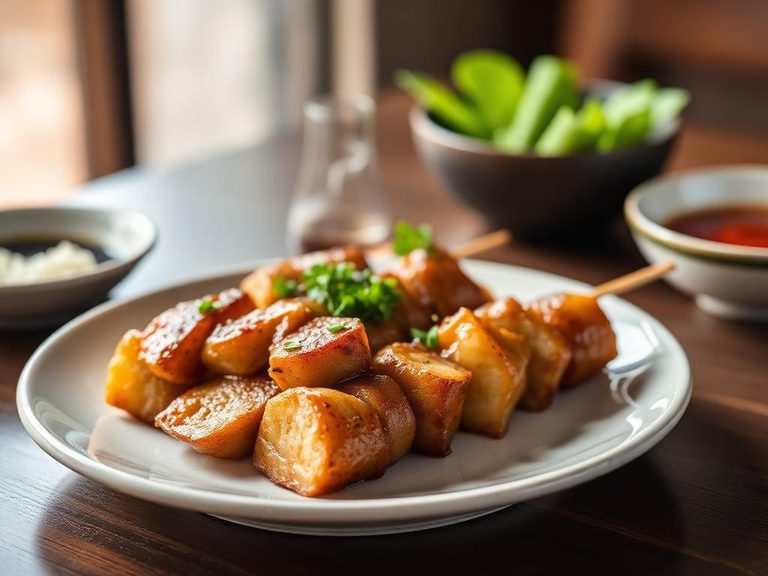
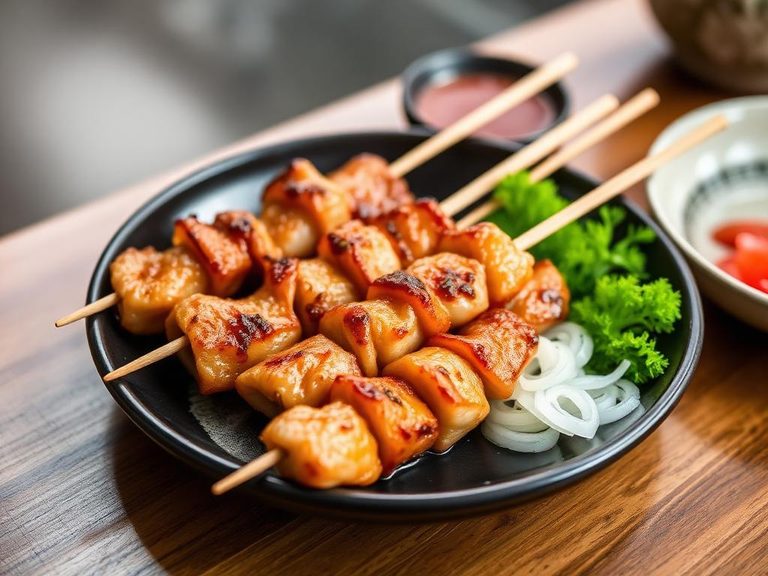
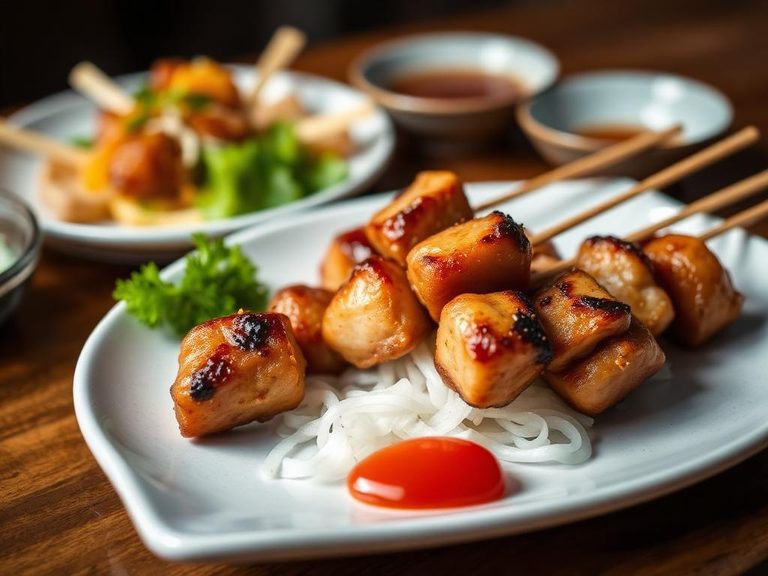
Heart Yakitori is a popular Japanese skewered dish made from chicken hearts, typically grilled over charcoal. The hearts are often seasoned with tare (a sweet soy sauce glaze) or shio (salt) and served as a savory, slightly chewy snack or appetizer. It is a staple of Japanese izakaya (pub) cuisine and street food stalls.
🍽️ Nutrition at a glance
This dish is exceptionally high in protein and relatively low in carbohydrates, with a moderate fat content depending on the glaze. It is a rich source of iron, B vitamins (especially B12), and CoQ10, with a typical serving containing roughly 150-200 calories.
Nutrition breakdown
| Calories | 180 kcal |
| Protein | 24 g |
| Carbs | 4 g |
| Fat | 7 g |
| Fiber | 0 g |
| Sugar | 2 g |
| Sodium | 450 mg |
| Iron | 4.5 mg |
| Vitamin B12 | 12.5 mcg |
| Zinc | 3.2 mg |
| Phosphorus | 250 mg |
| Niacin (B3) | 9 mg |
| Riboflavin (B2) | 0.8 mg |
| Potassium | 220 mg |
| Selenium | 28 mcg |
Per 4 skewers (approx. 120 g) · estimated, varies by recipe
💡 What's interesting
Culturally, yakitori represents the Japanese philosophy of 'mottainai' (no waste), utilizing every part of the animal. Nutritionally, chicken hearts are one of the densest natural sources of CoQ10, a compound vital for cellular energy and heart health.