Yakitori (Japan)

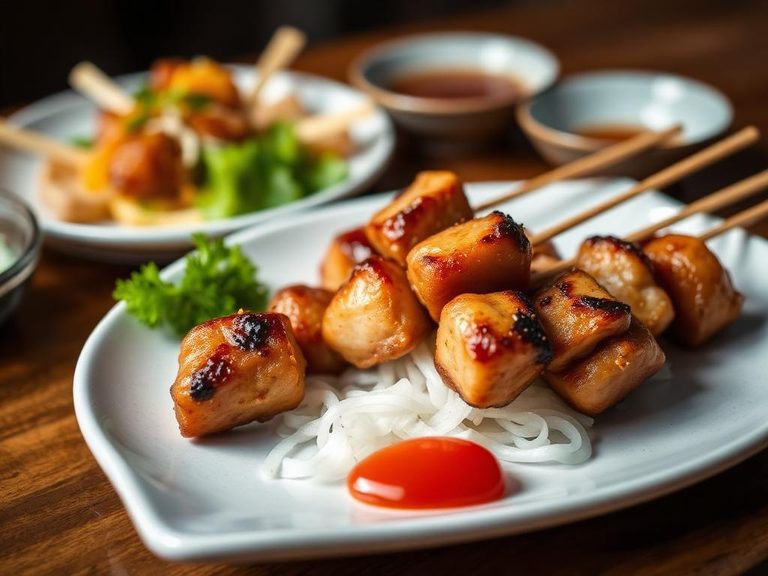
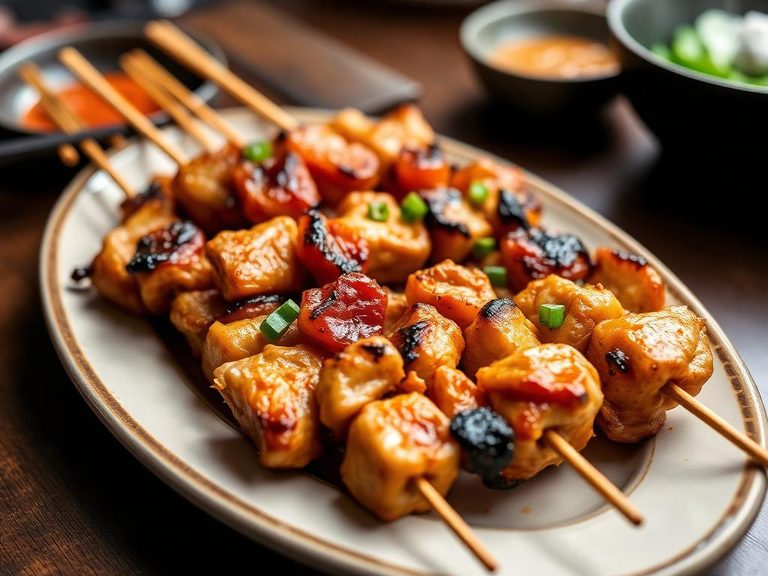
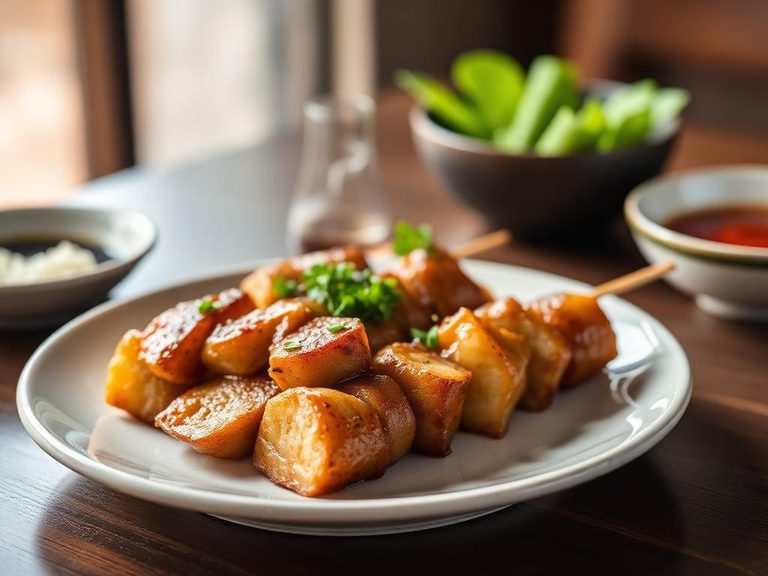
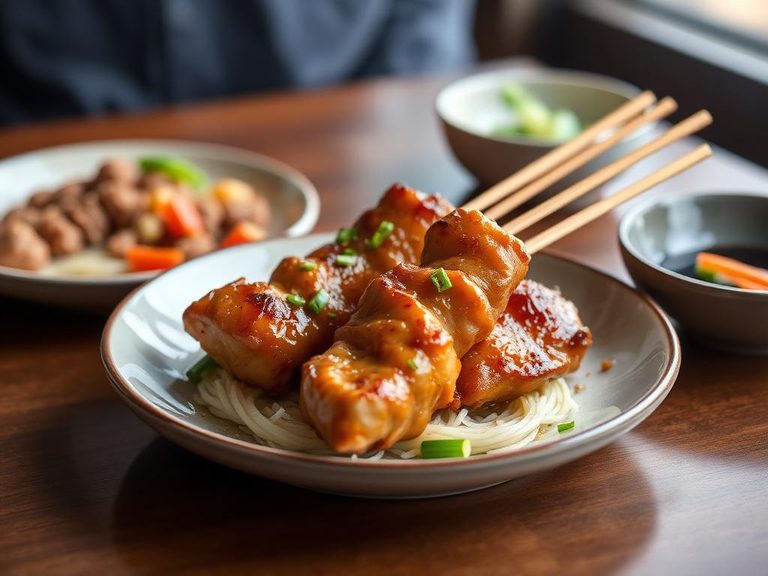
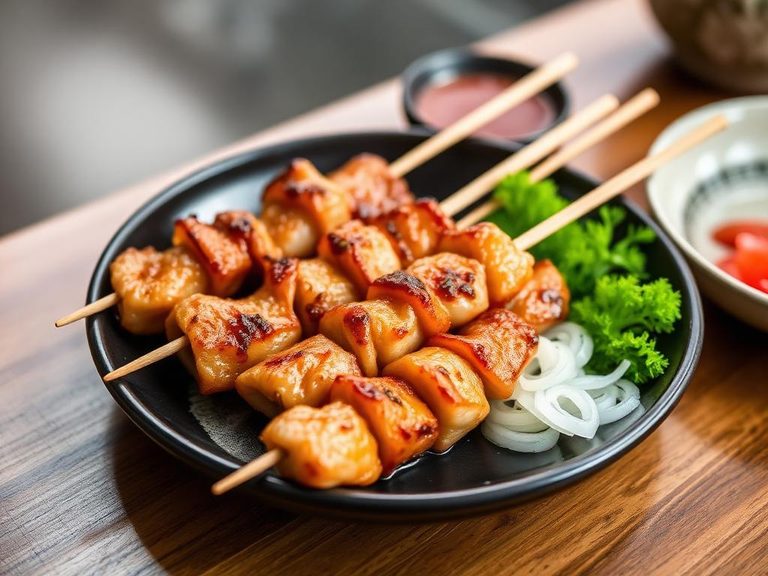
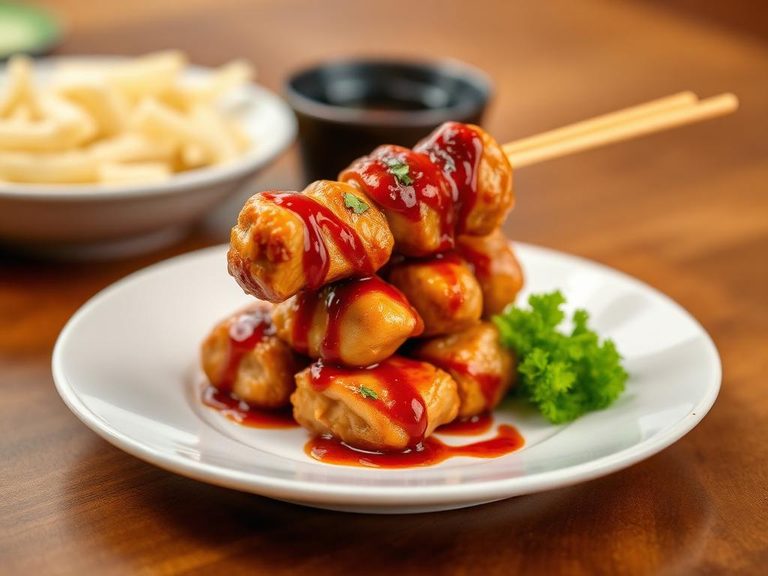
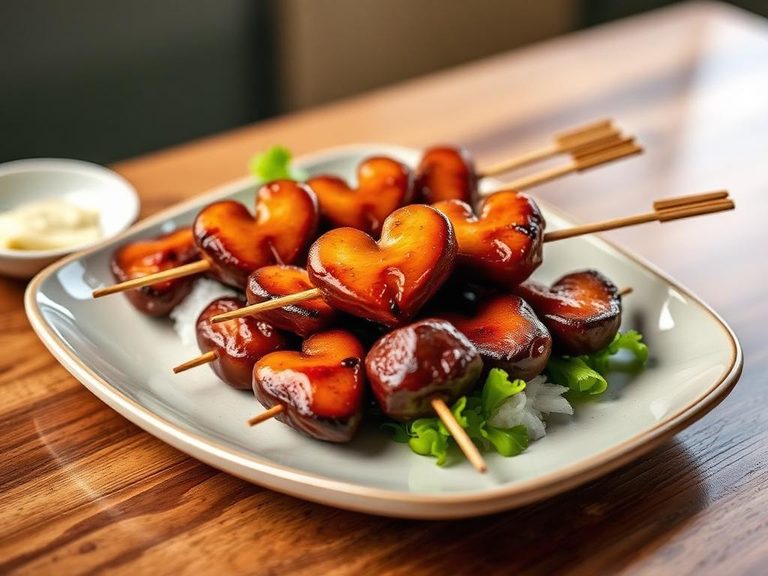
Yakitori is a classic Japanese dish of skewered and grilled chicken, typically seasoned with either a savory-sweet tare sauce or simple salt. It features various parts of the chicken, from breast and thigh to skin and cartilage, all cooked over charcoal for a smoky flavor. This popular street food and izakaya staple originated in Japan during the post-World War II era.
🍽️ Nutrition at a glance
Yakitori is primarily a high-protein dish, especially when made with lean cuts like breast meat, though some parts like skin and thigh add more fat. A typical serving of two skewers provides roughly 150-250 calories, offering good amounts of B vitamins and minerals like selenium.
Nutrition breakdown
| Calories | 350 kcal |
| Protein | 32 g |
| Carbs | 10 g |
| Fat | 18 g |
| Fiber | 1 g |
| Sugar | 4 g |
| Sodium | 800 mg |
| Iron | 2.5 mg |
| Zinc | 4 mg |
| Niacin (B3) | 10 mg |
| Vitamin B6 | 0.6 mg |
| Vitamin B12 | 1.2 mcg |
| Phosphorus | 280 mg |
| Selenium | 30 mcg |
| Potassium | 350 mg |
Per 6 skewers (210 g) · estimated, varies by recipe
💡 What's interesting
Culturally, yakitori is deeply tied to Japanese social dining, often enjoyed with drinks in casual settings. Nutritionally, using the whole chicken is a traditional practice that minimizes waste and provides a diverse range of nutrients from different cuts.