

Eggnog

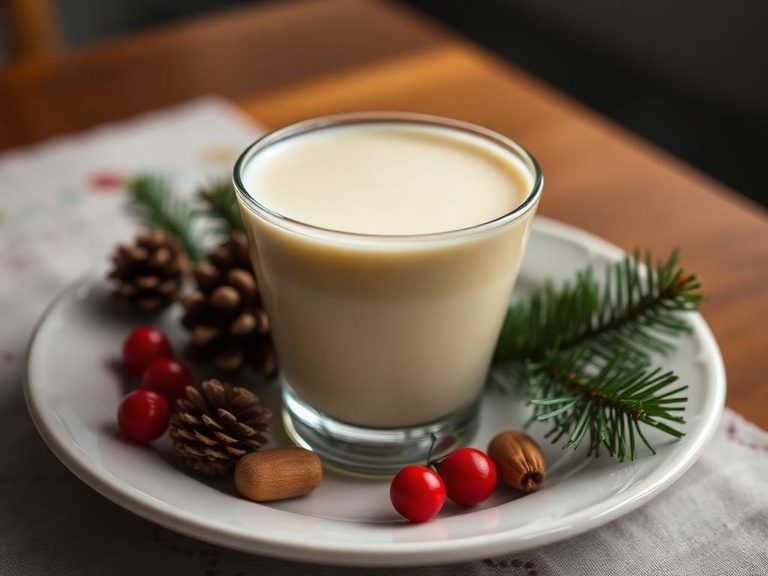
Eggnog is a rich, creamy holiday beverage traditionally made with milk, cream, sugar, whipped egg whites, and egg yolks, often spiked with spirits like rum, brandy, or bourbon. It is a classic Christmas and New Year's drink with origins in medieval British 'posset,' which was a warm, milky, ale-based drink.
🍳 View the full Eggnog recipe →
🍽️ Nutrition at a glance
A typical 1-cup serving of eggnog is high in fat and carbohydrates, with a significant amount of sugar, and provides a good source of calcium and protein from the dairy and eggs. It generally ranges from 300 to 450 calories per serving, depending on the recipe and whether alcohol is added.
Nutrition breakdown
| Calories | 223 kcal |
| Protein | 7.3 g |
| Carbs | 22.1 g |
| Fat | 11.6 g |
| Fiber | 0 g |
| Sugar | 21.4 g |
| Sodium | 111 mg |
| Calcium | 254 mg |
| Vitamin A | 145 mcg RAE |
| Vitamin D | 1.2 mcg |
| Vitamin B12 | 0.8 mcg |
| Riboflavin (B2) | 0.3 mg |
| Phosphorus | 205 mg |
| Potassium | 350 mg |
| Choline | 60 mg |
Per 1 cup (240 g) · estimated, varies by recipe
💡 What's interesting
Culturally, eggnog is deeply associated with festive celebrations in North America, and its name may derive from the term 'nog,' a type of strong beer. Nutritionally, while it's a source of calcium and protein, its traditional preparation makes it a very calorie-dense treat, often enjoyed in moderation as part of holiday indulgence.
🍽️ Related dishes






AI estimate may be inaccurate · Terms