Doro Wat
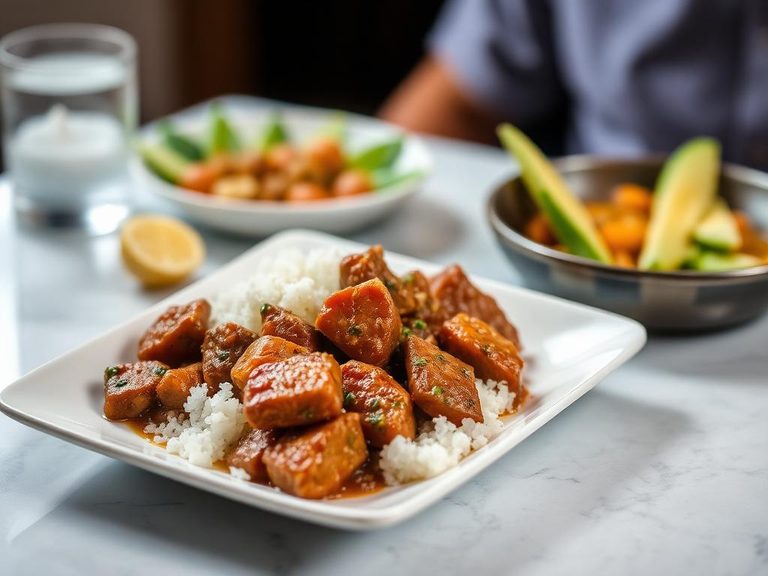
Doro Wat is a rich and aromatic Ethiopian chicken stew, renowned as the national dish and a centerpiece of festive celebrations like Ethiopian Christmas and Easter. It features chicken simmered for hours in a deeply flavorful base of berbere spice blend and niter kibbeh (spiced clarified butter), traditionally served with hard-boiled eggs and accompanied by injera, the spongy sourdough flatbread.
🍽️ Nutrition at a glance
This dish is a high-protein, high-fat meal, with the protein coming primarily from the chicken and eggs, and the fat from the generous use of niter kibbeh. A typical serving provides substantial calories, likely in the 600-800 range, and is a good source of iron and B vitamins from the meat and spices.
Nutrition breakdown
| Calories | 350 kcal |
| Protein | 25 g |
| Carbs | 15 g |
| Fat | 22 g |
| Fiber | 4 g |
| Sugar | 6 g |
| Sodium | 800 mg |
| Potassium | 450 mg |
| Iron | 4 mg |
| Vitamin A | 120 mcg RAE |
| Vitamin C | 15 mg |
| Vitamin B6 | 0.5 mg |
| Niacin (B3) | 7 mg |
| Phosphorus | 250 mg |
| Zinc | 3 mg |
Per 1 cup (240 g) · estimated, varies by recipe
💡 What's interesting
Culturally, Doro Wat is a labor of love, often taking a full day to prepare, symbolizing patience and communal effort for special occasions. Nutritionally, the long cooking process with spices like berbere (containing chili peppers) and turmeric may offer anti-inflammatory benefits, and the dish is traditionally enjoyed by hand, tearing off pieces of injera to scoop up the stew.