

Curries
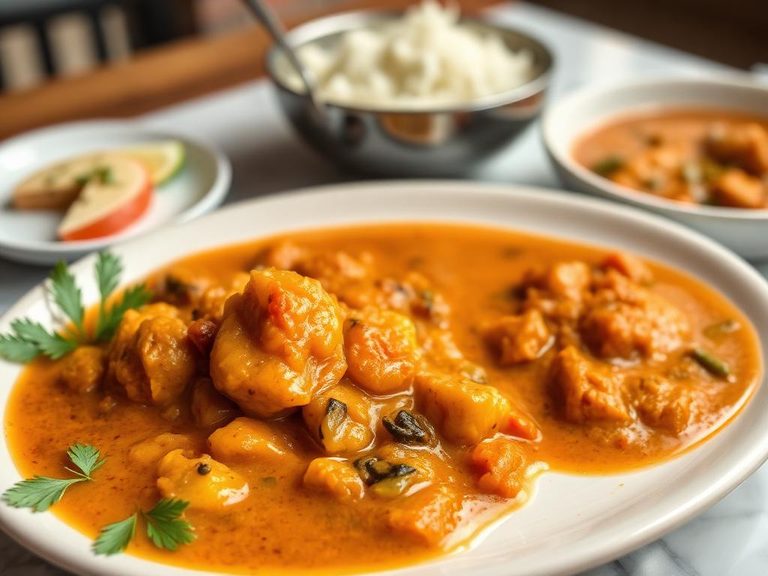
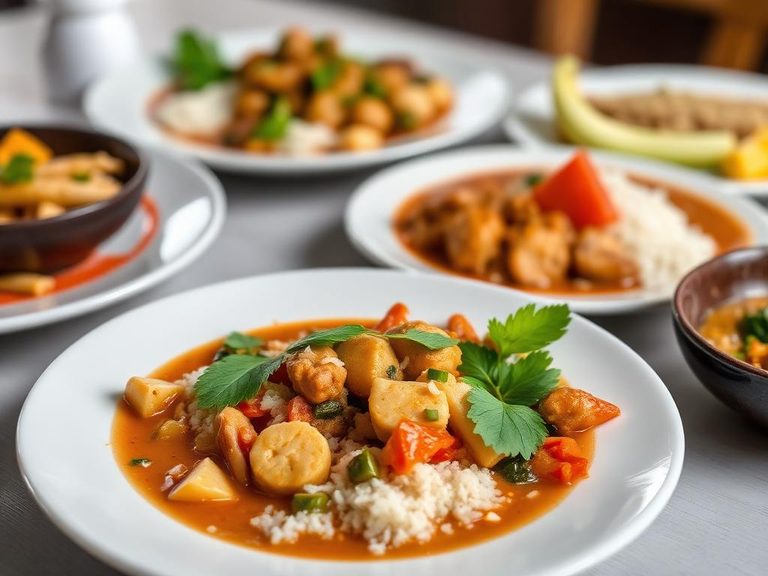
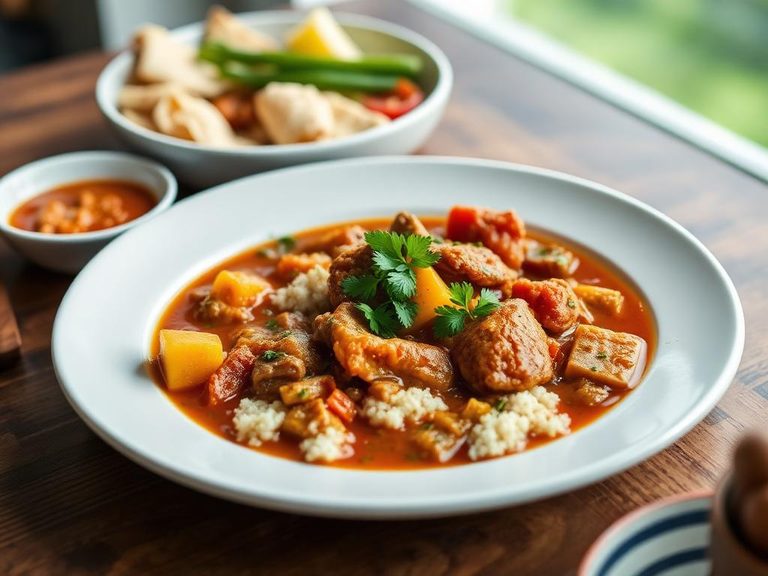
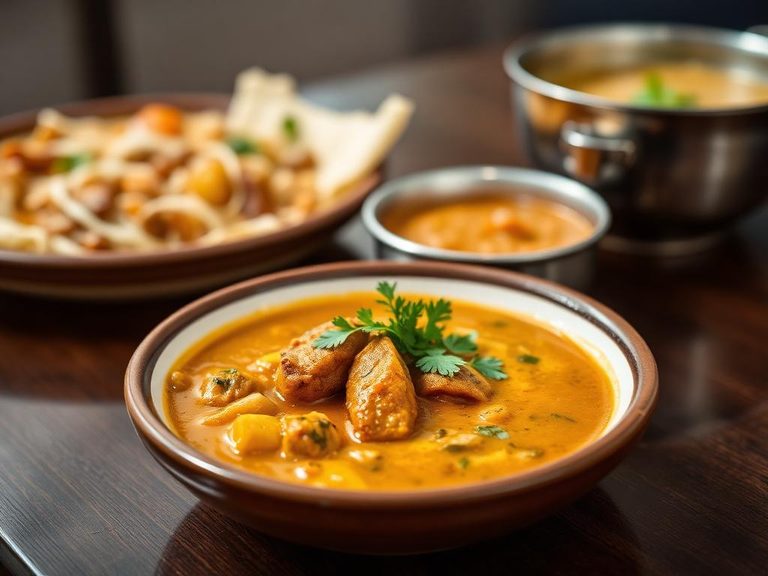
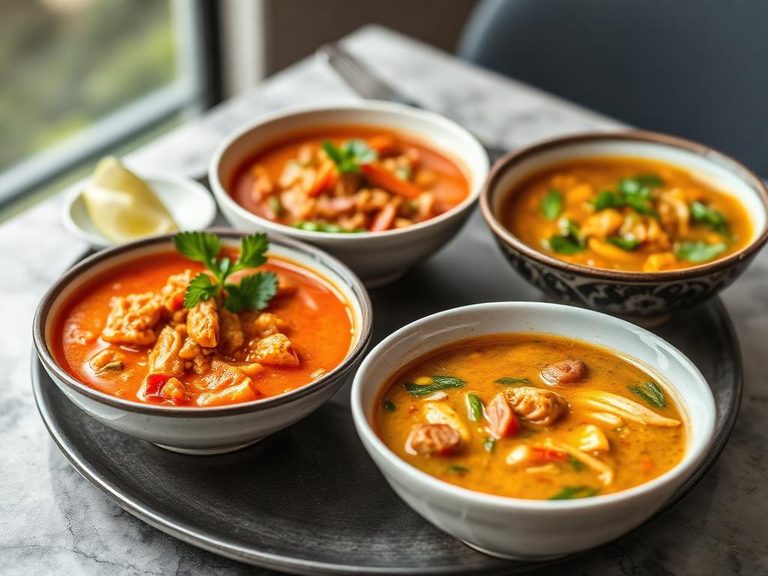
Curry is a broad category of dishes originating from the Indian subcontinent, characterized by a complex sauce or gravy seasoned with a blend of spices. Typical ingredients include meat or vegetables simmered with onions, tomatoes, ginger, garlic, and a signature spice blend (like turmeric, cumin, coriander, and chili), often with coconut milk or yogurt for creaminess.
🍽️ Nutrition at a glance
Depending on the recipe, curries can range from light to rich, with a moderate to high fat content from cooking oil and coconut milk, and a good amount of protein from meat or legumes. They are a notable source of fiber, vitamins A and C, and minerals like iron and potassium.
Nutrition breakdown
| Calories | 350 kcal |
| Protein | 20 g |
| Carbs | 25 g |
| Fat | 18 g |
| Fiber | 6 g |
| Sugar | 8 g |
| Sodium | 800 mg |
| Potassium | 450 mg |
| Vitamin A | 80 mcg RAE |
| Vitamin C | 15 mg |
| Iron | 3.5 mg |
| Calcium | 80 mg |
| Magnesium | 45 mg |
| Phosphorus | 220 mg |
| Zinc | 3 mg |
Per 1 cup (240 g) · estimated, varies by recipe
💡 What's interesting
The term 'curry' is a Western generalization; in South Asia, dishes are typically named by their main ingredient and preparation style. Nutritionally, the spices used, particularly turmeric, contain compounds like curcumin, which have been studied for their anti-inflammatory properties.
🍽️ Related dishes

AI estimate may be inaccurate · Terms