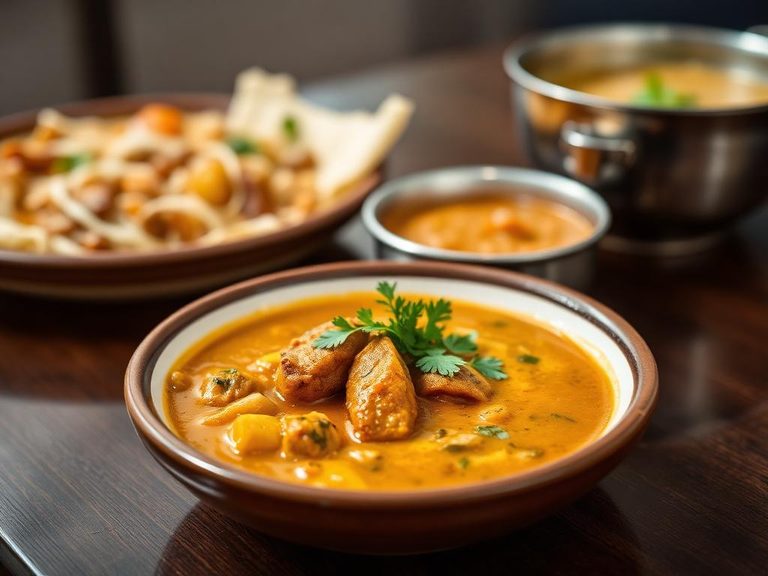
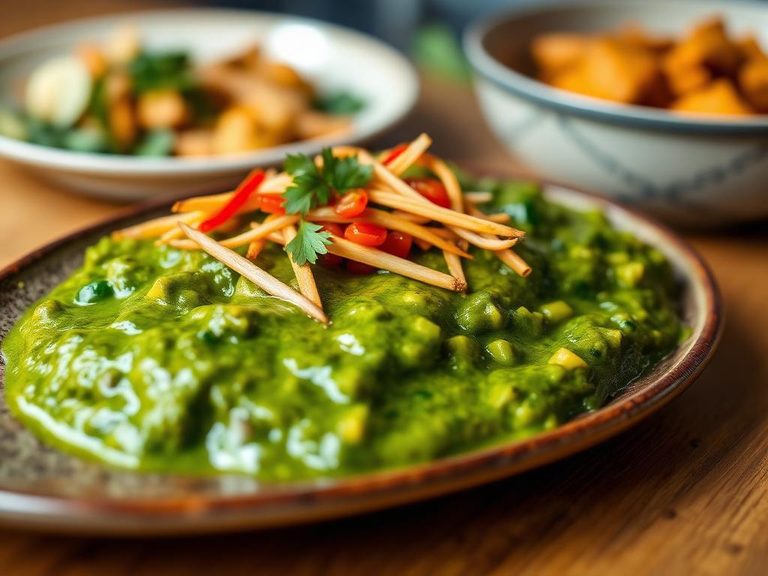
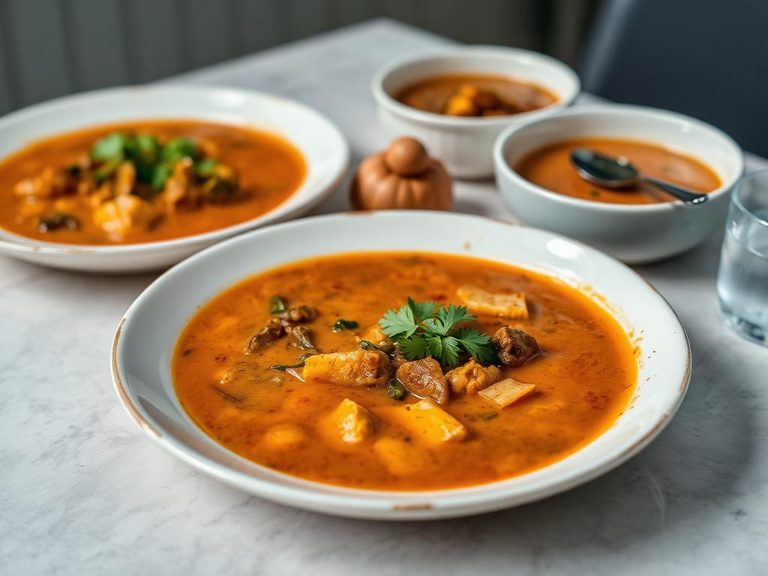
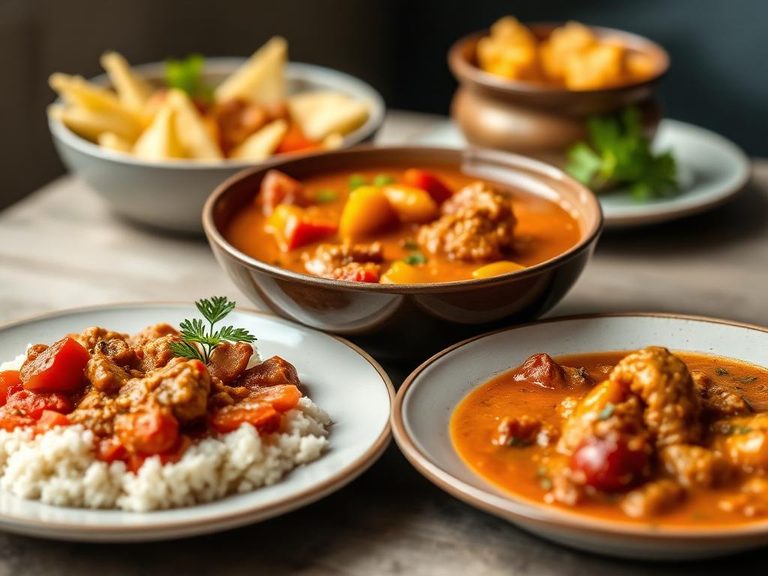
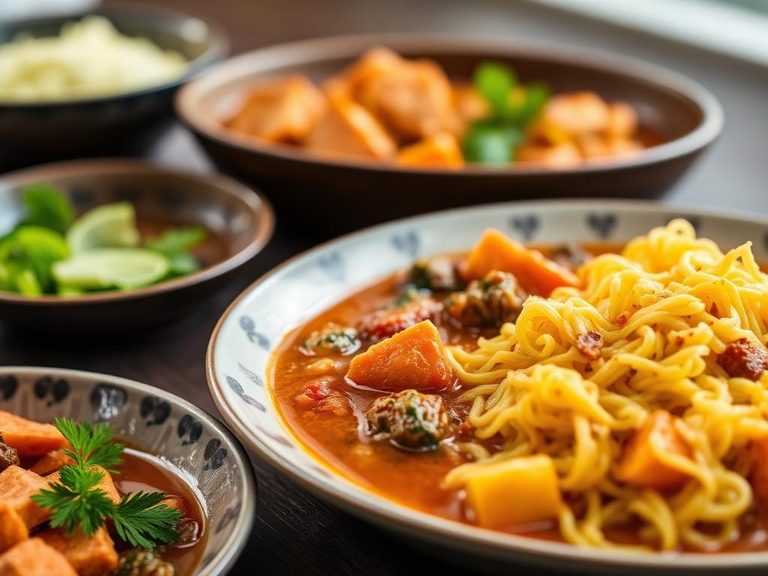
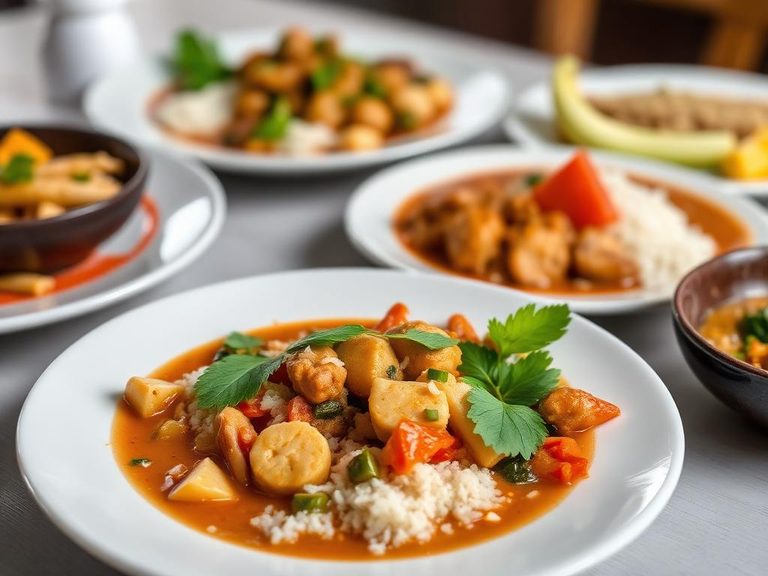
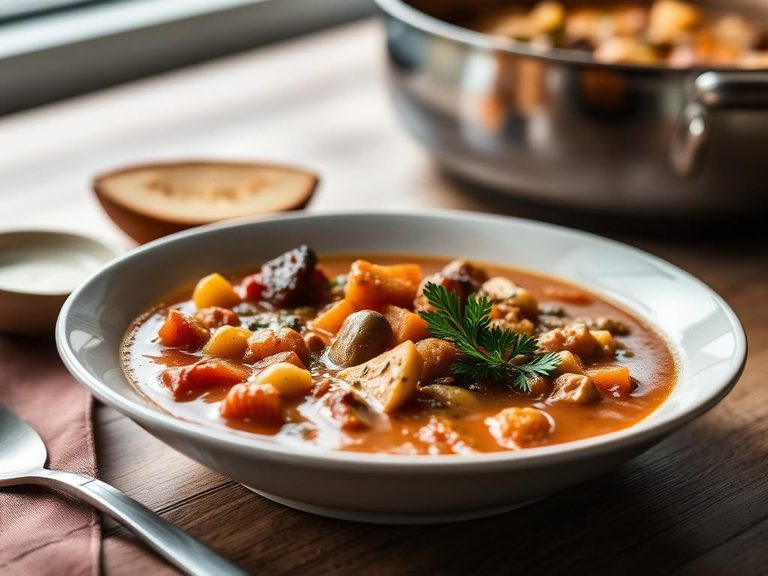
Added to Thai curries and soups
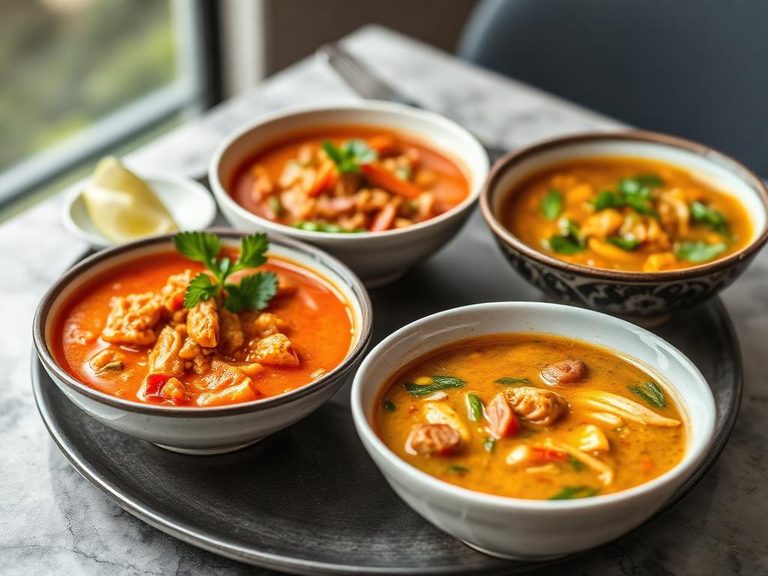
This refers to coconut milk, the essential creamy base for Thai curries and soups like Tom Kha Gai and Massaman. It's made by simmering grated coconut flesh with water, then straining to extract the rich, white liquid. While used across Southeast Asia, it is a cornerstone of Thai cuisine, providing the signature velvety texture and subtle sweetness.
🍽️ Nutrition at a glance
Coconut milk is high in saturated fat, which gives curries their rich mouthfeel, but it is relatively low in protein and carbohydrates. It provides a good source of manganese, copper, and iron, with a typical serving containing around 300-400 calories.
Nutrition breakdown
| Calories | 350 kcal |
| Protein | 3.6 g |
| Carbs | 7.8 g |
| Fat | 36.1 g |
| Fiber | 0 g |
| Sugar | 5.5 g |
| Sodium | 25 mg |
| Manganese | 1.8 mg |
| Copper | 0.5 mg |
| Iron | 3.8 mg |
| Magnesium | 55 mg |
| Potassium | 497 mg |
| Selenium | 14.4 mcg |
| Phosphorus | 161 mg |
| Folate | 48 mcg |
Per 1 cup (240 g) · estimated, varies by recipe
💡 What's interesting
Unlike dairy cream, coconut milk is lactose-free and adds a distinct, tropical flavor profile that defines many Thai dishes. Nutritionally, its high fat content helps the body absorb fat-soluble vitamins from other ingredients in the curry, like those from vegetables and spices.