Christmas Ham

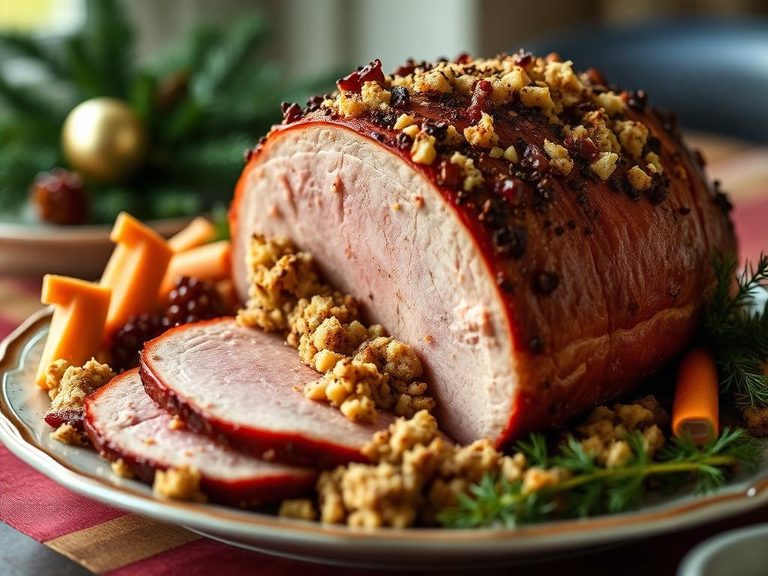
Christmas Ham is a festive centerpiece dish, typically a cured pork leg glazed with ingredients like brown sugar, honey, or pineapple, and often studded with cloves. It is a staple of holiday feasts in North America and Europe, symbolizing abundance and celebration.
🍽️ Nutrition at a glance
As a meat dish, Christmas Ham is high in protein but also contains significant fat, especially in the skin and marbling. A standard serving provides substantial B vitamins (like B12 and niacin) and minerals such as zinc and selenium, with a calorie range of roughly 250-350 per 3-ounce serving depending on the glaze and cut.
Nutrition breakdown
| Calories | 290 kcal |
| Protein | 22 g |
| Carbs | 14 g |
| Fat | 16 g |
| Fiber | 0 g |
| Sugar | 12 g |
| Sodium | 1100 mg |
| Potassium | 350 mg |
| Phosphorus | 280 mg |
| Zinc | 3.5 mg |
| Iron | 1.2 mg |
| Thiamin (B1) | 0.8 mg |
| Niacin (B3) | 5.0 mg |
| Vitamin B6 | 0.4 mg |
| Selenium | 30 µg |
Per 1 slice (113 g) · estimated, varies by recipe
💡 What's interesting
Culturally, the tradition of serving ham at Christmas is linked to historical harvesting cycles, as pigs slaughtered in late autumn provided fresh meat for winter celebrations. Nutritionally, the curing process gives ham its distinctive pink color and flavor, but also means it is high in sodium.