

Chopped salads
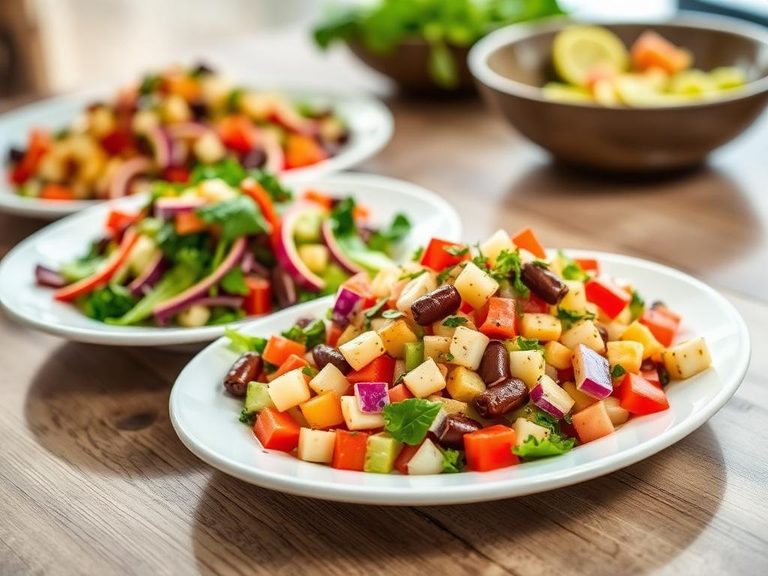
Chopped salads are a vibrant, textured salad where all ingredients—vegetables, proteins, and toppings—are uniformly diced into small, bite-sized pieces and tossed together. They typically feature a base of crisp lettuce (like romaine or iceberg) combined with a colorful mix of tomatoes, cucumbers, onions, and often include elements like chickpeas, cheese, or grilled chicken. This style of salad is a popular, customizable staple in American casual dining, with roots in Mediterranean and Middle Eastern chopped vegetable traditions.
🍽️ Nutrition at a glance
A typical chopped salad is generally balanced, being moderate in carbohydrates from vegetables and legumes, with protein from additions like chicken, cheese, or beans, and fat from dressings and toppings. It's a good source of fiber, vitamins A and C, and potassium, with a calorie range of approximately 300-500 kcal per serving depending heavily on the dressing and protein choice.
Nutrition breakdown
| Calories | 380 kcal |
| Protein | 15 g |
| Carbs | 28 g |
| Fat | 22 g |
| Fiber | 7 g |
| Sugar | 6 g |
| Sodium | 650 mg |
| Vitamin A | 120 µg RAE |
| Vitamin C | 25 mg |
| Vitamin K | 80 µg |
| Folate | 90 µg |
| Potassium | 450 mg |
| Calcium | 150 mg |
| Iron | 2.5 mg |
| Magnesium | 40 mg |
Per 1 bowl (approx. 350 g) · estimated, varies by recipe
💡 What's interesting
The chopped salad format is celebrated for ensuring a perfect, harmonious bite every time, as the uniform pieces allow flavors and textures to meld seamlessly. Nutritionally, this method can increase the volume and variety of vegetables consumed in a single sitting, making it an efficient way to boost micronutrient intake.
🍽️ Related dishes



AI estimate may be inaccurate · Terms