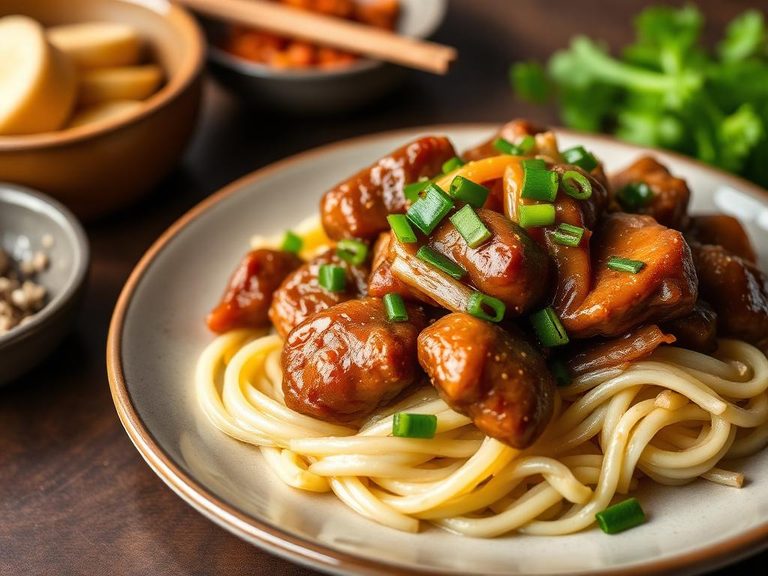
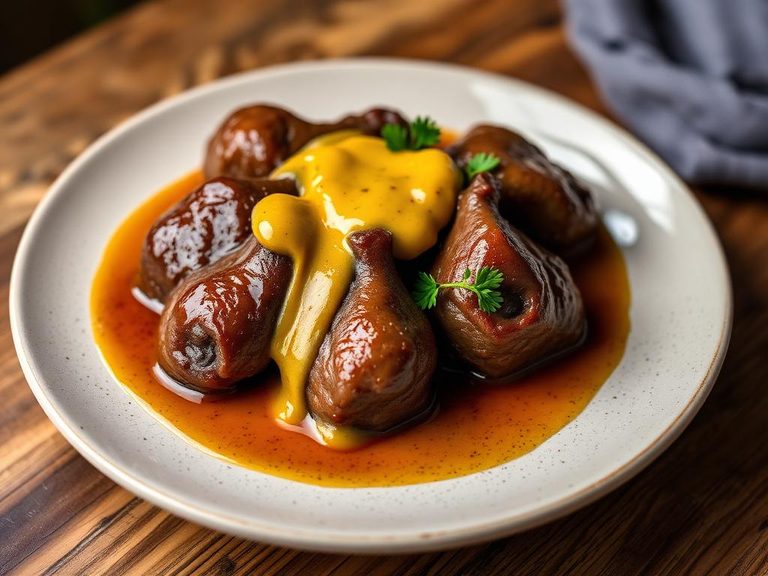
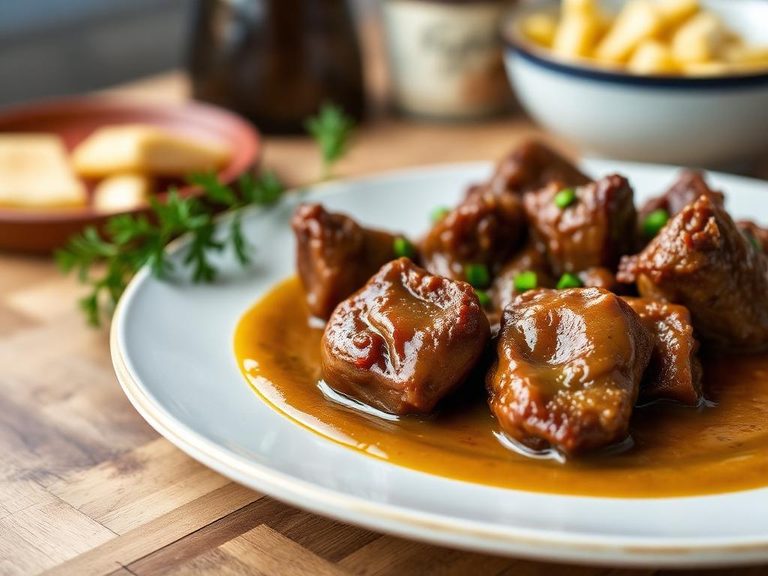
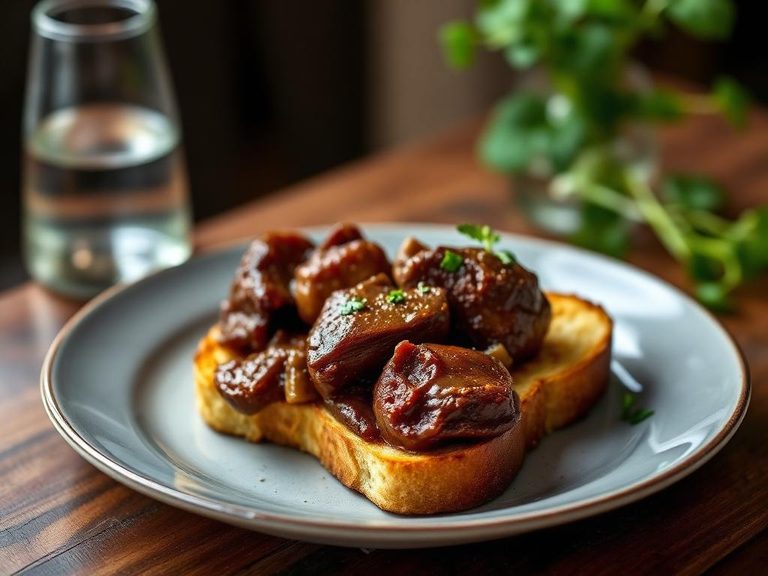
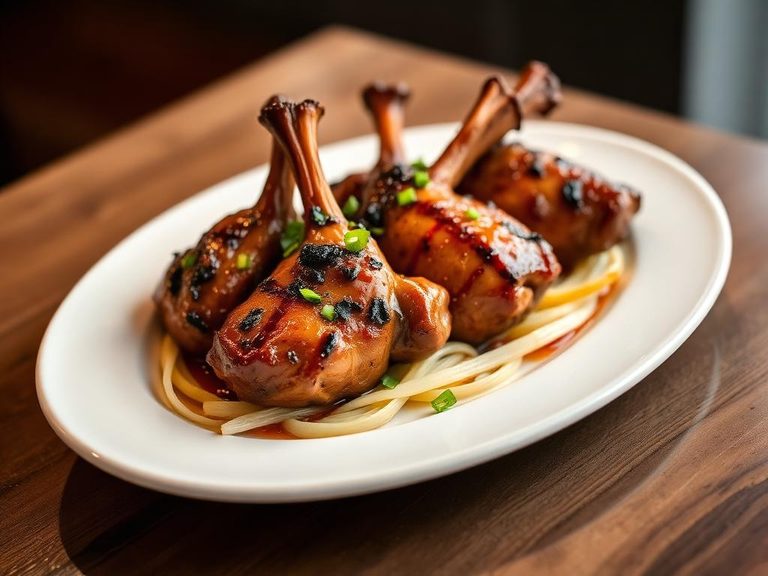
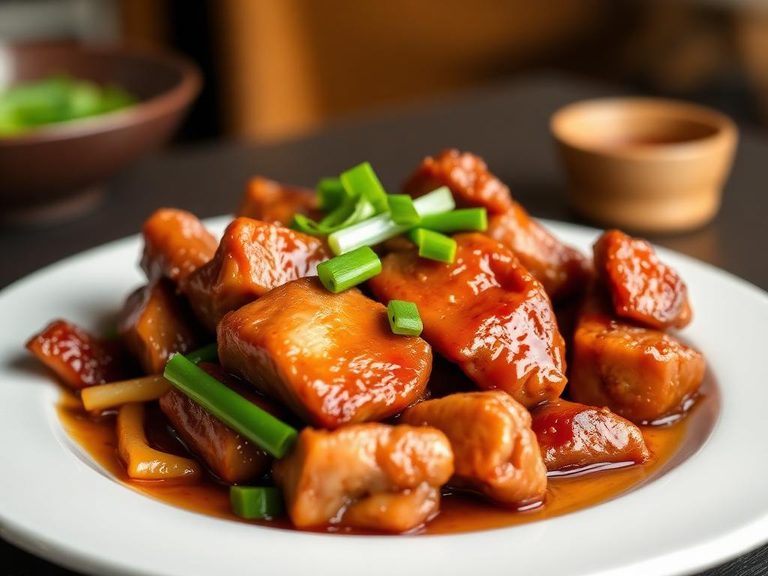
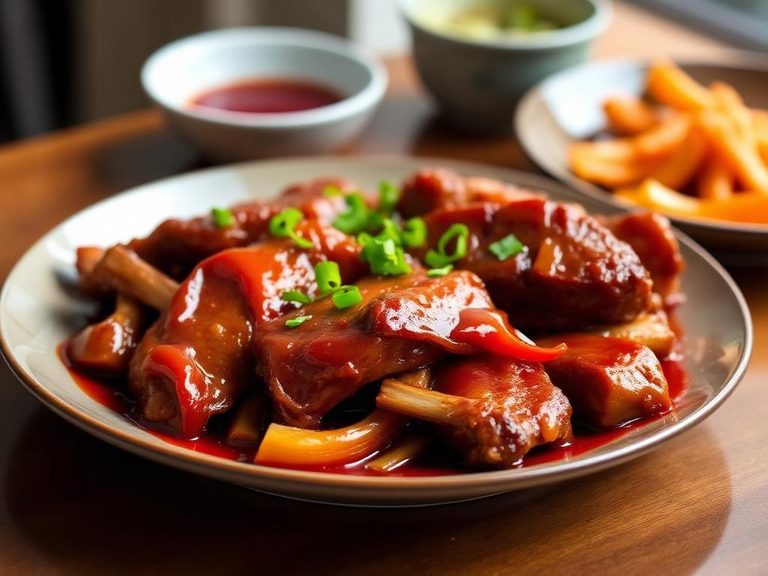
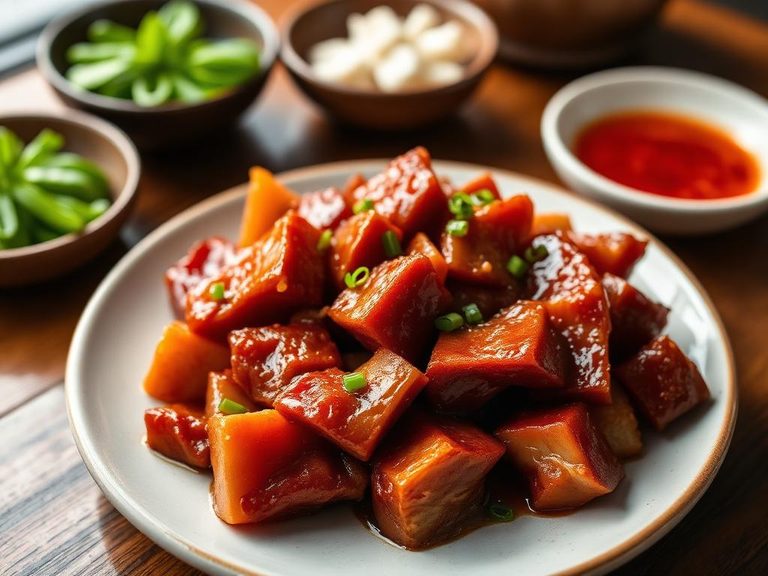
Chinese Braised Pork Kidneys (滷腰花)
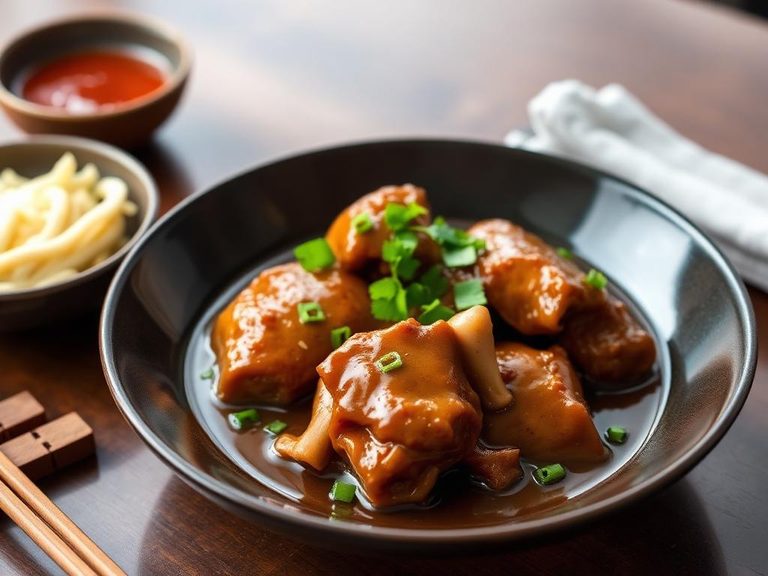
Chinese Braised Pork Kidneys, known as 滷腰花 (Lǔ Yāo Huā), is a classic dish where pork kidneys are cleaned, scored, and braised in a fragrant, savory, and often slightly sweet soy-based sauce. The 'flower' (花) in the name refers to the beautiful cross-hatch pattern cut into the kidneys, which helps them cook quickly and absorb the rich flavors of the braising liquid, which typically includes soy sauce, Shaoxing wine, ginger, and star anise.
🍽️ Nutrition at a glance
This dish is primarily a high-protein, low-carbohydrate option, with a moderate amount of fat depending on the cut of pork and the amount of oil used. It is a notable source of B vitamins, especially B12 and riboflavin, as well as minerals like selenium and iron, with a typical serving ranging from 250-350 kcal.
Nutrition breakdown
| Calories | 310 kcal |
| Protein | 32 g |
| Carbs | 5 g |
| Fat | 18 g |
| Fiber | 0.5 g |
| Sugar | 2 g |
| Sodium | 850 mg |
| Vitamin B12 | 16.5 mcg |
| Selenium | 140 mcg |
| Riboflavin (B2) | 1.8 mg |
| Phosphorus | 380 mg |
| Iron | 4.5 mg |
| Zinc | 5.2 mg |
| Copper | 0.6 mg |
| Potassium | 350 mg |
Per 1 cup (220 g) · estimated, varies by recipe
💡 What's interesting
Culturally, this dish exemplifies the Chinese culinary principle of 'nose-to-tail' eating, where organ meats are prized for their texture and nutritional value. Nutritionally, pork kidneys are exceptionally dense in nutrients like selenium (an antioxidant) and vitamin B12, which is crucial for nerve function and is more abundant in organ meats than in muscle meat.