

Boiled Tongue
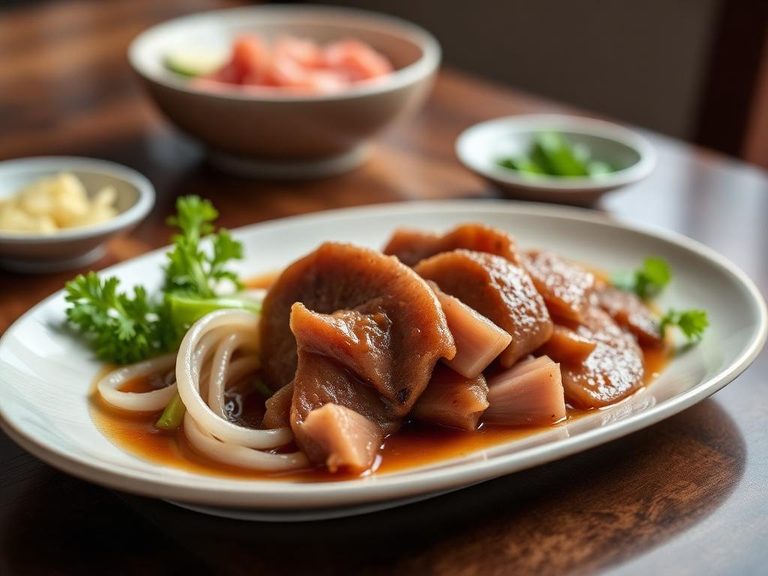
Boiled Tongue is a savory dish made by simmering beef, pork, or lamb tongue in a flavorful broth until tender, then typically peeled and sliced. It's a traditional comfort food found in many cuisines, including German, Jewish deli, Eastern European, and Latin American cooking, often served with mustard or horseradish.
🍽️ Nutrition at a glance
This dish is very high in protein and relatively low in carbohydrates, making it a nutrient-dense option. It's an excellent source of B vitamins (especially B12 and niacin), iron, zinc, and selenium.
Nutrition breakdown
| Calories | 160 kcal |
| Protein | 23 g |
| Carbs | 0 g |
| Fat | 7 g |
| Fiber | 0 g |
| Sugar | 0 g |
| Sodium | 80 mg |
| Vitamin B12 | 8.5 mcg |
| Niacin (B3) | 6.5 mg |
| Zinc | 5.0 mg |
| Selenium | 25 mcg |
| Iron | 2.5 mg |
| Phosphorus | 200 mg |
| Potassium | 280 mg |
| Choline | 100 mg |
Per 3 oz (85 g), cooked and sliced · estimated, varies by recipe
💡 What's interesting
Culturally, it's often considered a 'nose-to-tail' delicacy, representing resourceful cooking. Nutritionally, it's one of the most concentrated food sources of vitamin B12, which is essential for nerve function and red blood cell formation.
🍽️ Related dishes


AI estimate may be inaccurate · Terms