

Base for a loaded mac and cheese bowl
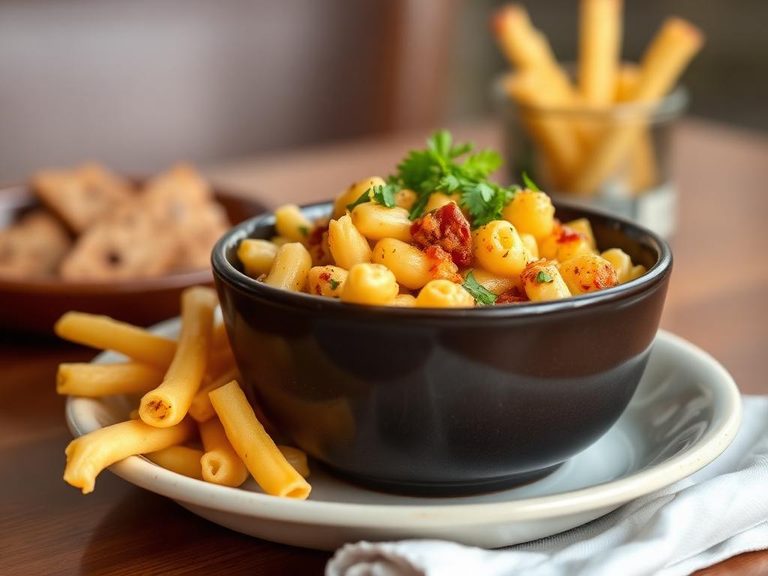
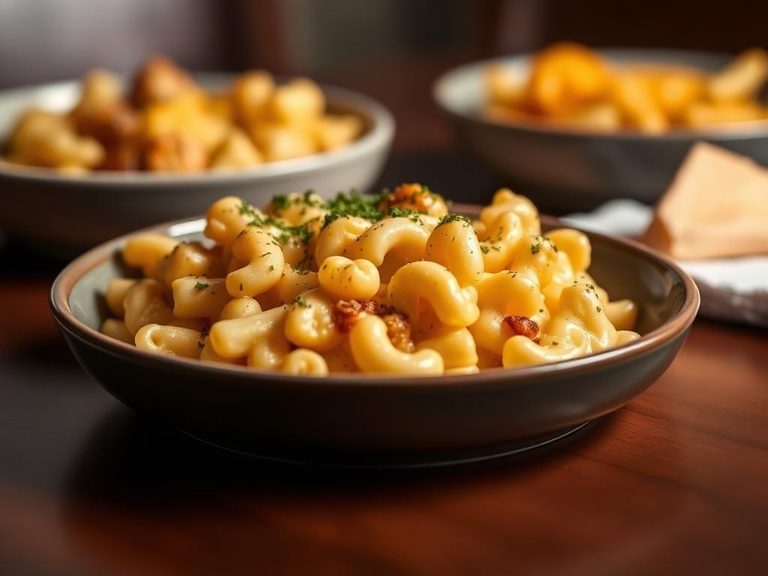
A loaded mac and cheese bowl base is a rich, creamy foundation of elbow pasta coated in a velvety cheese sauce, often made with a blend of sharp cheddar, Gruyère, or processed cheese for optimal meltability. This dish originates from American comfort food traditions, evolving from simple baked casseroles into customizable bowls where diners add toppings like bacon, jalapeños, or breadcrumbs. It’s a staple in casual dining and home cooking, celebrated for its indulgent, satisfying nature.
🍳 View the full Base for a loaded mac and cheese bowl recipe →
🍽️ Nutrition at a glance
This base is high in carbohydrates from the pasta and fat from the cheese and butter, with moderate protein from dairy and optional additions. Key nutrients include calcium, vitamin D (if fortified), and sodium, with a typical serving ranging from 500 to 700 calories, depending on portion size and cheese quantity.
Nutrition breakdown
| Calories | 380 kcal |
| Protein | 14 g |
| Carbs | 42 g |
| Fat | 16 g |
| Fiber | 2 g |
| Sugar | 5 g |
| Sodium | 650 mg |
| Calcium | 300 mg |
| Iron | 1.5 mg |
| Potassium | 200 mg |
| Vitamin A | 150 mcg |
| Vitamin D | 1.0 mcg |
| Vitamin B12 | 0.8 mcg |
| Phosphorus | 250 mg |
| Zinc | 2.0 mg |
Per 1 cup (240 g) · estimated, varies by recipe
💡 What's interesting
Culturally, mac and cheese has roots in 13th-century Italian cookbooks but became an American icon through Thomas Jefferson’s advocacy and Kraft’s mass production. Nutritionally, its high calorie density makes it a comfort food often associated with emotional satisfaction rather than dietary balance, highlighting how food can serve social and psychological roles beyond mere sustenance.
🍽️ Related dishes



AI estimate may be inaccurate · Terms