

Asian-style rice bowls
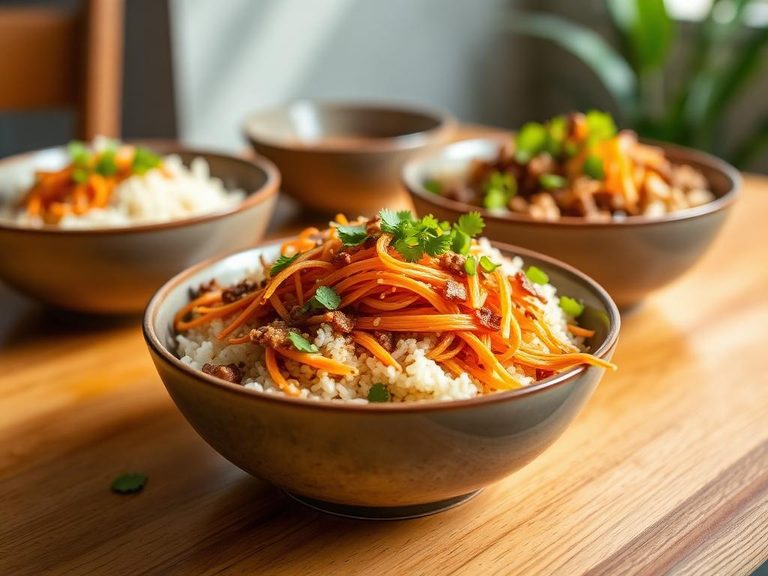
Asian-style rice bowls are versatile, one-bowl meals featuring a base of steamed rice topped with a variety of proteins, vegetables, and flavorful sauces. Common ingredients include grilled chicken, beef, tofu, or seafood, paired with items like edamame, pickled ginger, seaweed, and soft-boiled eggs. This format is popular across many Asian cuisines, including Japanese (donburi), Korean (bibimbap), and Chinese (poke-inspired bowls).
🍽️ Nutrition at a glance
Typically balanced in carbohydrates from rice, protein from meat or tofu, and fats from sauces or toppings like avocado or sesame oil. Key nutrients include fiber from vegetables, B vitamins from rice, and iron from proteins. A standard serving generally ranges from 500 to 800 calories, depending on portion sizes and added sauces.
Nutrition breakdown
| Calories | 550 kcal |
| Protein | 25 g |
| Carbs | 75 g |
| Fat | 18 g |
| Fiber | 6 g |
| Sugar | 8 g |
| Sodium | 900 mg |
| Iron | 4 mg |
| Vitamin A | 150 mcg |
| Vitamin C | 15 mg |
| Calcium | 100 mg |
| Potassium | 450 mg |
| Magnesium | 60 mg |
| Zinc | 3 mg |
| Folate | 120 mcg |
Per 1 bowl (350 g) · estimated, varies by recipe
💡 What's interesting
Culturally, these bowls embody the principle of 'ichiju sansai' in Japanese cuisine, meaning 'one soup, three sides,' adapted into a single, harmonious dish. Nutritionally, they allow for easy customization to meet dietary needs, making them a popular choice for balanced, nutrient-dense meals in modern healthy eating trends.
🍽️ Related dishes

AI estimate may be inaccurate · Terms